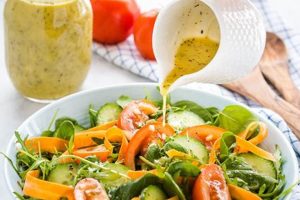
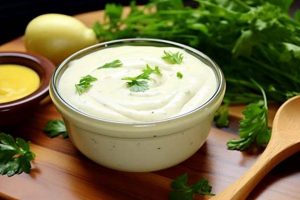
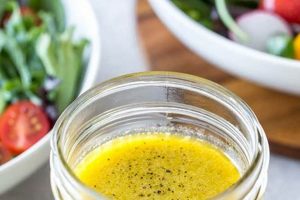
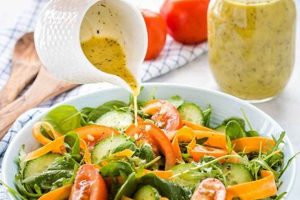
A superior vinaigrette hinges on a careful balance of high-quality oil and vinegar, complemented by seasonings. For example, extra virgin olive oil offers a robust flavor, while a milder option like avocado oil provides a neutral base. Vinegars range from the bright acidity of white wine vinegar to the tangy sweetness of balsamic. Seasonings such as Dijon mustard, minced garlic, fresh herbs, salt, and pepper further enhance the flavor profile.
Achieving this balance offers numerous advantages. A well-crafted vinaigrette not only elevates the taste of fresh greens and vegetables but also contributes to a healthier diet by providing beneficial fats and antioxidants. Historically, oil and vinegar mixtures have served as simple yet essential condiments across various cultures, evolving over time with the introduction of new ingredients and techniques. Their enduring popularity speaks to their versatility and adaptability.
This exploration will delve into the nuances of creating an exceptional vinaigrette, covering topics such as ideal oil and vinegar pairings, recommended ratios, emulsification techniques, and creative flavor combinations. Readers will gain the knowledge and tools to craft dressings perfectly suited to their palates and culinary needs.
Tips for an Exceptional Vinaigrette
Creating a delicious and versatile vinaigrette involves understanding the interplay of key ingredients and techniques. These tips offer guidance on achieving optimal flavor and texture.
Tip 1: Use High-Quality Ingredients. The foundation of a great vinaigrette lies in the quality of the oil and vinegar. Opt for extra virgin olive oil for its rich flavor or a milder option like avocado or grapeseed oil. Select vinegars that complement the intended flavor profile, such as white wine, red wine, apple cider, or balsamic.
Tip 2: Achieve the Right Balance. A classic vinaigrette ratio is three parts oil to one part vinegar. However, this can be adjusted based on personal preference and the specific ingredients used. Taste and adjust as needed to achieve the desired balance of acidity and richness.
Tip 3: Emulsify Effectively. A proper emulsion prevents the dressing from separating. Whisk the vinegar and seasonings together vigorously, then slowly drizzle in the oil while continuing to whisk. Alternatively, a blender or food processor can be used for a smoother, more stable emulsion.
Tip 4: Season Thoughtfully. Beyond salt and pepper, consider adding Dijon mustard for emulsification and flavor, minced garlic or shallots for pungency, and fresh or dried herbs for aromatic complexity.
Tip 5: Experiment with Flavors. Don’t be afraid to explore different flavor combinations. Citrus zest, honey, maple syrup, or even a touch of chili flakes can add unique dimensions to a vinaigrette.
Tip 6: Taste and Adjust. Before dressing the salad, taste the vinaigrette and adjust the seasoning as needed. A small pinch of sugar can balance excessive acidity, while additional herbs or spices can enhance the overall flavor profile.
Tip 7: Store Properly. Leftover vinaigrette can be stored in an airtight container in the refrigerator for up to a week. Shake well before using, as some separation may occur.
By following these tips, one can consistently create flavorful and versatile vinaigrettes that enhance any salad or vegetable dish.
From understanding ingredient selection and ratios to mastering emulsification and seasoning techniques, these insights provide a solid foundation for crafting delicious and personalized vinaigrettes. The following section will conclude this exploration with practical applications and further considerations.
1. High-Quality Ingredients
The pursuit of a superlative oil and vinegar salad dressing hinges directly on the caliber of its components. Substandard ingredients yield mediocre results, while high-quality oils and vinegars unlock a dressing’s full potential. The impact of ingredient quality manifests in several ways. For instance, extra virgin olive oil, cold-pressed from fresh olives, delivers a complex flavor profile absent in refined or lower-grade oils. Similarly, aged balsamic vinegar offers a nuanced sweetness and depth compared to mass-produced alternatives. This distinction translates directly to the final product: a dressing vibrant in flavor, aroma, and texture.
Consider the difference between using a generic white wine vinegar and a white wine vinegar aged in oak barrels. The latter imparts subtle oaky notes and a mellower acidity, enriching the dressing’s complexity. Likewise, fresh herbs, such as basil or thyme, offer a more vibrant and nuanced flavor than dried counterparts. Selecting high-quality oils ensures a pleasant mouthfeel and contributes beneficial antioxidants. These nuanced differences, while seemingly subtle, collectively contribute to a significantly enhanced culinary experience. Investing in premium ingredients, therefore, represents a crucial step toward achieving dressing excellence.
Ingredient quality functions as a cornerstone of exceptional dressings. The difference between a bland and a vibrant vinaigrette often lies not in elaborate techniques but in the inherent quality of the core components. While technique and creativity play important roles, they cannot compensate for lackluster ingredients. Prioritizing quality allows the inherent flavors of the oil, vinegar, and seasonings to shine through, resulting in a dressing that elevates the simplest salad to a culinary delight. Understanding this foundational principle empowers one to make informed choices, elevating the final product from ordinary to extraordinary.
2. Balanced Ratio

Balance represents a cornerstone of culinary excellence, particularly within the realm of oil and vinegar salad dressings. The interplay between oil and vinegar defines a vinaigrette’s character. An optimal ratio harmonizes the richness of the oil with the acidity of the vinegar, creating a dressing that neither overpowers nor underwhelms the palate. A typical starting point, a 3:1 ratio of oil to vinegar, offers a balanced foundation. However, this ratio serves as a guideline rather than a rigid rule. Individual preferences and the specific characteristics of chosen ingredients influence the ideal balance. For instance, a robust extra virgin olive oil might require a slightly higher proportion of vinegar to balance its intensity, whereas a delicate white wine vinegar might benefit from a lower proportion to avoid excessive sharpness. A balanced ratio allows the individual components to shine while contributing to a harmonious whole.
Consider the impact of an unbalanced ratio. An excess of oil can lead to a dressing that feels heavy and coats the palate, masking the flavors of the salad ingredients. Conversely, an overabundance of vinegar can create an excessively sharp and acidic dressing, overpowering more subtle flavors. Achieving the proper balance hinges on careful consideration of the chosen oil and vinegar. A mild oil, such as grapeseed, harmonizes well with a similarly mild vinegar, like apple cider. Conversely, a bolder oil, like walnut, might pair well with a more assertive vinegar, such as balsamic. Understanding these relationships allows for informed adjustments to the standard ratio, resulting in a dressing perfectly tailored to specific ingredients and taste preferences. Experimentation and tasting remain crucial steps in this process, enabling refinement and personalization of the vinaigrette.
Mastery of balanced ratios elevates vinaigrette preparation from a simple task to a nuanced art. It underscores the importance of thoughtful ingredient selection and the interplay between flavors. Achieving the perfect balance unlocks the full potential of a vinaigrette, transforming it from a mere condiment to a crucial element that enhances the overall dining experience. This understanding empowers culinary exploration, allowing for the creation of dressings perfectly suited to individual palates and specific culinary creations.
3. Effective Emulsification

Effective emulsification represents a critical factor in achieving a high-quality oil and vinegar salad dressing. Emulsification refers to the process of combining two immiscible liquids, such as oil and vinegar, into a stable mixture. In a vinaigrette, effective emulsification prevents the oil and vinegar from separating, creating a homogenous texture and ensuring a consistent flavor distribution throughout the salad. This stability enhances both the sensory experience and visual appeal of the dressing. Without proper emulsification, the oil and vinegar will quickly separate, resulting in an uneven coating on the salad, with some bites receiving primarily oil and others primarily vinegar. This separation compromises the intended balance of flavors and can lead to an unpleasant, oily mouthfeel.
Several techniques facilitate effective emulsification. Vigorous whisking, by hand or with an electric mixer, creates enough energy to disperse the vinegar droplets throughout the oil, forming a temporary emulsion. Adding an emulsifying agent, such as Dijon mustard or honey, enhances stability. These agents contain compounds that attract both oil and water molecules, helping to bridge the gap between the two immiscible liquids. For example, the lecithin in mustard acts as a natural emulsifier, binding the oil and vinegar together more effectively. A blender or food processor further enhances emulsification by creating a more forceful and consistent blending action, resulting in a smoother, more stable emulsion, especially beneficial for dressings with thicker consistencies or added ingredients like garlic or herbs.
The practical significance of effective emulsification extends beyond mere aesthetics and texture. A stable emulsion ensures that each bite of salad receives the intended balance of flavors, contributing to a more harmonious and enjoyable culinary experience. Furthermore, a well-emulsified dressing clings more effectively to salad ingredients, ensuring even coating and maximizing flavor delivery. Challenges can arise when using highly acidic vinegars or when temperature fluctuations occur. However, understanding the principles of emulsification, employing appropriate techniques, and selecting suitable emulsifying agents allows for the creation of stable and flavorful vinaigrettes that elevate the simplest salads to culinary heights.
4. Thoughtful Seasoning
Seasoning represents a pivotal element in crafting exceptional oil and vinegar salad dressings. It transcends merely adding salt and pepper; it involves a nuanced understanding of flavor profiles and the interplay of various seasonings to enhance and complement the core ingredients. Thoughtful seasoning elevates a simple vinaigrette to a complex and flavorful culinary creation. It allows for customization and creativity, transforming a basic dressing into a personalized expression of taste.
- Balancing Flavors
Seasoning aims to achieve a harmonious balance of flavors within the dressing. Salt enhances sweetness and mitigates bitterness, while pepper adds a subtle heat and complexity. Herbs, such as fresh basil, oregano, or thyme, introduce aromatic dimensions and complement the chosen oil and vinegar. The goal is to create a symphony of flavors that work in concert rather than compete with one another. For instance, a balsamic vinaigrette might benefit from the sweetness of a pinch of sugar to balance its acidity, while a lemon vinaigrette might be enhanced by the savory notes of dried dill. The careful consideration of flavor profiles ensures a well-rounded and balanced final product.
- Enhancing Core Ingredients
Thoughtful seasoning enhances the inherent qualities of the oil and vinegar. The right combination of spices can highlight the fruity notes of an extra virgin olive oil or the tangy brightness of a champagne vinegar. Garlic and shallots add pungent layers, while mustard contributes both flavor and emulsifying properties. For example, the peppery notes of freshly cracked black pepper complement the robust flavor of a walnut oil, while a touch of Dijon mustard enhances the sharpness of a red wine vinegar. Understanding these relationships allows for the creation of dressings that showcase the best qualities of the chosen ingredients.
- Building Complexity
Seasoning builds complexity within the dressing. Layering different flavors and textures creates depth and intrigue. A simple vinaigrette can be transformed by the addition of toasted sesame seeds, crushed red pepper flakes, or a pinch of smoked paprika. These additions introduce textural contrasts and subtle flavor nuances, elevating the dressing from simple to sophisticated. Consider the addition of finely chopped chives to a lemon vinaigrette, providing a subtle onion flavor and a delicate crunch. These seemingly small additions contribute significantly to the overall sensory experience.
- Customization and Creativity
Seasoning allows for customization and creativity in vinaigrette preparation. It offers an opportunity to personalize a dressing based on individual preferences and the specific dish it will accompany. A vinaigrette for a grilled vegetable salad might incorporate smoky flavors, while a dressing for a delicate green salad might feature lighter, brighter notes. This adaptability allows for endless variations and encourages culinary experimentation. The addition of a pinch of saffron to a champagne vinaigrette, for example, adds a unique color and a delicate floral aroma, demonstrating the transformative potential of thoughtful seasoning.
In conclusion, thoughtful seasoning distinguishes an average oil and vinegar salad dressing from an exceptional one. It involves a deliberate and considered approach to flavor building, enhancing core ingredients, and adding complexity. By understanding the principles of balance and the interplay of different seasonings, one can create vinaigrettes that are not only delicious but also tailored to specific culinary needs and personal preferences. This mastery of seasoning elevates the simple act of dressing a salad to an art form, transforming a basic condiment into a culinary highlight.
5. Flavor Exploration

Flavor exploration represents a crucial pathway toward achieving a truly exceptional oil and vinegar salad dressing. It signifies a departure from standard recipes and an embrace of creativity and experimentation. While classic combinations provide a solid foundation, flavor exploration unlocks the potential for unique and personalized vinaigrettes. This exploration involves a conscious and deliberate approach to combining ingredients in novel ways, pushing the boundaries of traditional flavor profiles. Consider, for instance, the incorporation of citrus zest. The zest of a lemon, orange, or grapefruit introduces bright, acidic notes that contrast beautifully with the richness of the oil and the sharpness of the vinegar. Similarly, the addition of a touch of honey or maple syrup introduces subtle sweetness and complexity, balancing the acidity and enhancing the overall flavor profile. These additions demonstrate the transformative power of flavor exploration.
Further examples illustrate the practical application of this concept. A balsamic vinaigrette can be elevated by the addition of fig jam, which adds a concentrated sweetness and a unique fruity note. A red wine vinaigrette benefits from the incorporation of roasted garlic, imparting a mellow sweetness and a savory depth. Even seemingly unconventional additions, such as a pinch of smoked paprika or a dash of chili flakes, can introduce intriguing smoky or spicy notes, adding depth and complexity to the dressing. The key lies in understanding the interplay of flavors and how different ingredients interact to create a harmonious whole. Flavor exploration necessitates a willingness to experiment, taste, and adjust, continually refining the balance until the desired flavor profile is achieved.
The practical significance of flavor exploration extends beyond the creation of unique and delicious dressings. It fosters a deeper understanding of flavor profiles and encourages culinary creativity. It empowers individuals to move beyond pre-defined recipes and develop their own signature vinaigrettes tailored to specific ingredients and personal preferences. Challenges may arise in balancing flavors or achieving desired textures, but the rewards of a successful flavor exploration far outweigh the risks. This willingness to experiment unlocks a world of culinary possibilities, transforming the act of creating a salad dressing into an engaging and rewarding experience.
Frequently Asked Questions
This section addresses common inquiries regarding the creation of optimal oil and vinegar salad dressings, offering practical guidance and clarifying potential misconceptions.
Question 1: What is the ideal ratio of oil to vinegar in a vinaigrette?
While a 3:1 ratio serves as a common starting point, the ideal balance depends on the specific oils and vinegars selected. A more robust extra virgin olive oil might require a higher proportion of vinegar, whereas a milder oil, such as grapeseed, may benefit from a lower proportion. Taste and adjust accordingly.
Question 2: How can one prevent a vinaigrette from separating?
Effective emulsification is key to preventing separation. Vigorous whisking or the use of a blender helps to disperse the vinegar droplets evenly throughout the oil. Incorporating an emulsifying agent, like Dijon mustard or honey, further enhances stability.
Question 3: What types of oils are best suited for vinaigrettes?
Extra virgin olive oil remains a popular choice due to its rich flavor and health benefits. Other suitable options include avocado oil, grapeseed oil, and walnut oil, each offering a distinct flavor profile.
Question 4: Beyond basic seasonings, how can vinaigrette flavors be enhanced?
Flavor exploration is encouraged. Consider incorporating ingredients like citrus zest, honey, maple syrup, fresh herbs, minced garlic, shallots, or spices such as chili flakes or smoked paprika.
Question 5: How long can a homemade vinaigrette be stored?
Stored in an airtight container in the refrigerator, a homemade vinaigrette typically remains fresh for up to a week. Shake well before using, as some separation may occur during storage.
Question 6: Can a vinaigrette be made without mustard?
While mustard aids emulsification and adds flavor, it is not strictly necessary. Other emulsifying agents, such as honey or egg yolk, can be substituted, or the vinaigrette can be vigorously whisked immediately before serving.
Understanding these fundamental aspects of vinaigrette preparation empowers culinary experimentation and ensures consistently delicious results. By addressing these common inquiries, one gains a deeper understanding of the principles behind creating superior oil and vinegar salad dressings.
This concludes the exploration of crafting exceptional oil and vinegar salad dressings. The knowledge and techniques presented provide a solid foundation for culinary creativity and enjoyment.
Crafting the Best Oil and Vinegar Salad Dressing
Optimal oil and vinegar salad dressing recipes prioritize high-quality ingredients, balanced ratios, effective emulsification, thoughtful seasoning, and flavor exploration. Ingredient quality forms the foundation, impacting the final product’s overall flavor and texture. A balanced oil-to-vinegar ratio, typically 3:1 but adjustable to preference and specific ingredients, ensures a harmonious blend of richness and acidity. Emulsification, achieved through whisking or blending, creates a stable and homogenous texture, preventing separation and ensuring consistent flavor distribution. Thoughtful seasoning elevates the dressing beyond basic flavors, incorporating herbs, spices, and other aromatics to complement and enhance the core ingredients. Finally, flavor exploration encourages experimentation with diverse ingredients like citrus zest, honey, or spices, unlocking unique and personalized flavor profiles.
Mastery of these elements empowers creation of vinaigrettes that not only enhance culinary creations but also reflect individual tastes and preferences. Continual refinement of technique, coupled with exploration of diverse flavor combinations, allows for a deeper appreciation of the culinary potential within this seemingly simple yet versatile dressing. This pursuit of the optimal vinaigrette represents a journey of culinary discovery, one that promises continuous refinement and consistently rewarding results.