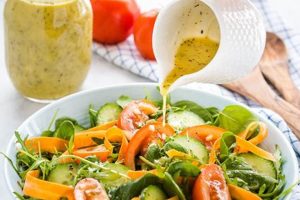
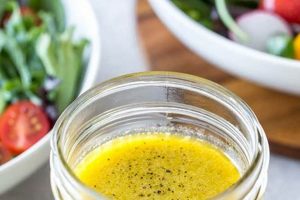
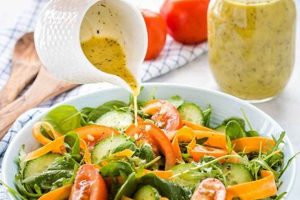
Bright, acidic dressings using the juice of oranges, lemons, limes, grapefruits, or a combination thereof, create a refreshing counterpoint to the richness of salads. These dressings, often emulsified with oil and enhanced with herbs, spices, or other flavoring agents, are known for their versatility and ability to complement a wide variety of ingredients, from leafy greens and vegetables to seafood and poultry. A classic example includes a mixture of fresh orange juice, olive oil, Dijon mustard, and a touch of honey.
The invigorating acidity of citrus-based dressings not only enhances flavor but also offers potential health benefits due to the vitamins and antioxidants present in citrus fruits. Historically, citrus fruits and their juices have been prized for their nutritional value. Their incorporation into salad dressings adds a vibrant element that can brighten even the simplest of dishes. Furthermore, the use of fresh juice offers a clean, natural flavor profile compared to processed dressings.
This exploration will delve into various recipes and techniques for crafting exceptional citrus-based dressings, offering guidance on ingredient selection, emulsion techniques, and flavor pairings. Different citrus varieties and their unique characteristics will be highlighted, alongside tips for balancing sweetness, acidity, and other flavor components.
Tips for Crafting Exceptional Citrus Dressings
Achieving a well-balanced and flavorful citrus dressing requires attention to detail and an understanding of the interplay between different ingredients. The following tips offer guidance for creating dressings that elevate any salad.
Tip 1: Balance Acidity and Sweetness: The tartness of citrus juice often benefits from a touch of sweetness to create a more rounded flavor profile. A small amount of honey, maple syrup, or agave nectar can effectively temper the acidity.
Tip 2: Emulsify Thoroughly: Proper emulsification creates a stable and creamy dressing that clings to salad ingredients. Whisk the oil into the citrus juice slowly and steadily, or use a blender for a more consistent emulsion.
Tip 3: Explore Flavor Combinations: Herbs, spices, and aromatics can add depth and complexity. Consider pairings such as dill with lemon, mint with lime, or ginger with orange.
Tip 4: Use Freshly Squeezed Juice: Bottled citrus juice often contains additives and preservatives that can negatively impact the flavor of the dressing. Freshly squeezed juice provides the purest and most vibrant flavor.
Tip 5: Consider the Oil: Different oils offer unique flavor profiles. Extra virgin olive oil provides a robust flavor, while lighter oils like grapeseed or avocado oil offer a more neutral base.
Tip 6: Season Appropriately: Salt and freshly ground black pepper are essential for enhancing the flavors of the dressing. Taste and adjust seasoning as needed.
Tip 7: Experiment with Citrus Varieties: Each citrus fruit offers a distinct flavor profile. Experiment with different combinations to discover new and exciting flavor combinations.
By following these tips, one can create vibrant and flavorful citrus dressings that complement a wide array of salads and dishes. The proper balance of acidity, sweetness, and complementary flavors elevates the dining experience.
This exploration concludes with a summary of key takeaways and a look forward to further culinary adventures with citrus-based dressings.
1. Fresh Citrus Juice

Fresh citrus juice forms the cornerstone of vibrant and flavorful citrus salad dressing recipes. Its importance stems from the unique balance of acidity, sweetness, and aromatic complexity it contributes. This freshness distinguishes it from commercially processed juices, which often contain additives and preservatives that can detract from the delicate flavor balance. The impact of using fresh juice is evident in the resulting vinaigrette’s brightness and depth of flavor. For instance, a vinaigrette made with freshly squeezed orange juice offers a noticeably more vibrant and nuanced flavor profile compared to one made with bottled juice. The difference lies in the presence of volatile aromatic compounds that dissipate over time and are often lost during processing and storage.
The choice of citrus fruit directly influences the character of the vinaigrette. Lemon juice provides a sharp, clean acidity, while lime juice imparts a slightly more floral and tart note. Orange juice contributes a sweeter, more rounded flavor, while grapefruit offers a distinctive bitterness that can be balanced with other ingredients. These distinct characteristics allow for a wide range of flavor profiles to be achieved, catering to diverse palates and culinary applications. A lemon vinaigrette, for instance, pairs well with delicate greens and seafood, while an orange vinaigrette complements heartier salads with roasted vegetables or grilled chicken. The acidity of fresh citrus juice also aids in tenderizing certain ingredients and enhancing the overall texture of the salad.
Utilizing fresh citrus juice presents a clear advantage in crafting superior citrus vinaigrettes. The vibrant flavor, nuanced complexity, and absence of artificial additives contribute to a more refined and enjoyable culinary experience. While convenience might tempt some to opt for pre-packaged juices, the noticeable difference in taste underscores the value of incorporating fresh ingredients. This commitment to quality enhances not only the flavor of the vinaigrette but also the overall dining experience.
2. High-Quality Oil

High-quality oil plays a crucial role in citrus salad dressing recipes, significantly influencing the final product’s flavor, texture, and overall quality. The oil serves as the foundation of the vinaigrette, providing body and carrying the flavors of the citrus juice and other ingredients. Its selection should be approached with the same level of care as the choice of citrus, as the oil’s characteristics directly impact the dressing’s balance and complexity. A delicate extra virgin olive oil, for example, with its fruity and peppery notes, might be chosen for a lemon vinaigrette intended for a delicate salad with fresh herbs. Conversely, a more robust olive oil with a stronger flavor profile could complement a grapefruit vinaigrette designed for a salad with roasted vegetables or grilled fish.
The quality of the oil affects the emulsification process, critical for creating a stable and homogenous vinaigrette. High-quality oils, particularly extra virgin olive oils, possess a higher concentration of monounsaturated fats, which contribute to a more stable emulsion. This stability prevents the vinaigrette from separating quickly, ensuring a consistent texture and flavor distribution throughout the salad. Using a low-quality oil, on the other hand, can result in a thin, unstable emulsion that quickly separates, leaving an oily residue on the salad and an uneven distribution of flavor. This separation can negatively impact the sensory experience of the dish, making it less appealing both visually and texturally.
Beyond emulsification, the oil’s flavor profile contributes directly to the overall balance and complexity of the vinaigrette. A neutral-flavored oil like grapeseed oil allows the citrus and other ingredients to shine, while a more flavorful oil, such as a hazelnut or walnut oil, adds another layer of complexity. Selecting the right oil involves careful consideration of the desired flavor profile and the other ingredients in the vinaigrette and the salad itself. Ultimately, choosing a high-quality oil is an investment in the overall success of the citrus vinaigrette, contributing to a more balanced, flavorful, and enjoyable culinary experience.
3. Balanced Acidity
Balanced acidity represents a cornerstone of successful citrus salad dressing recipes. The inherent tartness of citrus fruits, while desirable, requires careful management to prevent the vinaigrette from becoming overly sharp or overpowering. This balance is achieved through the interplay of several factors, including the specific type of citrus used, the addition of sweetening agents, and the incorporation of other ingredients that can modulate the perceived acidity. The effect of unbalanced acidity can be readily observed; a dressing that is too acidic can overwhelm the other flavors in the salad, while a dressing that lacks sufficient acidity can taste bland and uninspired. A classic example lies in the contrast between a lemon vinaigrette and an orange vinaigrette. Lemon juice, possessing a higher acidity level, requires a proportionally greater amount of sweetening agent, such as honey or maple syrup, to achieve balance compared to a less acidic orange juice base.
Achieving balanced acidity necessitates an understanding of the interplay between different flavor components. Sweetness, saltiness, and bitterness all interact with acidity, influencing the overall perception of the vinaigrette. A small amount of sweetness can effectively temper sharp acidity, while salt can enhance the other flavors and create a more rounded profile. Bitterness, often introduced through ingredients like zest or herbs, can provide a counterpoint to the acidity, adding depth and complexity. Consider a grapefruit vinaigrette where the inherent bitterness of the fruit is balanced by the addition of a touch of honey and a pinch of salt. The honey tempers the bitterness and acidity, while the salt enhances the grapefruit’s inherent flavor profile, creating a harmonious blend.
Mastering balanced acidity is crucial for creating citrus vinaigrettes that complement, rather than overpower, the other ingredients in a salad. This balance allows the flavors of the fresh produce, proteins, and other components to shine while providing a bright and refreshing counterpoint. Challenges in achieving this balance often stem from a lack of understanding of the specific citrus fruit being used and its inherent acidity level. Experimentation and careful tasting are essential for developing an intuitive understanding of how to achieve the desired balance. Ultimately, a well-balanced acidity profile elevates the citrus vinaigrette from a simple dressing to a key element that enhances the overall dining experience.
4. Complementary Sweetness
Complementary sweetness plays a vital role in citrus salad dressing recipes, specifically vinaigrettes, by balancing the inherent tartness of citrus fruits. The sharp acidity characteristic of lemons, limes, oranges, and grapefruits requires a counterpoint to create a more nuanced and palatable flavor profile. This balancing act is achieved through the judicious use of sweetening agents, which harmonize with the citrus’s acidity, preventing the vinaigrette from becoming overly tart. The interplay between these two contrasting elementsacidity and sweetnessis crucial for achieving a well-rounded and flavorful vinaigrette. For instance, a lime vinaigrette intended for a delicate seafood salad might benefit from a touch of agave nectar to soften the lime’s sharpness, while a more robust orange vinaigrette designed for a salad with roasted vegetables might utilize a small amount of honey to complement the orange’s sweetness and create a richer flavor profile. The absence of this complementary sweetness can result in a vinaigrette that tastes overly acidic and unbalanced, potentially overpowering the other flavors in the salad.
The choice of sweetening agent and its quantity significantly influence the final character of the vinaigrette. Mild sweeteners like agave nectar or simple syrup offer a clean sweetness that allows the citrus flavor to remain prominent. Honey, with its more complex flavor profile, can add depth and richness to the vinaigrette, while maple syrup imparts a subtle caramel-like note. Granulated sugar, while an option, dissolves less readily in oil-based dressings and may require prior dissolution in the citrus juice. The quantity of sweetener used depends on the desired level of sweetness and the specific citrus fruit being used. A more acidic lemon juice, for example, will require a proportionally greater amount of sweetener compared to a less acidic orange juice. Practical experimentation and careful tasting are essential for determining the optimal balance between acidity and sweetness for a given recipe.
Understanding the role of complementary sweetness in citrus vinaigrettes allows for precise control over flavor profiles and enhances the overall dining experience. This balance is not simply about masking acidity but about creating a harmonious interplay of flavors that elevate the vinaigrette beyond a simple dressing. Challenges arise when the sweetening agent is used indiscriminately; an overly sweet vinaigrette can be just as detrimental as one that is overly acidic. The key lies in finding the precise point of balance where the sweetness complements and enhances the citrus’s natural flavors without masking them. This nuanced approach to flavor development distinguishes a well-crafted citrus vinaigrette from a mediocre one, demonstrating a deeper understanding of culinary principles and a commitment to creating balanced and flavorful dishes.
5. Emulsification Technique

Emulsification is fundamental to achieving a desirable texture and flavor distribution in citrus salad dressing recipes, particularly vinaigrettes. It involves combining two immiscible liquidstypically oil and an acidic element like citrus juiceinto a stable mixture. This process prevents the vinaigrette from separating, ensuring a homogenous blend where the flavors are evenly dispersed throughout the dressing. Without proper emulsification, the oil and citrus juice would separate, resulting in an oily, unbalanced, and less visually appealing dressing. The emulsification process creates a smooth, creamy texture that coats salad ingredients evenly, enhancing flavor delivery and overall enjoyment. A classic example is a lemon vinaigrette where the tart lemon juice is emulsified with olive oil, creating a cohesive dressing that clings to leafy greens and other salad components.
Several techniques facilitate effective emulsification. Whisking vigorously by hand introduces air and helps disperse the oil into tiny droplets within the citrus juice. Alternatively, a blender creates a more consistent and stable emulsion by rapidly breaking down the oil into smaller particles, thoroughly integrating it with the juice. Regardless of the chosen method, gradual addition of the oil to the acidic element, while constantly whisking or blending, is crucial for creating a stable emulsion. Adding the oil too quickly can lead to separation, even with vigorous mixing. Furthermore, incorporating an emulsifying agent, such as a small amount of Dijon mustard or honey, can further stabilize the vinaigrette. These agents contain compounds that help bind the oil and citrus juice together, promoting a more durable and homogenous mixture. For example, a honey-lime vinaigrette for a fruit salad benefits from the emulsifying properties of honey, creating a creamy dressing that evenly coats the fruit.
Mastery of emulsification is essential for crafting high-quality citrus vinaigrettes. A stable emulsion ensures not only a visually appealing dressing but also a consistent flavor experience with each bite. Challenges in emulsification often arise from improper technique, such as adding the oil too quickly or insufficient mixing. Understanding the underlying principles of emulsification and employing the appropriate techniques allows for greater control over the final product, leading to more balanced and flavorful citrus vinaigrettes. This understanding is a crucial step in elevating simple ingredients into a refined culinary creation.
6. Flavorful Additions
Flavorful additions represent a critical component in elevating citrus salad dressing recipes, specifically vinaigrettes, beyond basic combinations of oil and citrus juice. These additions introduce complexity, depth, and nuance, transforming a simple vinaigrette into a dynamic element that complements and enhances the overall salad experience. Herbs, spices, aromatics, and other flavoring agents contribute unique characteristics, broadening the potential flavor profiles achievable with citrus vinaigrettes. The considered incorporation of such additions allows for tailored flavor combinations that harmonize with specific salad ingredients and culinary goals. For example, a classic lemon vinaigrette benefits from the addition of fresh dill, which complements the lemon’s bright acidity with its subtle anise-like notes. Conversely, a more robust orange vinaigrette intended for a salad with roasted root vegetables might be enhanced by the warmth of ground cumin and coriander.
The selection of flavorful additions should be guided by the desired overall flavor profile and the specific characteristics of the citrus fruit used. Fresh herbs, such as mint, basil, or chives, offer bright, herbaceous notes that pair well with lighter citrus fruits like lemon and lime. Spices, including paprika, chili flakes, or ginger, introduce warmth and complexity, often complementing richer citrus fruits like orange and grapefruit. Aromatics like shallots, garlic, or ginger add pungent notes that deepen the vinaigrette’s flavor profile. Furthermore, ingredients like mustard, honey, or maple syrup contribute not only flavor but also textural complexity and emulsification properties. Consider a grapefruit vinaigrette where the addition of minced shallots and a pinch of red pepper flakes creates a complex interplay of bitterness, sweetness, and spice, perfectly suited for a salad with roasted chicken or grilled halloumi.
Understanding the impact of flavorful additions on citrus vinaigrettes empowers culinary exploration and allows for the creation of dressings tailored to specific dishes and preferences. Challenges may arise from an overabundance of additions, which can obscure the delicate balance between the citrus and other components. A judicious approach, focusing on a few key complementary flavors, typically yields the most successful results. Ultimately, the strategic use of flavorful additions elevates the citrus vinaigrette from a simple condiment to a sophisticated element that enhances the overall culinary experience.
7. Proper Seasoning
Proper seasoning is paramount in citrus salad dressing recipes, particularly vinaigrettes, as it directly impacts the overall balance and flavor expression. Salt, the primary seasoning agent, not only enhances the inherent flavors of the citrus juice and other ingredients but also plays a critical role in modulating perceived acidity. The interplay between salt and acid is a delicate balancing act; insufficient salt can leave the vinaigrette tasting overly tart and sharp, while excessive salt can mask the delicate nuances of the citrus and other components. This careful calibration is crucial for achieving a harmonious flavor profile. For instance, in a lemon vinaigrette, the correct amount of salt tempers the lemon’s tartness, allowing its bright, citrusy notes to shine through without being overwhelming. Conversely, an under-seasoned grapefruit vinaigrette might emphasize the grapefruit’s bitterness, creating an unbalanced and less palatable experience.
Beyond salt, other seasonings can further enhance the complexity and depth of a citrus vinaigrette. Freshly ground black pepper adds a subtle spice and warmth, complementing the citrus’s brightness. A pinch of sugar, in addition to other sweetening agents like honey or maple syrup, can further refine the balance between sweet and sour. The addition of herbs, spices, and aromatics, while contributing their own flavors, also benefits from proper seasoning, as salt amplifies their inherent characteristics. For example, the subtle anise notes of fresh dill in a lemon vinaigrette are enhanced by the presence of salt, creating a more pronounced and well-rounded flavor profile. Similarly, the warmth of ground cumin in an orange vinaigrette becomes more pronounced and nuanced with proper seasoning.
Mastery of proper seasoning is essential for elevating citrus vinaigrettes from simple mixtures to complex and well-balanced flavor enhancers. The interaction between salt, acid, and other flavor components requires careful consideration and adjustment based on the specific ingredients used and the desired outcome. Challenges arise when seasoning is treated as an afterthought or applied without understanding its impact on the overall balance of the vinaigrette. A well-seasoned citrus vinaigrette not only enhances the flavors of the salad ingredients but also exemplifies a refined understanding of culinary principles and a commitment to creating balanced and flavorful dishes. It transforms a simple dressing into a key element that elevates the entire dining experience.
Frequently Asked Questions
This section addresses common inquiries regarding the preparation and utilization of citrus-based salad dressings.
Question 1: How can one prevent citrus vinaigrettes from becoming too tart?
Balancing the acidity of citrus juice is crucial. This can be achieved by incorporating a sweetening element such as honey, maple syrup, or agave nectar. The amount required depends on the specific citrus fruit used and personal preference. Tasting and adjusting accordingly is recommended.
Question 2: What is the best method for emulsifying a citrus vinaigrette?
Both whisking and blending are effective methods. Whisking creates a lighter texture, while blending yields a more stable, emulsified dressing. For whisking, slowly drizzle the oil into the citrus juice while whisking constantly. A blender simplifies the process and creates a homogenous emulsion.
Question 3: Which oils are best suited for citrus vinaigrettes?
Extra virgin olive oil is a classic choice, providing a robust flavor that complements citrus. Lighter oils like grapeseed or avocado oil offer a more neutral base, allowing the citrus to shine. The choice depends on the desired flavor profile.
Question 4: How long can citrus vinaigrettes be stored?
Freshly made vinaigrettes are best consumed within a few days. Store them in an airtight container in the refrigerator. Separation may occur, but the vinaigrette can be re-emulsified by whisking or shaking before use.
Question 5: Can bottled citrus juice be used in place of fresh juice?
While bottled juice can be used, fresh juice is strongly recommended. Freshly squeezed juice offers a brighter, more nuanced flavor profile and lacks the additives and preservatives often found in bottled varieties.
Question 6: Beyond salads, what other applications exist for citrus vinaigrettes?
Citrus vinaigrettes are versatile. They can be used as marinades for fish or poultry, drizzled over roasted vegetables, or incorporated into sauces and dips. Their bright acidity and fresh flavors enhance a variety of dishes.
Understanding these fundamental aspects of citrus vinaigrette preparation ensures a consistently delicious and versatile culinary experience.
The following section offers a collection of curated recipes, demonstrating the versatility and potential of citrus-based salad dressings.
Citrus Salad Dressing Recipes Vinaigrette
Citrus-based salad dressings, specifically vinaigrettes, offer a versatile and flavorful approach to enhancing culinary creations. The exploration of key componentsfresh citrus juice, high-quality oil, balanced acidity, complementary sweetness, emulsification techniques, flavorful additions, and proper seasoningreveals the nuanced interplay required for crafting exceptional dressings. Emphasis on fresh ingredients, balanced flavor profiles, and proper techniques underscores the potential of these vinaigrettes to elevate a wide array of dishes. From the bright acidity of lemon to the subtle sweetness of orange and the unique bitterness of grapefruit, the diverse characteristics of citrus fruits allow for a broad spectrum of flavor combinations.
Culinary exploration within the realm of citrus vinaigrettes extends beyond established recipes. The foundational principles discussed provide a framework for experimentation and innovation, encouraging the development of personalized flavor profiles tailored to individual preferences and culinary contexts. The continued exploration of citrus varieties, complementary ingredients, and innovative techniques promises a vibrant and evolving culinary landscape, enriching the dining experience and offering a refreshing perspective on flavor creation.