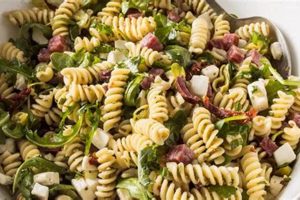
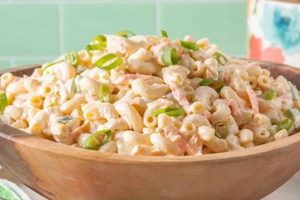
A chilled dish featuring cooked pasta, flaked crab, and often a variety of vegetables, herbs, and a creamy or vinaigrette-based dressing. Common additions include celery, bell peppers, red onion, and fresh parsley or dill. Mayonnaise, sour cream, lemon juice, and Dijon mustard are frequent components of the dressing. Variations can incorporate different pasta shapes, seasonings, and protein additions like shrimp or imitation crab.
This type of dish offers a refreshing and flavorful meal, particularly suited for warm weather or casual gatherings. It’s a versatile option, adaptable to different dietary needs and preferences by adjusting the ingredients. The high protein content of the crab combined with the carbohydrates in the pasta provides a satisfying and nutritionally balanced meal. Historically, combining seafood with pasta and vegetables has been a culinary tradition in coastal regions worldwide, evolving into numerous regional variations.
The subsequent sections will explore specific ingredient selections, preparation techniques, dressing variations, and serving suggestions to create delectable versions of this classic dish. Nutritional information and potential ingredient substitutions will also be addressed.
Tips for a Superior Crab and Pasta Salad
Elevating a simple crab and pasta salad to an extraordinary culinary experience involves attention to detail and thoughtful ingredient selection. The following tips offer guidance for achieving optimal flavor and texture.
Tip 1: Prioritize Fresh, High-Quality Crab Meat. Fresh crab meat, whether lump, claw, or backfin, contributes significantly to the overall flavor. If fresh crab is unavailable, pasteurized or canned crab meat offers viable alternatives. Ensure any canned crab is thoroughly drained and flaked.
Tip 2: Cook Pasta Al Dente. Slightly firm pasta holds its shape better in the salad and prevents a mushy texture. Rinse cooked pasta under cold water to stop the cooking process and cool it down quickly.
Tip 3: Embrace a Variety of Vegetables. Beyond the standard celery and onion, consider incorporating chopped bell peppers, cherry tomatoes, blanched asparagus, or shredded carrots for added color, texture, and nutritional value.
Tip 4: Balance Flavors in the Dressing. A well-balanced dressing complements the crab and other ingredients without overpowering them. Consider a combination of mayonnaise, Dijon mustard, lemon juice, and a touch of sweetness, adjusting ratios to suit individual preferences.
Tip 5: Season Thoughtfully. Fresh herbs like dill, parsley, and chives enhance the flavors of the salad. Seasoning with salt, black pepper, and a pinch of cayenne pepper or paprika adds complexity.
Tip 6: Chill Thoroughly Before Serving. Chilling allows the flavors to meld and enhances the refreshing quality of the salad. Refrigerate for at least 30 minutes before serving.
Tip 7: Consider Presentation. Serve the salad in an attractive bowl or platter. Garnish with fresh herbs, lemon wedges, or a sprinkle of paprika for visual appeal.
By following these guidelines, one can create a crab and pasta salad that is not only delicious but also visually appealing and texturally satisfying.
The following section will provide a selection of recipe variations to inspire culinary creativity.
1. Fresh, High-Quality Crab Meat

The foundation of a superior crab and pasta salad rests upon the selection of crab meat. Fresh, high-quality crab contributes significantly to the overall flavor profile and culinary experience, differentiating an ordinary salad from an exceptional one. Understanding the nuances of crab meat selection is essential for achieving optimal results.
- Type of Crab Meat
Different types of crab meat offer varying textures and flavor intensities. Lump crab meat, prized for its delicate flavor and large chunks, is ideal for showcasing the crab’s inherent sweetness. Claw meat, with its firmer texture and briny flavor, provides a robust counterpoint. Backfin, a blend of smaller pieces, offers a versatile and economical option.
- Indicators of Freshness
Fresh crab meat exhibits a bright, clean aroma reminiscent of the sea. It should appear moist and opaque, with a firm yet delicate texture. Avoid crab meat that appears dry, discolored, or has a strong, fishy odor. Sourcing crab from reputable fishmongers or seafood markets ensures optimal quality and freshness.
- Impact on Flavor
The inherent sweetness and delicate flavor of fresh, high-quality crab meat shine through in a well-executed pasta salad. The crab’s flavor should complement, not compete with, the other ingredients. A clean, fresh crab flavor elevates the overall taste experience, providing a nuanced and satisfying culinary profile.
- Alternatives to Fresh Crab Meat
While fresh crab meat represents the ideal, pasteurized or canned crab meat offers accessible alternatives. When using canned crab, opt for reputable brands and ensure thorough draining to remove excess liquid. Pasteurized crab meat provides a convenient option with an extended shelf life.
The quality of crab meat directly impacts the overall success of the dish. Selecting fresh, high-quality crab, or a suitable alternative, establishes a foundation for a flavorful and memorable crab and pasta salad. This careful consideration enhances the culinary experience and showcases the delicate nuances of this versatile ingredient.
2. Perfectly Cooked Pasta
Pasta, a seemingly simple ingredient, plays a crucial role in a crab and pasta salad. Its texture significantly influences the overall enjoyment of the dish. Achieving perfectly cooked pasta is essential for creating a salad that is both flavorful and appealing.
- Al Dente Texture: The Gold Standard
Al dente, Italian for “to the tooth,” describes pasta cooked until firm to the bite. This texture provides a pleasant chewiness and prevents the pasta from becoming mushy when combined with the other ingredients. Overcooked pasta absorbs excess dressing, resulting in a heavy, less appealing salad. Conversely, undercooked pasta offers an unpleasant, tough texture. Al dente pasta offers the ideal balance, maintaining its structure and integrity within the salad.
- Pasta Shape Selection: Enhancing Visual and Textural Appeal
The choice of pasta shape contributes to both the visual appeal and the overall eating experience. Small, tubular shapes like rotini, fusilli, or penne hold the dressing well and create textural interest. Larger shapes, such as farfalle (bowtie) or shells, offer a different visual element. Avoid long, thin pasta like spaghetti or linguine, which can become tangled and difficult to eat in a salad format.
- Cooling and Rinsing: Preserving Texture and Preventing Sticking
Once cooked, immediately rinsing the pasta under cold water halts the cooking process and removes excess starch. This prevents the pasta from sticking together and helps maintain its al dente texture. Cooling the pasta also ensures that it does not warm the other salad ingredients, particularly crucial for maintaining the freshness of the crab meat.
- Impact on Flavor and Dressing Absorption
Properly cooked pasta absorbs the dressing evenly, allowing the flavors to meld without becoming soggy. Al dente pasta provides a neutral canvas for the other ingredients, allowing the flavors of the crab, vegetables, and dressing to shine through. Overcooked pasta, on the other hand, tends to absorb excessive dressing, diluting the overall flavor profile.
The texture and quality of the pasta significantly influence the overall success of a crab and pasta salad. By selecting an appropriate shape and cooking it al dente, one ensures a pleasant textural experience. Proper cooling and rinsing maintain the pasta’s integrity, allowing it to absorb the dressing evenly and showcase the flavors of the other ingredients. This attention to detail elevates the dish from a simple salad to a carefully composed culinary creation.
3. Complementary Vegetables
The success of a crab and pasta salad hinges not only on the quality of the crab and pasta but also on the judicious selection of complementary vegetables. These vegetables contribute texture, color, and flavor, enhancing the overall sensory experience. Careful consideration of vegetable choices elevates the dish from simple to sophisticated.
- Textural Contrast
Vegetables introduce textural variety, counterbalancing the softness of the crab and the chewiness of the pasta. Crisp vegetables like celery, bell peppers, and red onion provide a satisfying crunch. Blanched or roasted vegetables, such as asparagus or green beans, offer a tender yet firm contrast. This interplay of textures creates a more dynamic and enjoyable eating experience.
- Flavor Enhancement
Certain vegetables possess flavors that complement the delicate sweetness of crab meat. Celery, with its subtle bitterness, provides a balancing counterpoint. Red onion adds a sharp, pungent note. Sweetcorn introduces a touch of natural sweetness. The judicious combination of these flavors creates a complex and well-rounded flavor profile.
- Visual Appeal
Vibrant vegetables enhance the visual appeal of the salad, making it more enticing. Bright red bell peppers, deep green cucumbers, and sunny yellow corn kernels create a visually appealing tapestry of colors. This visual element contributes significantly to the overall enjoyment of the dish, stimulating the appetite and enhancing the dining experience.
- Nutritional Value
Incorporating a variety of vegetables increases the nutritional value of the crab and pasta salad. Vegetables provide essential vitamins, minerals, and dietary fiber. This nutritional boost transforms the dish into a more wholesome and balanced meal, adding health benefits to its culinary appeal.
The strategic incorporation of complementary vegetables elevates the crab and pasta salad from a basic dish to a culinary masterpiece. By considering the textural contrast, flavor enhancement, visual appeal, and nutritional value that vegetables provide, one can create a salad that is not only delicious but also visually stunning and nutritionally balanced. This attention to detail distinguishes a truly exceptional crab and pasta salad.
4. Balanced, Flavorful Dressing

A balanced, flavorful dressing is paramount to a successful crab and pasta salad recipe. The dressing serves as the unifying element, binding the individual components and harmonizing their flavors. It should complement the delicate sweetness of the crab meat, the subtle flavors of the vegetables, and the neutral base of the pasta, without overpowering any single ingredient. A dressing that is too acidic, too sweet, or too rich can detract from the overall balance and diminish the enjoyment of the salad.
Consider a classic mayonnaise-based dressing. The richness of the mayonnaise provides a creamy texture that coats the pasta and crab, while a touch of acidity from lemon juice or vinegar cuts through the richness and brightens the flavors. Dijon mustard adds a subtle tang and complexity, while a hint of sweetness from sugar or honey balances the savory notes. Fresh herbs, such as dill, parsley, or chives, contribute freshness and aromatic complexity. Alternatively, a vinaigrette dressing offers a lighter, brighter option. A simple combination of olive oil, lemon juice, and herbs provides a refreshing counterpoint to the richness of the crab. The balance of oil and acid in the vinaigrette is crucial; too much oil can create a greasy texture, while too much acid can make the dressing overly tart. A well-balanced vinaigrette enhances the flavors of the other ingredients without masking their delicate nuances.
Achieving a balanced dressing requires careful consideration of flavor profiles and ingredient ratios. The dressing should enhance, not overwhelm, the other components of the salad. It’s a delicate balancing act, but one that is essential for creating a truly exceptional crab and pasta salad. A well-executed dressing transforms individual ingredients into a cohesive and harmonious culinary creation, elevating the dish from simple to sublime.
5. Appropriate Seasoning
Appropriate seasoning is integral to a successful crab and pasta salad recipe. It elevates the inherent flavors of the crab, vegetables, and dressing, transforming a simple mixture into a cohesive, flavorful dish. Seasoning not only enhances taste but also adds depth and complexity, crucial for a well-rounded culinary experience. The absence of proper seasoning can result in a bland, uninspired salad, regardless of the quality of the ingredients.
Consider the delicate sweetness of crab meat. A pinch of sea salt amplifies this natural sweetness without masking it. Freshly ground black pepper adds a subtle bite, contrasting the crab’s delicate flavor. A hint of Old Bay seasoning, with its blend of celery salt, paprika, and other spices, complements the seafood notes. Fresh herbs, such as dill, parsley, or chives, contribute brightness and aromatic complexity. Lemon zest introduces a citrusy aroma that enhances the overall freshness. The key lies in using these seasonings judiciously, allowing the inherent flavors of the ingredients to shine through while adding depth and complexity.
A common pitfall is over-seasoning, which can mask the delicate flavors of the crab and other ingredients. A light hand and gradual incorporation of seasonings, tasting throughout the process, allows for adjustments and prevents an imbalance. Additionally, the timing of seasoning is crucial. Adding salt to the pasta water seasons the pasta itself, creating a foundation of flavor. Seasoning the dressing separately ensures even distribution throughout the salad. A final sprinkle of fresh herbs or a dusting of paprika before serving adds a finishing touch. Appropriate seasoning, therefore, involves not only selecting the right seasonings but also understanding their impact and applying them strategically throughout the preparation process. This careful attention to detail distinguishes an ordinary crab and pasta salad from a truly exceptional one.
6. Proper Chilling and Presentation
Proper chilling and presentation are essential final steps in a crab and pasta salad recipe, significantly impacting both food safety and sensory experience. Chilling allows the flavors to meld and develop fully. A minimum of 30 minutes in the refrigerator allows the dressing to permeate the pasta and other ingredients, creating a more cohesive and flavorful dish. More importantly, adequate chilling ensures food safety, particularly crucial with seafood. Maintaining a temperature below 40F (4C) inhibits bacterial growth, preventing spoilage and potential foodborne illness. A salad left at room temperature for an extended period poses a significant health risk.
Presentation elevates the dining experience, transforming a simple dish into a visually appealing culinary creation. Choosing an attractive serving bowl or platter enhances the salad’s aesthetic appeal. Garnishing with fresh herbs, such as dill or parsley sprigs, adds a touch of elegance and reinforces the fresh flavors. Lemon wedges provide a pop of color and offer an additional layer of flavor. A sprinkle of paprika or a dusting of Old Bay seasoning enhances visual interest. Consider the context: a casual gathering might call for a rustic presentation in a large bowl, while a more formal occasion might warrant individual portions plated artfully. Thoughtful presentation demonstrates care and attention to detail, enhancing the perceived value and enjoyment of the dish.
Chilling and presentation, therefore, represent critical final steps in a crab and pasta salad recipe. Proper chilling safeguards against bacterial growth, ensuring food safety. Thoughtful presentation elevates the dining experience, transforming a simple salad into a visually appealing and flavorful dish. These elements, while often overlooked, contribute significantly to the overall success and enjoyment of the crab and pasta salad. Neglecting these final touches can compromise both safety and sensory appeal, diminishing the overall culinary experience. Attention to these details demonstrates a commitment to quality and enhances the enjoyment for all who partake.
Frequently Asked Questions
This section addresses common inquiries regarding crab and pasta salad preparation, offering concise and informative responses to ensure optimal results and address potential concerns.
Question 1: What is the best type of crab meat to use?
While fresh lump crab meat is ideal for its delicate flavor and texture, pasteurized or canned crab meat provides suitable alternatives. Canned crab should be thoroughly drained before use. Imitation crab meat is discouraged due to its significantly different flavor profile.
Question 2: How can one prevent the pasta from becoming mushy?
Cooking the pasta al dente, or firm to the bite, is crucial. Immediately rinsing the cooked pasta under cold water stops the cooking process and removes excess starch, preventing stickiness and mushiness.
Question 3: What vegetables pair well with crab and pasta salad?
Celery, bell peppers, red onion, and cherry tomatoes are classic choices. Other complementary options include blanched asparagus, chopped cucumbers, or shredded carrots. The choice of vegetables can be adjusted based on personal preference and dietary considerations.
Question 4: Can the dressing be made ahead of time?
The dressing can be prepared a day in advance and stored separately in an airtight container in the refrigerator. This allows the flavors to meld and intensifies the overall taste. Add the dressing to the salad just before serving to prevent the pasta and vegetables from becoming soggy.
Question 5: How long can crab and pasta salad be stored?
Refrigerate promptly in an airtight container. Consume within three days for optimal quality and food safety. Do not leave the salad at room temperature for extended periods, especially in warm environments, as this can promote bacterial growth.
Question 6: Can this recipe be adapted for different dietary needs?
The recipe is adaptable. Gluten-free pasta can be substituted for traditional pasta. Dairy-free mayonnaise or a vinaigrette dressing accommodates lactose intolerance. Adjustments to vegetable and seasoning choices can cater to individual preferences and dietary restrictions.
Addressing these common inquiries enhances understanding of crab and pasta salad preparation. Adherence to food safety guidelines and careful consideration of ingredient selection contribute to a safe and enjoyable culinary experience.
The following section provides a complete recipe with specific ingredient quantities and step-by-step instructions.
Crab Meat and Pasta Salad Recipe
Exploration of crab meat and pasta salad recipes reveals a dish offering versatility and culinary potential. Careful selection of fresh, high-quality ingredients, including crab meat, pasta, and complementary vegetables, forms the foundation for a successful outcome. Proper cooking techniques, such as achieving al dente pasta, contribute significantly to textural appeal. A balanced and flavorful dressing, whether mayonnaise-based or a vinaigrette, unifies the components, while appropriate seasoning enhances the inherent flavors. Proper chilling and thoughtful presentation elevate the dish from simple fare to a carefully composed culinary creation. Addressing food safety concerns through proper refrigeration and prompt consumption ensures a safe and enjoyable dining experience. Adaptability to dietary restrictions further enhances the appeal of this versatile dish.
Crab meat and pasta salad represents more than a mere combination of ingredients; it embodies a culinary synergy where individual components harmonize to create a balanced and flavorful whole. Potential for customization allows for endless variations, encouraging culinary creativity and exploration. This dish, suitable for casual gatherings or elegant occasions, offers a refreshing and satisfying culinary experience, highlighting the versatility and appeal of combining simple ingredients into a sophisticated and enjoyable meal.