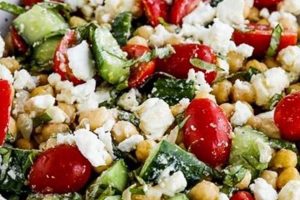
A quintessential Mediterranean dish, this salad typically combines fresh, ripe tomatoes, cucumbers, red onion, Kalamata olives, and a generous block of feta cheese, dressed with olive oil, oregano, and sometimes a splash of red wine vinegar. Variations may include other ingredients like bell peppers, capers, or fresh herbs such as mint or dill. An example would be a combination of chopped romaine lettuce, tomatoes, cucumbers, red onion, Kalamata olives, and crumbled feta, dressed simply with olive oil, lemon juice, oregano, and salt and pepper.
The dish exemplifies the Mediterranean diet’s emphasis on fresh, whole ingredients and healthy fats. The combination of vibrant vegetables offers essential vitamins and antioxidants, while the olive oil provides heart-healthy monounsaturated fats. Feta, a brined cheese, contributes a salty, tangy flavor and a source of calcium and protein. Its historical roots likely trace back to ancient Greece, evolving over time to become a staple in various regional cuisines.
This foundational understanding sets the stage for exploring specific variations, ingredient selection, preparation techniques, and potential health benefits in greater detail. Further discussion might include topics such as sourcing high-quality feta, balancing flavors through the dressing, or adapting the recipe for different dietary needs.
Tips for a Superior Salad
Optimizing ingredient selection and preparation techniques elevates this simple salad to a culinary experience.
Tip 1: Use High-Quality Feta: Opt for authentic Greek feta made from sheep’s milk or a blend of sheep and goat milk. This ensures the characteristic tangy flavor and creamy texture crucial for an authentic experience. Avoid pre-crumbled feta, as it tends to be drier.
Tip 2: Prioritize Ripe, Seasonal Produce: Peak-season tomatoes and cucumbers offer the best flavor and juiciness. Look for firm, fragrant tomatoes and cucumbers with smooth skin.
Tip 3: Employ Proper Cutting Techniques: Uniformly sized pieces ensure even distribution of flavor and a pleasing presentation. Dice cucumbers and tomatoes into similar-sized chunks and thinly slice the red onion to mitigate its pungency.
Tip 4: Don’t Overdress: A light touch prevents the salad from becoming soggy. Drizzle the dressing over the salad just before serving. Toss gently to coat.
Tip 5: Consider Kalamata Olives: These dark, briny olives contribute a rich, salty flavor that complements the feta. Ensure they are pitted for ease of consumption.
Tip 6: Experiment with Fresh Herbs: A sprinkle of fresh oregano, mint, or dill adds a bright, aromatic dimension. Chop the herbs finely to release their flavor.
Tip 7: Allow the Flavors to Meld: While optional, allowing the salad to rest briefly after dressing allows the flavors to meld and intensify.
By focusing on quality ingredients and mindful preparation, one can create a vibrant and flavorful dish that exemplifies the best of Mediterranean cuisine.
These tips offer a pathway to maximizing enjoyment and nutritional benefits. Further exploration of specific recipe variations and serving suggestions can enhance appreciation for this versatile dish.
1. High-quality Feta
High-quality feta cheese is integral to an authentic and flavorful Greek salad. The cheese’s unique characteristics significantly impact the overall sensory experience. Authentic Greek feta, traditionally made from sheep’s milk or a blend of sheep and goat milk, possesses a distinct tangy, salty flavor and a creamy, slightly crumbly texture. These attributes are essential for balancing the other fresh ingredients in the salad, such as ripe tomatoes, cucumbers, and olives. Substituting lower-quality feta, often made from cow’s milk and processed differently, results in a blander, less nuanced flavor profile and a denser, less desirable texture. For example, a Greek salad made with a high-quality sheep’s milk feta offers a complex interplay of salty, tangy, and creamy notes, while a salad made with a cow’s milk feta may lack the characteristic tang and possess a rubbery texture. This difference profoundly affects the overall enjoyment of the dish.
The production method further distinguishes high-quality feta. Traditional methods involve aging the cheese in brine for several weeks, contributing to its characteristic salty flavor and moist texture. This brining process also acts as a natural preservative. Industrially produced feta often undergoes a shorter brining period and may contain additives, compromising both flavor and texture. Consider a comparison between a Greek salad featuring feta aged in brine for two months versus a salad with feta aged for a few days. The former exhibits a deeper, more complex salinity and a smoother texture, whereas the latter may taste blander and feel drier. The impact of these nuances underscores the significance of feta selection in achieving an authentic culinary experience.
Ultimately, the choice of feta directly impacts the overall quality and authenticity of a Greek salad. Investing in high-quality feta, identifiable by its creamy white color, slightly crumbly texture, and distinct tangy aroma, ensures a genuinely flavorful and enjoyable dish. Recognizing the characteristics of authentic feta allows consumers to make informed decisions, enhancing their appreciation for this classic Mediterranean salad. While other ingredients contribute to the overall composition, the feta acts as a cornerstone, its quality inextricably linked to the overall sensory experience.
2. Fresh, Ripe Produce

The emphasis on fresh, ripe produce is paramount in a feta cheese Greek salad recipe. The salad’s success hinges on the quality and seasonality of its vegetable components, which provide a foundation of flavor and texture. Subpar or out-of-season produce compromises the dish’s vibrancy and overall culinary experience.
- Tomatoes:
Ripe, juicy tomatoes contribute sweetness and a burst of umami. Locally sourced, in-season tomatoes offer superior flavor compared to bland, commercially grown varieties available year-round. Examples include heirloom tomatoes, which provide a complex sweetness, or vine-ripened tomatoes known for their juiciness. The tomato’s texture, ranging from firm to slightly soft depending on ripeness, complements the creamy feta and crisp cucumbers.
- Cucumbers:
Cucumbers provide a refreshing crunch and a subtle, cooling flavor that balances the richness of the feta and olives. Seedless varieties like English or Persian cucumbers offer a less watery, more delicate flavor profile. Their crisp texture contrasts with the other ingredients, contributing to the salad’s textural complexity. Overly mature cucumbers with large seeds can introduce bitterness and detract from the overall experience.
- Onions:
Red onion, with its sharp, pungent flavor, adds a piquant note to the salad. Thinly slicing the onion mitigates its intensity, allowing its flavor to integrate harmoniously with the other ingredients. Alternatives such as milder sweet onions or shallots can be substituted for a less assertive flavor profile. The onion’s texture, ranging from crisp to slightly softened depending on the cut and preparation, adds another layer of complexity.
- Other Vegetables:
While not traditional, additions such as bell peppers (green, red, or yellow) can introduce sweetness, color, and varied textures. These additions should complement, not overshadow, the core ingredients. For example, incorporating roasted red peppers can offer a smoky sweetness, while green bell peppers contribute a vegetal crispness. The selection and preparation of these additional vegetables significantly influence the final flavor profile.
The interplay of these fresh, ripe vegetables forms the base of a successful feta cheese Greek salad. Their individual flavors and textures combine to create a harmonious balance of sweet, salty, tangy, and crisp elements. Prioritizing quality and seasonality ensures an optimal sensory experience, highlighting the simplicity and freshness that define this classic Mediterranean dish.
3. Simple Vinaigrette

A simple vinaigrette plays a crucial role in a feta cheese Greek salad recipe, acting as a unifying element that enhances and balances the flavors of the other ingredients. Rather than masking the fresh flavors of the tomatoes, cucumbers, onions, and feta, a well-executed vinaigrette complements their individual characteristics while adding a bright, acidic counterpoint to the richness of the cheese and olives. The vinaigrette’s simplicity is key; an overly complex or heavy dressing can detract from the salad’s inherent freshness. For example, a vinaigrette composed simply of extra virgin olive oil, lemon juice, dried oregano, salt, and pepper allows the flavors of the fresh produce and feta to shine through, while a creamy or heavily herbed dressing might overpower these delicate flavors.
The balance of acidity and oil in the vinaigrette is critical. Too much acidity can make the salad taste sharp, while too little can result in a bland, oily mouthfeel. The quality of the olive oil also significantly impacts the vinaigrette’s flavor. A high-quality extra virgin olive oil contributes a fruity, peppery flavor that enhances the overall sensory experience, whereas a lower-quality oil may introduce undesirable flavors. For instance, a vinaigrette made with a robust, peppery extra virgin olive oil and fresh lemon juice provides a vibrant, balanced flavor profile that complements the salad’s ingredients, while a vinaigrette made with a bland oil and bottled lemon juice may fall flat. The emulsification of the oil and acid, achieved through whisking or shaking, creates a harmonious texture that coats the salad ingredients evenly, ensuring a consistent flavor experience in each bite.
In conclusion, the simple vinaigrette serves as a critical component of a successful feta cheese Greek salad recipe. Its carefully balanced acidity, high-quality olive oil, and simple preparation enhance the natural flavors of the fresh ingredients, creating a cohesive and refreshing culinary experience. Understanding the vinaigrette’s role and mastering its preparation elevates the dish from a simple combination of ingredients to a harmonious symphony of flavors and textures. This understanding allows for informed adaptations and variations, catering to individual preferences while preserving the essence of this classic Mediterranean salad.
4. Kalamata Olives
Kalamata olives represent a crucial component of a feta cheese Greek salad recipe, contributing a distinct flavor profile and textural element that complements the other ingredients. Their presence elevates the salad beyond a simple combination of vegetables and cheese, adding a layer of complexity that defines its authentic Mediterranean character. Understanding their role and characteristics enhances appreciation for this classic dish.
- Flavor Profile
Kalamata olives possess a rich, briny, and slightly fruity flavor. This distinct taste, derived from their unique curing process, provides a savory counterpoint to the creamy feta and fresh vegetables. Their inherent saltiness also reduces the need for added salt in the vinaigrette, promoting a healthier balance of flavors.
- Texture and Appearance
Kalamata olives offer a firm, meaty texture that contrasts with the crispness of the cucumbers and the crumbly nature of the feta cheese. Their dark purple, almost black, color adds visual appeal to the salad, enhancing its overall presentation. The smooth, oblong shape of the olives provides a pleasing tactile experience.
- Nutritional Value
Beyond their flavor and textural contributions, Kalamata olives offer nutritional benefits. They are a source of healthy monounsaturated fats, antioxidants, and iron. Their inclusion aligns with the Mediterranean diet’s emphasis on nutrient-rich whole foods, further enhancing the salad’s healthfulness.
- Cultural Significance
Kalamata olives, named after the city of Kalamata in Greece, hold cultural significance within Greek cuisine. Their inclusion in the salad reinforces its authenticity and connection to Mediterranean culinary traditions. This historical context adds depth and meaning to the dish, elevating it beyond a mere combination of ingredients.
The combination of these facetsflavor, texture, nutrition, and cultural significancesolidifies the Kalamata olive’s essential role in a feta cheese Greek salad recipe. Their presence elevates the dish from a simple salad to a vibrant, complex, and authentically Mediterranean culinary experience. Understanding these contributions enhances appreciation for the carefully balanced interplay of ingredients that defines this classic dish and allows for informed substitutions or adaptations while preserving its essence.
5. Optional additions
While a traditional feta cheese Greek salad emphasizes simplicity, optional additions can enhance its flavor profile and nutritional value without compromising its essential character. These additions offer opportunities for personalization and creativity, allowing for adaptations based on individual preferences and seasonal availability. Understanding their potential impact ensures these additions complement, rather than detract from, the salad’s core elements.
- Fresh Herbs
Fresh herbs introduce aromatic complexity and visual appeal. Dill, mint, or parsley, finely chopped, contribute bright, herbaceous notes that complement the other ingredients. For example, dill offers a slightly tangy, anise-like flavor that pairs well with feta, while mint provides a refreshing coolness. The choice of herbs can reflect personal preference or regional variations, further enhancing the salad’s character. Overuse, however, can overpower the delicate balance of flavors, so moderation is key.
- Capers
Capers, the unopened flower buds of the caper bush, provide a burst of salty, briny flavor that complements the olives and feta. Their piquant taste adds a layer of complexity, enhancing the overall sensory experience. A small quantity suffices, as their intense flavor can easily dominate. For example, a teaspoon of capers adds a noticeable briny pop without overpowering the other ingredients. Their small, dark appearance also offers visual contrast against the other ingredients.
- Bell Peppers
Bell peppers, available in various colors, contribute sweetness, crunch, and visual interest. Green bell peppers offer a slightly vegetal flavor, while red and yellow varieties provide a sweeter profile. Their crisp texture adds another dimension to the salad’s mouthfeel. For example, incorporating diced red bell pepper introduces both sweetness and color. However, excessive use can shift the flavor balance and dilute the impact of the core ingredients.
- Lettuce
While not traditionally included, adding crisp lettuce such as romaine or butter lettuce can provide a bed for the other ingredients and add volume to the salad. This addition can be particularly appealing for those seeking a larger, more substantial salad. The lettuce’s neutral flavor does not detract from the core ingredients but offers a textural contrast and enhances the visual presentation.
These optional additions offer a pathway to personalize the feta cheese Greek salad recipe while preserving its fundamental character. Judicious selection and mindful incorporation of these elements can enhance flavor, texture, and nutritional value, creating a more complex and satisfying culinary experience. However, respecting the salad’s inherent simplicity remains paramount. The focus should remain on the high-quality core ingredientsfeta, tomatoes, cucumbers, onions, and olivesallowing the optional additions to play a supporting role, enhancing rather than overshadowing the essential flavors.
Frequently Asked Questions
This section addresses common inquiries regarding the preparation and enjoyment of a feta cheese Greek salad.
Question 1: Can other cheeses be substituted for feta?
While substitutions are possible, they fundamentally alter the dish’s authentic character. Feta’s distinct salty, tangy flavor and creamy texture are essential to the salad’s profile. Other cheeses may not provide the same flavor balance or textural interplay.
Question 2: What type of olive oil is recommended?
Extra virgin olive oil is preferred for its robust flavor and health benefits. Its fruity, peppery notes complement the other ingredients and contribute to the salad’s overall sensory experience. Lower-quality olive oils may lack these desirable characteristics.
Question 3: Should the feta be crumbled or served as a block?
A block of feta, placed atop the salad, offers a more traditional presentation and allows individuals to appreciate the cheese’s texture. Crumbling the feta distributes its flavor more evenly but may result in a drier texture.
Question 4: How long can the salad be stored?
Refrigeration is recommended for no more than 24 hours. Longer storage may lead to textural changes and loss of flavor. Ideally, the salad is consumed fresh to maximize its vibrancy and nutritional value.
Question 5: Can the salad be prepared in advance?
While the components can be chopped ahead of time, the salad is best assembled just before serving. This prevents the vegetables from becoming soggy and maintains their crisp texture. The dressing should also be added immediately before serving to prevent overdressing.
Question 6: Are there variations on the traditional recipe?
Numerous regional variations exist, incorporating ingredients such as capers, bell peppers, or different herbs. These variations demonstrate the salad’s adaptability while preserving its core elements of fresh produce, feta cheese, and a simple vinaigrette.
Understanding these aspects ensures optimal preparation and enjoyment. Further exploration of specific recipe variations and serving suggestions can deepen appreciation for this versatile and flavorful dish.
This FAQ section offers practical guidance for navigating common questions. A deeper understanding of these points empowers one to fully appreciate and successfully recreate this iconic Mediterranean salad.
Conclusion
Exploration of the elements comprising a feta cheese Greek salad recipe reveals the importance of ingredient quality and careful preparation. From the selection of authentic feta to the balance of acidity in the vinaigrette, each component contributes to the final dish’s overall sensory experience. Prioritizing fresh, ripe produce and understanding the role of Kalamata olives further enhances appreciation for this classic Mediterranean salad. Optional additions offer opportunities for personalization while maintaining the dish’s core identity.
The enduring popularity of this deceptively simple salad underscores its versatility and timeless appeal. Continued exploration of regional variations and adaptations promises further culinary discoveries, ensuring the feta cheese Greek salad remains a vibrant and celebrated element of global cuisine.