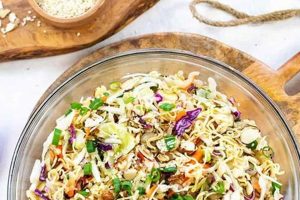
This dish typically involves using dried ramen noodles (often discarding the flavor packet), which are crushed and then crisped up through various methods such as frying, baking, or even microwaving. These crunchy noodles then provide a textural base for a salad featuring a variety of vegetables, often in a slaw-like format. Common ingredients include shredded cabbage, carrots, and bell peppers, often combined with other vegetables like edamame, snap peas, or shredded red onion. A vibrant dressing, often Asian-inspired with flavors like soy sauce, sesame oil, rice vinegar, and ginger, ties the ingredients together.
The popularity of this type of salad stems from several factors. The crispy noodles offer a satisfying crunch, contrasting with the fresh vegetables. The adaptability of the dish allows for diverse flavor profiles and ingredient combinations, catering to various dietary preferences and seasonal produce availability. It’s also generally quick to prepare, making it an ideal option for a light meal or side dish. This style of salad also represents a modern evolution of classic noodle salads, demonstrating the versatility of ramen beyond its traditional preparation.
Further exploration of this culinary concept will delve into specific recipes, variations in dressing options, techniques for achieving optimal noodle crispness, and creative adaptations for diverse dietary needs.
Tips for Crafting the Perfect Ramen Noodle Salad Slaw
Elevating this simple dish to culinary excellence involves attention to detail and thoughtful preparation. The following tips offer guidance for creating a truly exceptional salad.
Tip 1: Noodle Preparation is Key: Achieving optimal noodle crispness is paramount. Methods include pan-frying in oil until golden brown, baking on a sheet pan, or even microwaving between paper towels. Experiment to find the preferred method for desired texture.
Tip 2: Flavorful Dressing is Essential: The dressing binds the salad and imparts significant flavor. A balance of sweet, sour, salty, and umami elements is recommended. Consider using ingredients like rice vinegar, soy sauce, sesame oil, ginger, and a touch of honey or maple syrup.
Tip 3: Fresh, High-Quality Ingredients Matter: Select fresh, crisp vegetables for optimal flavor and texture. Pre-shredded vegetables can save time, but freshly shredded vegetables often offer superior quality.
Tip 4: Embrace Variety: Explore beyond basic cabbage and carrots. Consider incorporating shredded red onion, bell peppers, snap peas, edamame, cilantro, or shredded rotisserie chicken for added protein.
Tip 5: Balance Texture and Flavor: The crunchy noodles provide a delightful contrast to the fresh vegetables. Consider adding toasted sesame seeds, chopped peanuts, or slivered almonds for additional textural complexity.
Tip 6: Don’t Overdress: Add the dressing just before serving to prevent the noodles from becoming soggy and the vegetables from wilting. Start with a smaller amount of dressing and add more as needed.
Tip 7: Make it Your Own: This salad is incredibly versatile. Adapt the ingredients and dressing to personal preferences and dietary needs. Explore different flavor profiles, such as Thai-inspired with peanut sauce, or a spicy Korean-inspired version with gochujang.
By focusing on these tips, one can transform simple ingredients into a vibrant and satisfying salad experience. Attention to detail, from noodle preparation to dressing selection, contributes to a truly exceptional dish.
With these foundational elements established, the subsequent sections will delve into specific recipe variations and explore the creative possibilities of this versatile salad further.
1. Crispy Noodles

Crispy noodles constitute a defining characteristic of this salad, contributing significantly to its appeal and overall success. Their presence offers a crucial textural counterpoint to the fresh, often crisp vegetables. The interplay of textures elevates the sensory experience, distinguishing the salad from traditional slaw or vegetable-based dishes. Without the crunchy noodles, the dish loses its defining element and becomes a simpler, less dynamic salad. Consider the contrast between a standard coleslaw and one incorporating crispy ramen noodles: the latter offers a heightened textural complexity and a more substantial, satisfying mouthfeel.
The method employed to achieve crispness influences the final flavor profile and texture. Pan-frying results in a richer, slightly browned noodle with a robust flavor, while baking produces a lighter, more delicate crunch. Even microwaving, though less conventional, can create a satisfactory level of crispness for those seeking a faster preparation method. The choice of oil used for frying or any seasonings added during baking further personalize the noodle component, allowing for nuanced flavor adjustments tailored to individual preferences or recipe variations. For example, using sesame oil for frying can impart subtle nutty notes, enhancing the overall Asian-inspired flavor profile.
Achieving optimal crispness is paramount. Noodles that are insufficiently crisped can become soggy when combined with the dressing and vegetables, detracting from the desired textural contrast. Conversely, over-crisping can result in a brittle, almost burnt flavor. The ideal crispy noodle offers a distinct crunch that persists even after being tossed with the other ingredients. Mastering the art of noodle crisping is fundamental to mastering the art of this salad. Understanding the nuances of different crisping methods and their impact on texture and flavor allows for consistent and successful results, ensuring a delightful and satisfying culinary experience.
2. Vibrant Vegetables
The success of a ramen noodle salad slaw hinges significantly on the selection and preparation of its vegetable components. These elements contribute not only crucial nutrients and textural variety but also vibrant color and fresh flavors that balance the richness of the noodles and dressing. The strategic incorporation of various vegetables elevates this dish from a simple noodle salad to a complex and satisfying meal.
- Color and Visual Appeal
Vibrant vegetables contribute significantly to the aesthetic appeal of the dish. A mix of colorsthe deep green of shredded cabbage, the bright orange of carrots, the fiery red of bell pepperscreates visual interest and enhances the dining experience. This visual appeal plays a psychological role, stimulating appetite and contributing to the overall perception of freshness and flavor.
- Nutritional Value
Incorporating a variety of vegetables ensures a broader spectrum of vitamins, minerals, and dietary fiber. Cabbage, for instance, offers vitamin K and vitamin C, while carrots provide beta-carotene. This nutritional density transforms the dish from a simple indulgence into a more healthful meal option.
- Textural Variety
Different vegetables offer diverse textures that complement the crunch of the noodles. The crispness of shredded cabbage contrasts with the softer texture of julienned carrots, creating a more dynamic mouthfeel. This interplay of textures enhances enjoyment and adds complexity to each bite.
- Flavor Balance
The freshness and subtle sweetness of vegetables provide a counterpoint to the often savory and umami-rich dressing and the saltiness of the noodles. This balance prevents the dish from becoming overly rich or one-dimensional, creating a more harmonious flavor profile. For example, the slight bitterness of shredded red cabbage balances the sweetness of a dressing containing honey or maple syrup.
The careful selection and preparation of vibrant vegetables are integral to a successful ramen noodle salad slaw. They contribute to visual appeal, nutritional value, textural complexity, and flavor balance, ultimately transforming the dish into a more complete and satisfying culinary experience. The interplay between these vegetable elements and the other componentsthe crispy noodles and flavorful dressingdefines the character of this versatile and popular dish.
3. Flavorful Dressing
The dressing in a ramen noodle salad slaw serves as the unifying element, binding the diverse components and imbuing the dish with its characteristic flavor profile. More than a simple condiment, the dressing elevates the salad beyond its individual ingredients, transforming it into a cohesive and flavorful experience. The careful consideration and preparation of the dressing are therefore crucial to the overall success of the dish.
- Balance of Flavors
A successful dressing achieves a harmonious balance of sweet, sour, salty, and umami. This balance prevents any single flavor from dominating, creating a more complex and nuanced taste experience. For example, the sweetness of honey or maple syrup can be balanced by the acidity of rice vinegar, while the saltiness of soy sauce can be complemented by the umami notes of sesame oil or fish sauce. This interplay of flavors creates a dynamic and satisfying taste profile.
- Texture and Viscosity
The texture and viscosity of the dressing also play a crucial role. A dressing that is too thin may not adequately coat the noodles and vegetables, while a dressing that is too thick can become heavy and cloying. The ideal dressing has a consistency that allows it to cling lightly to the ingredients, ensuring even distribution of flavor without making the salad soggy. Ingredients like peanut butter or tahini can add richness and body to the dressing, while a touch of water can adjust the viscosity to the desired consistency.
- Complementary Ingredients
The dressing should complement the other ingredients in the salad, not overpower them. The flavors of the dressing should enhance the natural flavors of the vegetables and noodles, creating a synergistic effect. For instance, a ginger-soy dressing pairs well with shredded cabbage and carrots, while a peanut dressing complements the addition of edamame or shredded chicken. The choice of dressing should be guided by the overall flavor profile desired.
- Freshness and Quality
Using fresh, high-quality ingredients in the dressing significantly impacts the final flavor. Freshly squeezed citrus juice, for example, offers a brighter, more vibrant flavor than bottled juice. Similarly, using high-quality oils and vinegars enhances the overall quality of the dressing. Fresh herbs like cilantro or mint can add a burst of freshness and complexity to the flavor profile.
The flavorful dressing in a ramen noodle salad slaw acts as more than just a topping; it defines the character of the dish. The careful balance of flavors, the appropriate texture and viscosity, the complementary nature of the ingredients, and the freshness and quality of the components all contribute to a dressing that elevates the salad to a new level of culinary enjoyment. A well-crafted dressing transforms the individual componentscrispy noodles, vibrant vegetables, and textural additionsinto a harmonious and satisfying whole.
4. Textural Contrast

Textural contrast forms a cornerstone of a successful ramen noodle salad slaw, significantly impacting the overall sensory experience. This interplay of textures elevates the dish beyond a simple combination of ingredients, creating a more dynamic and engaging culinary experience. The contrast arises primarily from the juxtaposition of crispy noodles against fresh, often crunchy vegetables. This foundational contrast provides a framework upon which further textural nuances can be built. Consider the difference between biting into a uniformly soft salad and one that offers a satisfying crunch. The latter immediately presents a more stimulating and enjoyable mouthfeel.
The importance of textural contrast becomes evident when analyzing the individual components. The crispy noodles, whether pan-fried, baked, or microwaved, provide the initial and often dominant textural element. Their brittle snap contrasts sharply with the softer, sometimes yielding textures of vegetables like shredded cabbage or julienned carrots. This initial contrast creates a foundation of textural complexity. Further textural elements, such as toasted sesame seeds, chopped peanuts, or slivered almonds, introduce additional layers, broadening the textural spectrum and enhancing the overall enjoyment. Imagine the addition of toasted sesame seeds: their subtle crunch offers a different textural experience compared to the larger, more substantial crunch of the noodles, further enhancing the textural depth of the salad.
Understanding the practical significance of textural contrast allows for informed decisions regarding ingredient selection and preparation methods. Choosing vegetables with varying degrees of crispness and firmness contributes to a more dynamic textural profile. Likewise, controlling the level of noodle crispness, from lightly toasted to deeply browned and crunchy, allows for further customization of the textural experience. A salad with overly soft noodles loses this crucial element of contrast, resulting in a less satisfying dish. Mastering the balance of textures ensures a delightful and engaging culinary experience, elevating the ramen noodle salad slaw from a simple side dish to a more complex and satisfying meal.
5. Versatile Ingredients

The inherent versatility of a ramen noodle salad slaw lies in its adaptability to a wide range of ingredients, accommodating diverse dietary preferences, seasonal availability, and creative culinary exploration. This adaptability distinguishes the dish from more rigidly defined salads, allowing for personalized variations while retaining its core identity. This section explores the multifaceted nature of this versatility, examining its various components and their implications.
- Proteins
The inclusion of protein transforms the salad into a more substantial meal. Options range from shredded rotisserie chicken or leftover grilled steak to plant-based alternatives like edamame, tofu, or chickpeas. This adaptability caters to various dietary needs and preferences, ensuring a balanced and satisfying meal. The protein choice also influences the overall flavor profile; for example, grilled shrimp lends a delicate seafood nuance, while shredded duck contributes a richer, more savory dimension.
- Vegetables
Beyond the standard cabbage and carrot base, a wide array of vegetables can be incorporated. Seasonal variations allow for continuous exploration, from crisp bell peppers and snap peas in summer to heartier options like shredded Brussels sprouts or roasted butternut squash in autumn. This flexibility ensures access to fresh, flavorful ingredients year-round, maximizing nutritional value and aligning with seasonal culinary trends. Furthermore, incorporating less common vegetables like shredded kohlrabi or daikon radish adds unique flavor and textural dimensions.
- Fruits and Nuts
The incorporation of fruits and nuts adds further complexity and textural intrigue. Mandarin orange segments or dried cranberries introduce a touch of sweetness and a burst of contrasting flavor, while toasted almonds, cashews, or peanuts contribute a satisfying crunch and healthy fats. These additions not only enhance flavor and texture but also contribute to the nutritional value of the dish, aligning with dietary preferences that emphasize whole foods and natural sweetness. The choice of fruits and nuts also allows for creative exploration; for example, the tropical sweetness of mango can be paired with macadamia nuts for a distinctly different flavor profile.
- Dressing Variations
The dressing offers another avenue for versatile expression. While a classic sesame-ginger dressing provides a familiar base, variations incorporating peanut sauce, sriracha mayo, or a citrus vinaigrette open up a world of flavor possibilities. This adaptability allows the salad to transcend cultural boundaries, incorporating influences from various cuisines and catering to a wide range of palates. A spicy peanut dressing, for example, adds a Southeast Asian flair, while a lime-cilantro vinaigrette introduces a vibrant Latin American twist.
The versatility inherent in the ramen noodle salad slaw allows for a dynamic and personalized culinary experience. The adaptable nature of its componentsproteins, vegetables, fruits and nuts, and dressingsensures that the dish remains engaging and relevant across diverse dietary needs, seasonal changes, and individual preferences. This adaptability underscores the enduring appeal of this salad, offering a platform for creative culinary expression and a consistently satisfying meal.
6. Easy Preparation

The ease of preparation contributes significantly to the popularity of ramen noodle salad slaw. This attribute positions the dish as an accessible and convenient meal option, particularly appealing to individuals with busy schedules or limited culinary experience. Several factors contribute to this ease of preparation, impacting both the time investment and the required skill level. The core ingredientsramen noodles, pre-shredded vegetables, and readily available dressing componentsminimize procurement efforts. Furthermore, the preparation process itself involves relatively straightforward steps: crisping the noodles, combining ingredients, and whisking together a dressing. This streamlined process eliminates the need for complex cooking techniques or specialized equipment, reducing the barrier to entry for novice cooks. For example, a weeknight meal can be assembled quickly using pre-shredded coleslaw mix, crisped ramen noodles, and a simple dressing of soy sauce, rice vinegar, and sesame oil.
The relative speed of preparation further enhances the dish’s appeal. The entire process, from ingredient assembly to final plating, can often be completed in under 30 minutes. This speed makes the salad a viable option for lunch breaks, quick dinners, or last-minute potluck contributions. The ability to prepare a flavorful and satisfying meal within a limited timeframe holds significant practical value in today’s fast-paced environment. Consider a scenario where an unexpected guest arrives; this salad can be quickly assembled, offering a presentable and delicious offering without requiring extensive time in the kitchen. This rapid turnaround time contributes significantly to the dish’s practicality and appeal.
The combination of accessible ingredients, straightforward preparation steps, and minimal time investment positions the ramen noodle salad slaw as a convenient and versatile culinary option. This ease of preparation expands the dish’s appeal beyond experienced cooks, making it accessible to a broader audience. Understanding this connection between ease of preparation and widespread appeal underscores the dish’s practicality and explains its enduring popularity as a quick, flavorful, and satisfying meal solution.
7. Adaptable Flavors

The adaptability of flavors represents a defining characteristic of ramen noodle salad slaw, distinguishing it from more prescriptively flavored salads. This adaptability stems from the inherent neutrality of the core ingredientsramen noodles and common vegetableswhich serve as a blank canvas for a wide spectrum of flavor profiles. This inherent flexibility allows the dish to transcend cultural boundaries and cater to diverse palates, contributing significantly to its widespread appeal.
- Cultural Influences
The neutral base of the salad readily accommodates flavors from various culinary traditions. A sesame-ginger dressing evokes East Asian cuisine, while a peanut-lime dressing leans towards Southeast Asian flavors. Similarly, a sriracha mayo dressing introduces a hint of Korean influence. This adaptability allows for exploration and fusion, creating unique flavor combinations that reflect individual preferences and culinary experiences. For example, incorporating lemongrass and fish sauce in the dressing adds a distinct Vietnamese character.
- Ingredient Variations
The choice of vegetables, protein additions, and garnishes further expands the flavor spectrum. Adding ingredients like shredded mango and cilantro introduces a tropical, Latin-inspired twist, while incorporating roasted peanuts and edamame evokes a more traditional East Asian profile. The selection of ingredients offers a pathway to personalized flavor profiles, aligning with specific dietary preferences or regional culinary traditions. The inclusion of toasted coconut flakes, for instance, adds a subtle sweetness and textural complexity, complementing a Thai-inspired peanut dressing.
- Dressing Versatility
The dressing plays a pivotal role in shaping the overall flavor profile. The base dressing can be as simple as a mixture of soy sauce, rice vinegar, and sesame oil, or as complex as a multi-layered blend of spices, herbs, and aromatics. The adaptability of the dressing allows for endless variations, accommodating preferences for sweet, sour, spicy, or savory profiles. A dressing featuring gochujang, a Korean fermented chili paste, adds a distinct depth of flavor and a pleasant heat, contrasting with the fresh vegetables and crispy noodles.
- Seasonal Adaptations
The adaptability of flavors extends to seasonal variations. Incorporating fresh herbs like mint and cilantro in the summer months creates a lighter, more refreshing profile, while utilizing heartier spices like ginger and star anise in the winter adds warmth and depth. This seasonal adaptability ensures that the salad remains appealing and relevant throughout the year, reflecting the availability of fresh produce and aligning with seasonal flavor preferences. The addition of roasted butternut squash and cranberries in the fall, for instance, creates a seasonal variation that complements the cooler weather.
The adaptable nature of ramen noodle salad slaw flavors contributes significantly to its versatility and enduring appeal. This adaptability allows the dish to remain relevant across diverse culinary preferences and seasonal variations, providing a platform for creative exploration and personalized flavor experiences. The capacity to seamlessly integrate flavors from different cultures and adapt to ingredient availability positions this salad as a dynamic and engaging culinary creation, capable of satisfying a wide range of palates and culinary aspirations.
Frequently Asked Questions
This section addresses common inquiries regarding the preparation and enjoyment of ramen noodle salad slaw, offering practical guidance and clarifying potential points of confusion.
Question 1: Can the flavor packet included with the ramen noodles be used in the dressing?
While the flavor packet can technically be used, it’s generally not recommended. These packets often contain high levels of sodium and artificial flavorings that can overpower the fresh flavors of the vegetables and other dressing ingredients. A dressing made with fresh ingredients offers greater control over flavor balance and nutritional content.
Question 2: What’s the best method for crisping the ramen noodles?
Several methods achieve satisfactory results. Pan-frying produces a richer flavor and a more robust crunch, while baking offers a lighter, more delicate crispness. Microwaving, while less conventional, provides a quick and convenient option. The preferred method depends on individual preferences and time constraints.
Question 3: How can sogginess be prevented?
Sogginess primarily results from premature dressing or improper noodle crisping. Ensure the noodles are thoroughly crisped before combining them with other ingredients. Add the dressing just before serving to prevent the noodles and vegetables from absorbing excess moisture.
Question 4: What are suitable protein additions for a more substantial meal?
Numerous protein options complement this salad. Shredded rotisserie chicken, grilled shrimp, or leftover steak offer convenient and flavorful choices. For vegetarian or vegan options, consider edamame, chickpeas, or marinated tofu.
Question 5: How long can the salad be stored?
While the salad is best enjoyed immediately after preparation, it can be stored in the refrigerator for up to 24 hours. Store the noodles and vegetables separately from the dressing to maintain optimal texture and prevent sogginess. Combine just before serving.
Question 6: Can this salad be adapted for specific dietary restrictions?
The adaptable nature of this salad makes it suitable for various dietary restrictions. Gluten-free ramen noodles are available for those with gluten sensitivities. Adjusting the dressing ingredients and protein choices can further accommodate dietary needs, such as vegan, vegetarian, or low-sodium diets.
By addressing these frequently asked questions, individuals can approach the preparation and enjoyment of ramen noodle salad slaw with greater confidence, ensuring a successful and satisfying culinary experience. Understanding these practical considerations allows for informed decisions regarding ingredient selection, preparation methods, and storage practices, optimizing both flavor and convenience.
This concludes the frequently asked questions section. The subsequent section will offer a collection of curated recipes, providing specific ingredient combinations and detailed instructions for crafting a variety of ramen noodle salad slaw creations.
Ramen Noodle Salad Recipe Slaw
Exploration of ramen noodle salad slaw reveals a dish characterized by versatility and adaptability. Analysis of core componentscrispy noodles, vibrant vegetables, and flavorful dressingsdemonstrates the interplay of textures, flavors, and cultural influences. Ease of preparation and adaptability to various dietary needs and preferences contribute to the dish’s broad appeal. Examination of ingredient variations, from proteins and vegetables to fruits, nuts, and dressings, underscores the potential for personalized culinary expression.
Ramen noodle salad slaw transcends its seemingly simple composition, offering a platform for creative exploration within a framework of accessible ingredients and straightforward techniques. Culinary innovation within this framework promises continued evolution and enduring relevance within the ever-changing landscape of food culture.