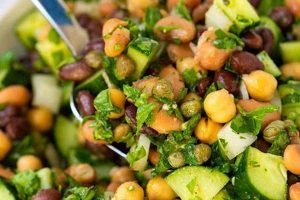
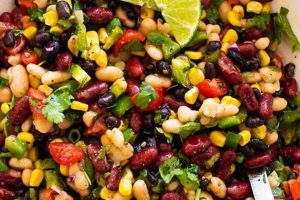
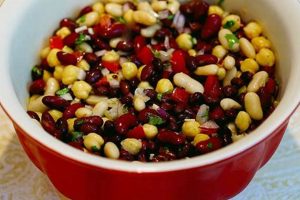
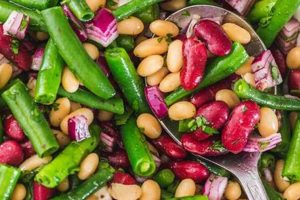
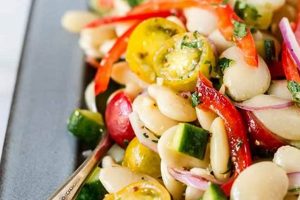
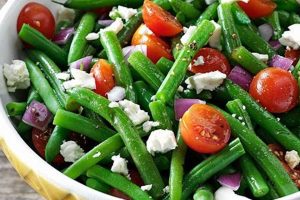
A vibrant, chilled dish featuring a medley of beans, fresh vegetables, and a tangy vinaigrette, this culinary creation offers a refreshing and nutritious option. Typically, cannellini or other white beans are combined with ingredients such as bell peppers, red onion, celery, and fresh herbs like parsley or basil. The vinaigrette often incorporates olive oil, red wine vinegar, garlic, and Dijon mustard. Variations may include other vegetables like tomatoes, cucumbers, or artichoke hearts, and sometimes ingredients like olives or chickpeas.
This type of salad provides a healthy source of protein, fiber, and vitamins. Its light and flavorful profile makes it ideal for warm weather, picnics, potlucks, or as a side dish to grilled meats or fish. The dish represents a delightful intersection of Italian culinary traditions, emphasizing fresh, seasonal ingredients and simple yet flavorful preparations. Its adaptability allows for customization based on personal preferences and ingredient availability, reflecting the resourcefulness often found in traditional Italian cuisine.
The following sections will explore specific ingredient selections, variations on the classic preparation, and tips for achieving optimal flavor and texture. Detailed instructions will be provided for crafting this dish, along with suggestions for complementary pairings and serving suggestions.
Tips for a Superior Bean Salad
Achieving optimal flavor and texture requires attention to detail throughout the preparation process. These tips offer guidance for creating a truly exceptional dish.
Tip 1: Bean Selection and Preparation: Canned beans offer convenience; however, dried beans, cooked until tender but still firm, provide superior flavor and texture. Soaking dried beans overnight reduces cooking time.
Tip 2: Vegetable Freshness: Peak-season vegetables contribute vibrant flavor and crisp texture. Thoroughly rinse and dry all vegetables before chopping.
Tip 3: Precise Chopping: Uniformly sized pieces ensure even distribution of flavor and a pleasing visual presentation. Dice vegetables into bite-sized pieces.
Tip 4: Vinaigrette Emulsification: A properly emulsified vinaigrette clings to the salad ingredients, distributing flavor evenly. Whisk the vinaigrette ingredients vigorously until thoroughly combined.
Tip 5: Marinating Time: Allowing the salad to marinate for at least 30 minutes, or preferably longer, allows the flavors to meld and deepen. Refrigerate during marination.
Tip 6: Herb Selection: Fresh herbs provide a bright, aromatic element. Finely chop herbs just before adding to the salad to maximize their flavor impact. Consider parsley, basil, or oregano.
Tip 7: Balancing Flavors: Taste and adjust seasonings as needed. A balance of acidity, saltiness, and sweetness creates a harmonious flavor profile.
By following these guidelines, one can elevate this simple dish to a culinary masterpiece. Attention to detail and quality ingredients yield a flavorful and refreshing experience.
The following section will offer variations and serving suggestions to further enhance enjoyment of this versatile dish.
1. Fresh Ingredients
The quality and freshness of ingredients directly impact the overall flavor and texture of an Italian bean salad. Fresh vegetables offer crispness and vibrant flavors often absent in older produce. Utilizing in-season produce maximizes flavor intensity and nutritional value. For instance, a summer salad benefits from ripe, juicy tomatoes, while a fall version might incorporate roasted butternut squash. The difference between freshly chopped herbs and dried versions is significant; fresh herbs contribute a bright, aromatic element crucial to the salad’s overall profile. This principle extends to the beans themselves; freshly cooked dried beans possess a superior texture and flavor compared to canned varieties, although the latter offer convenience.
Prioritizing fresh ingredients elevates this simple dish. The interplay of texturescrisp vegetables, tender beans, and a light vinaigretteis best achieved with high-quality components. Consider sourcing ingredients from local farmers’ markets or prioritizing produce in its prime at the grocery store. This dedication to freshness translates to a more vibrant, flavorful, and ultimately more satisfying culinary experience. For example, using freshly picked basil and parsley compared to dried versions creates a noticeable difference in the salad’s aroma and taste.
Freshness, therefore, represents a cornerstone of a successful Italian bean salad. While substitutions may offer convenience, the impact on the final product underscores the importance of sourcing the best possible ingredients. This emphasis on quality aligns with core principles of Italian cuisine, which traditionally prioritizes simple preparations that allow the natural flavors of fresh, seasonal ingredients to shine through. This understanding allows one to appreciate the connection between ingredient quality and the overall sensory experience of the dish.
2. Balanced Vinaigrette

A balanced vinaigrette is crucial to a successful Italian bean salad. It provides the acidic element that brightens the flavors of the beans and vegetables, while the oil adds richness and helps distribute those flavors throughout the salad. A vinaigrette that is too acidic can overpower the other ingredients, while one that is too oily can make the salad heavy and unappetizing. The balance hinges on the correct ratio of oil to acid, typically a 3:1 ratio. However, this ratio can be adjusted slightly based on personal preference and the specific ingredients used in the salad. For example, a salad with more delicate vegetables might benefit from a slightly less acidic vinaigrette. Furthermore, the type of oil and acid used influences the overall flavor profile. Extra virgin olive oil offers a robust, peppery flavor, while a lighter olive oil provides a more neutral base. Red wine vinegar contributes a sharp tang, while white wine vinegar or lemon juice offer a milder acidity. The choice of acid should complement the other ingredients in the salad. A vinaigrette for a bean salad with artichoke hearts, for instance, might benefit from the brighter acidity of lemon juice.
Beyond the core oil and acid components, other ingredients enhance the vinaigrette’s complexity. Common additions include Dijon mustard, minced garlic, salt, and pepper. Dijon mustard acts as an emulsifier, helping the oil and acid combine into a stable mixture. It also contributes a subtle tang and a creamy texture. Garlic provides pungent depth, while salt and pepper enhance the overall flavor profile. The inclusion of these additional ingredients allows for further customization of the vinaigrette to complement the specific flavors in the salad. For instance, adding a pinch of red pepper flakes adds a touch of heat, while a teaspoon of honey can balance the acidity and add a touch of sweetness. These subtle adjustments create a layered flavor profile that enhances the overall enjoyment of the dish.
In summary, achieving a balanced vinaigrette requires careful consideration of the oil-to-acid ratio, the specific types of oil and acid used, and the inclusion of complementary ingredients like mustard, garlic, and seasonings. This harmonious balance is essential for a successful Italian bean salad, as it enhances the flavors of the beans and vegetables, creating a cohesive and satisfying culinary experience. Mastering this element transforms a simple bean salad into a flavorful and refreshing dish. This understanding emphasizes the importance of the vinaigrette as more than just a dressing; it acts as a unifying element that ties the various components of the salad together, elevating the dish from a simple collection of ingredients to a complex and satisfying culinary creation.
3. Proper Bean Cooking

Proper bean cooking is fundamental to a successful Italian bean salad. The texture of the beans significantly impacts the overall enjoyment of the dish. Overcooked beans become mushy and detract from the salad’s textural complexity, while undercooked beans are unpleasant and potentially difficult to digest. Achieving the ideal texturetender yet firmrequires attention to detail throughout the cooking process.
- Bean Selection and Soaking:
Choosing the right bean variety and employing proper soaking techniques are crucial first steps. Dried beans offer superior flavor and texture compared to canned varieties, but require pre-soaking. Soaking dried beans for several hours, or preferably overnight, hydrates them, reducing cooking time and ensuring even cooking. Different bean varieties have varying soaking and cooking times; larger beans like cannellini generally require longer soaking periods. This initial preparation lays the groundwork for optimal bean texture in the final salad.
- Cooking Method:
The cooking method significantly influences the final texture of the beans. Simmering beans gently over low heat prevents them from splitting and ensures even cooking. Boiling beans aggressively can result in a mushy exterior and a firm, undercooked interior. Adding salt to the cooking water only after the beans have softened helps maintain their shape and prevents tough skins. Proper heat control and timing are critical for achieving the desired tenderness without overcooking.
- Determining Doneness:
Assessing bean doneness accurately is essential. The ideal texture is tender but still slightly firm, often described as “al dente.” Testing a few beans by biting into them offers the most reliable assessment. Overcooked beans will be mushy, while undercooked beans will have a noticeable firmness in the center. This tactile evaluation ensures the beans contribute the appropriate texture to the salad.
- Cooling and Storage:
Proper cooling and storage techniques maintain the beans’ optimal texture. Cooling the beans gradually in their cooking liquid prevents them from becoming tough. Once cooled, storing the beans in an airtight container in the refrigerator preserves their freshness and texture until ready to use in the salad. These final steps ensure the beans retain their desired texture and contribute to a more enjoyable salad experience.
These facets of proper bean cooking contribute significantly to the overall success of an Italian bean salad. The texture of the beans, achieved through careful attention to soaking, cooking method, doneness, and storage, plays a key role in the final dish’s appeal. A well-executed bean cooking process elevates the salad from a simple side dish to a more complex and satisfying culinary experience. By understanding and applying these principles, one can ensure that the beans contribute the ideal texture and flavor to this classic Italian preparation.
4. Varied Vegetables
The inclusion of varied vegetables is essential for a well-rounded and flavorful Italian bean salad. Beyond contributing essential nutrients and vibrant colors, the strategic selection of vegetables introduces textural complexity and depth of flavor. This variety elevates the salad from a simple combination of ingredients to a more dynamic and satisfying culinary experience. The interplay of different vegetables creates a balanced and appealing flavor profile.
- Textural Contrast
Different vegetables offer a range of textures, creating a more interesting and enjoyable sensory experience. Crisp vegetables like bell peppers and celery provide a refreshing crunch, while softer vegetables like tomatoes offer a juicy burst. This interplay of textures adds depth and complexity to each bite. For example, the crisp snap of a green bean contrasts pleasantly with the creamy texture of a cannellini bean. This textural diversity prevents the salad from becoming monotonous and enhances its overall appeal.
- Flavor Complexity
A variety of vegetables introduces a broader spectrum of flavors, enhancing the overall complexity of the salad. Peppery arugula, sweet bell peppers, and pungent red onion each contribute unique flavor notes that interact harmoniously. This interplay of flavors creates a more nuanced and satisfying taste experience. For instance, the sweetness of roasted red peppers complements the slight bitterness of radicchio, creating a balanced and flavorful combination.
- Nutritional Value
Incorporating a range of vegetables increases the nutritional density of the salad. Different vegetables offer different vitamins, minerals, and antioxidants. Combining various types ensures a wider range of nutrients in a single dish. For example, adding carrots provides Vitamin A, while spinach contributes iron. This nutritional diversity enhances the health benefits of the salad, making it a more complete and nourishing meal component.
- Visual Appeal
A colorful array of vegetables enhances the visual appeal of the salad. The vibrant hues of red bell peppers, green cucumbers, and yellow squash create an aesthetically pleasing presentation. This visual appeal makes the salad more inviting and appetizing. For instance, a mix of green beans, red onion, and yellow bell peppers creates a visually striking and appealing salad.
In conclusion, the incorporation of varied vegetables in an Italian bean salad is crucial for optimizing texture, flavor, nutritional value, and visual appeal. The careful selection and combination of different vegetables contribute significantly to the overall enjoyment and nutritional benefit of the dish. This emphasis on variety transforms a basic bean salad into a more complex, flavorful, and visually appealing culinary creation. By understanding the role of varied vegetables, one can appreciate the importance of this element in crafting a truly exceptional Italian bean salad.
5. Marination Time
Marination time plays a crucial role in the development of flavor and texture in an Italian bean salad. The process allows the vinaigrette to permeate the beans and vegetables, softening their textures and melding their individual flavors into a cohesive whole. This infusion of flavor deepens over time, resulting in a more complex and satisfying sensory experience. The chemical processes involved include the diffusion of acids and oils into the plant cells, breaking down cell walls and allowing flavors to mingle. For example, the sharp bite of red onion mellows during marination, while the beans absorb the herbaceous notes of the vinaigrette. This transformative process highlights the importance of marination as an active step, not merely a waiting period.
The optimal marination time depends on several factors, including the types of vegetables used, the acidity of the vinaigrette, and the desired intensity of flavor. Delicate vegetables like leafy greens require shorter marinating times to prevent them from becoming overly wilted, while heartier vegetables like beans and bell peppers benefit from longer periods. A more acidic vinaigrette will break down cell walls faster, requiring less marination time compared to a milder one. In practical terms, a minimum of 30 minutes is generally recommended to allow for sufficient flavor infusion, with optimal results often achieved after several hours or even overnight in the refrigerator. This extended marination allows the flavors to fully develop and meld, resulting in a more harmonious and balanced salad. For instance, allowing the salad to marinate overnight allows the beans to fully absorb the flavors of the vinaigrette, resulting in a richer, more complex taste.
Understanding the impact of marination time empowers one to tailor the process to specific preferences and ingredient combinations. While shorter marinating times yield a brighter, fresher flavor profile, longer durations create a deeper, more mellow taste. This flexibility allows for customization based on individual preferences and the desired outcome. Furthermore, careful consideration of marination time helps avoid common pitfalls, such as over-marinating delicate vegetables or under-marinating heartier ingredients. This knowledge ensures a consistently delicious and well-balanced Italian bean salad, highlighting the importance of marination as a critical step in achieving optimal flavor and texture.
Frequently Asked Questions
This section addresses common inquiries regarding the preparation and enjoyment of this dish.
Question 1: What type of beans are best suited for this salad?
Cannellini beans are traditional, but other varieties such as Great Northern, navy, or pinto beans can be substituted. Dried beans, cooked properly, offer superior flavor and texture.
Question 2: Can this salad be made ahead of time?
The salad benefits from marination, so preparing it a day in advance enhances flavor development. Store the salad in an airtight container in the refrigerator.
Question 3: How long does this salad stay fresh?
Properly stored in an airtight container in the refrigerator, the salad typically remains fresh for 3-5 days. The texture of the vegetables may soften slightly over time.
Question 4: Can frozen vegetables be used?
Fresh vegetables are preferred for optimal texture and flavor. Frozen vegetables, if used, should be thawed and thoroughly drained before adding to the salad.
Question 5: What can be substituted for red wine vinegar?
White wine vinegar, apple cider vinegar, or lemon juice offer suitable alternatives to red wine vinegar, each contributing a unique flavor profile.
Question 6: How can the salad be adapted for dietary restrictions?
Adaptations for specific dietary needs are readily achievable. Gluten-free versions require ensuring the selected vinegar and any other added ingredients are gluten-free. Vegan preparations typically avoid animal-derived ingredients like honey. Specific ingredient substitutions may be necessary based on individual dietary restrictions.
Careful consideration of these frequently asked questions allows for informed choices regarding ingredient selection, preparation methods, and storage, ultimately contributing to a more satisfying culinary experience.
Further exploration of this culinary tradition can be found in the following section.
Italian Bean Salad Recipe
Exploration of this classic dish reveals the importance of fresh, high-quality ingredients, a balanced vinaigrette, properly cooked beans, varied vegetables, and adequate marination time. Each element contributes significantly to the final product’s overall flavor, texture, and nutritional value. Attention to detail throughout the preparation process elevates this seemingly simple salad to a culinary creation offering both satisfaction and nourishment. Understanding the interplay of these components allows for informed choices and customization based on individual preferences and dietary needs. From bean selection and cooking techniques to vinaigrette composition and vegetable variety, each decision influences the final outcome.
This exploration serves as a foundation for further culinary experimentation and appreciation of the rich tradition inherent in Italian cuisine. Culinary traditions, passed down through generations, often emphasize simple preparations that showcase the natural flavors of fresh, seasonal ingredients. This dish embodies such principles, demonstrating the potential for culinary excellence through mindful ingredient selection and meticulous preparation. Continued exploration of such culinary traditions offers opportunities for deeper understanding and appreciation of the diverse and flavorful world of food.