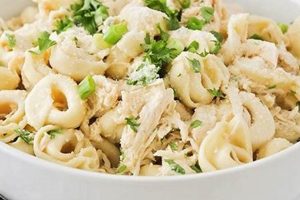
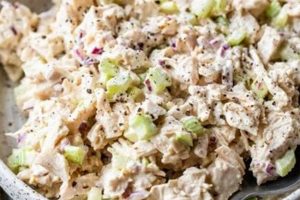
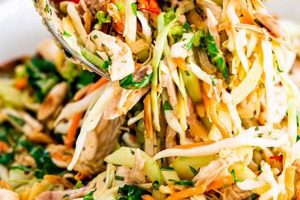
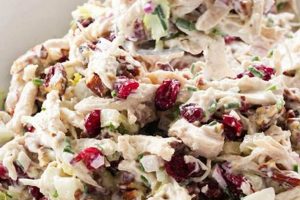
A flavorful combination of cooked chicken, often shredded or diced, blended with mayonnaise and enhanced by the sweet-tartness of cranberries and the rich crunch of pecans. This dish commonly includes additional ingredients like celery, onion, and seasonings, varying based on personal preference and regional influences. It can be served as a sandwich filling, on crackers, in lettuce cups, or as a standalone salad.
This blend of protein, fruit, and nuts provides a balanced and satisfying meal or snack. The cranberries and pecans offer not only textural contrast but also contribute valuable nutrients and antioxidants. The adaptability of this dish allows for variations in ingredients and seasonings, making it a versatile option for picnics, potlucks, or quick lunches. Its popularity has endured, evolving from classic preparations to more contemporary versions featuring diverse flavors and ingredients.
This exploration will delve into various aspects of preparing this dish, from selecting the best ingredients and mastering different techniques to exploring creative variations and presentation ideas. Further discussion will cover nutritional information, storage tips, and suggestions for pairing this versatile salad with complementary dishes.
Tips for a Superior Chicken Salad
Elevating a simple chicken salad with cranberries and pecans requires attention to detail and an understanding of flavor pairings. The following tips offer guidance on achieving optimal results.
Tip 1: Chicken Selection: Opting for high-quality, cooked chicken significantly impacts the final product. Roasting or poaching a whole chicken or individual breasts yields superior flavor and texture compared to pre-cooked or canned options.
Tip 2: Cranberry Choices: Dried cranberries offer a concentrated sweetness and chewy texture. Consider using a mixture of sweetened and unsweetened cranberries for a balanced flavor profile. Fresh cranberries can also be incorporated, though their tartness requires adjustment of other ingredients.
Tip 3: Pecan Preparation: Toasting pecans before adding them to the salad enhances their nutty flavor and adds a satisfying crunch. Briefly toast them in a dry pan or oven until fragrant.
Tip 4: Mayonnaise Matters: The quality of mayonnaise significantly influences the overall flavor and creaminess. Consider using a full-fat mayonnaise for a richer flavor, or explore alternatives like Greek yogurt for a lighter option.
Tip 5: Balancing Flavors: Fresh herbs, such as chives, parsley, or tarragon, can complement the sweetness of the cranberries and the richness of the pecans. A touch of Dijon mustard or a squeeze of lemon juice can brighten the flavors and add complexity.
Tip 6: Texture Considerations: Dicing the chicken and other ingredients into uniform sizes ensures a pleasant eating experience and even distribution of flavors. Avoid over-processing the chicken, as this can result in a mushy texture.
Tip 7: Chilling Time: Allowing the salad to chill for at least 30 minutes before serving allows the flavors to meld and enhances the overall experience.
By implementing these tips, one can achieve a chicken salad that is both flavorful and texturally appealing. Attention to these details ensures a dish that surpasses the ordinary.
These insights provide a foundation for creating a delectable chicken salad experience. The following sections will offer further guidance on variations, pairings, and nutritional considerations.
1. High-quality Chicken

High-quality chicken plays a crucial role in the overall success of a chicken salad with cranberries and pecans. The chicken provides the foundational flavor and texture, impacting how the other ingredients interact and contribute to the final dish. Tender, flavorful chicken elevates the salad, while dry, bland chicken can detract from even the most carefully selected cranberries and pecans. Choosing chicken with good flavor and texture creates a more satisfying and enjoyable culinary experience.
Several factors contribute to chicken quality. Freshly roasted or poached chicken, preferably from a reputable butcher or farm, generally offers superior flavor and texture compared to pre-cooked or canned options. The cooking method also impacts the outcome. Roasting or poaching preserves moisture and allows for the development of richer flavors, unlike boiling, which can result in a blander, drier product. For instance, using home-roasted chicken breast allows for control over seasoning and ensures optimal moisture content, directly impacting the final salad’s flavor profile. Conversely, using pre-cooked, processed chicken often results in a less flavorful and sometimes rubbery texture, diminishing the overall quality of the salad.
Understanding the impact of chicken quality allows for informed choices that enhance the overall enjoyment of the dish. Investing in higher-quality chicken often leads to a more flavorful, satisfying result. While convenience may tempt some to utilize pre-cooked or lower-grade chicken, the difference in taste and texture reinforces the value of prioritizing quality ingredients. By focusing on selecting and preparing chicken thoughtfully, one ensures the foundation of the salad complements the sweetness of the cranberries and the richness of the pecans, resulting in a balanced and delightful culinary creation.
2. Cranberry Selection

Cranberry selection significantly influences the flavor profile and overall quality of chicken salad with cranberries and pecans. The choice between fresh and dried cranberries, as well as considerations regarding sweetness and tartness, requires careful evaluation to achieve the desired balance within the salad.
- Fresh vs. Dried Cranberries
Fresh cranberries offer a vibrant tartness and a slightly firm texture. Their intense flavor can be balanced by adjusting the sweetness of other ingredients, such as the mayonnaise or by adding a touch of honey or maple syrup. Dried cranberries, readily available and convenient, provide a concentrated sweetness and a chewier texture. They require less adjustment to other ingredients but may contribute less pronounced tartness.
- Sweetness Levels
Dried cranberries are often available in various sweetness levels, ranging from unsweetened to heavily sweetened. The choice depends on personal preference and the overall balance of flavors desired in the salad. Using a combination of sweetened and unsweetened dried cranberries can provide a nuanced flavor profile, balancing sweetness with tartness.
- Whole vs. Craisins
While Craisins is a trademarked name for dried cranberries, the term is often used generically. Craisins and other dried cranberries may vary in size, texture, and sweetness. Some are smaller and more intensely sweet, while others are larger and less sweet. Considering these variations can ensure the desired texture and sweetness level in the final salad.
- Cranberry Sauce as an Alternative
While less common, cranberry sauce can be incorporated into chicken salad. Whole berry cranberry sauce offers a textural element and a distinct tart-sweet flavor. However, it is crucial to use it sparingly to avoid overpowering the other ingredients and to ensure the salad maintains a desirable consistency. The sauce’s moisture content can also affect the overall texture of the chicken salad.
The nuances of cranberry selection contribute significantly to the complexity and balance of flavors in chicken salad with cranberries and pecans. Understanding these variations allows for informed decisions, resulting in a dish tailored to individual preferences and desired flavor profiles. Whether opting for the bright tartness of fresh cranberries or the convenient sweetness of dried cranberries, careful consideration ensures a harmonious blend of flavors and textures within the salad.
3. Pecan Preparation

Pecan preparation contributes significantly to the overall texture and flavor profile of chicken salad with cranberries and pecans. Properly prepared pecans provide a desirable crunch and enhance the nutty depth of the salad, complementing the other ingredients. Overlooking this step can result in a less satisfying textural experience and a muted pecan flavor.
- Toasting
Toasting pecans intensifies their natural oils, resulting in a richer, more pronounced nutty flavor. This process also enhances their crispness, providing a satisfying contrast to the softer textures of the chicken and mayonnaise. Toasting can be achieved in a dry skillet over medium heat or in a preheated oven at 350F (175C) for 5-7 minutes, or until fragrant. Care must be taken to avoid burning, as this imparts a bitter flavor.
- Chopping Methods
The size to which pecans are chopped influences both texture and flavor distribution. Coarsely chopped pecans offer larger pieces with a more pronounced crunch, while finely chopped pecans provide a more subtle textural contrast and distribute their flavor more evenly throughout the salad. The choice depends on personal preference and the desired textural experience.
- Raw vs. Roasted Pecans
While toasting enhances flavor and texture, using raw pecans offers a milder flavor and a slightly softer texture. This can be preferable for those seeking a less intense pecan presence in the salad or for those who prefer a less pronounced crunch.
- Storage and Freshness
Storing pecans properly maintains their quality and prevents them from becoming rancid. Pecans should be stored in an airtight container in a cool, dark, and dry place. Refrigeration or freezing extends their shelf life. Using fresh, high-quality pecans is essential for optimal flavor and texture in the salad.
The preparation method chosen for the pecans directly impacts the final quality of the chicken salad. Thoughtful consideration of toasting, chopping size, and pecan freshness ensures that their contribution enhances both the flavor profile and the textural complexity of the dish. Properly prepared pecans provide a crucial counterpoint to the other ingredients, ensuring a balanced and enjoyable culinary experience.
4. Mayonnaise Choice

Mayonnaise functions as a critical binding agent and flavor component in chicken salad with cranberries and pecans. Its quality and type significantly influence the overall texture, richness, and flavor profile of the dish. Careful selection ensures the mayonnaise complements, rather than overwhelms, the delicate balance of sweet, tart, and savory elements.
Different types of mayonnaise offer distinct characteristics. Traditional mayonnaise, typically made with oil, eggs, and vinegar or lemon juice, provides a rich, creamy texture and a tangy flavor. Full-fat versions contribute a greater richness, while light or low-fat options offer a less dense, potentially less flavorful result. Alternatives, such as Greek yogurt or avocado-based mayonnaise, introduce different flavor profiles and textural nuances. Greek yogurt adds a tangy, slightly acidic element, while avocado mayonnaise imparts a creamy, subtly vegetal flavor. The choice of mayonnaise also impacts the salads overall nutritional value. Traditional mayonnaise contributes significant fat and calories, whereas alternatives like Greek yogurt offer a lower-fat, higher-protein option. For instance, using a robust, full-fat mayonnaise with a hint of Dijon mustard enhances the classic flavor profile of the salad, while a lighter lemon-infused mayonnaise might better complement a brighter, more herb-forward variation.
Understanding the impact of mayonnaise choice allows for informed decision-making. Consideration of flavor profiles, desired textures, and nutritional goals informs the selection process. The interplay between the mayonnaise and other ingredientsthe sweetness of cranberries, the richness of pecans, and the savory chickenultimately determines the overall success of the dish. A well-chosen mayonnaise harmonizes these elements, creating a cohesive and enjoyable culinary experience.
5. Seasoning Balance

Seasoning balance is paramount in a successful chicken salad with cranberries and pecans. It involves a nuanced interplay of flavors, carefully orchestrated to complement the inherent sweetness of the cranberries, the richness of the pecans, and the savory base of the chicken. A well-seasoned salad elevates these individual components, creating a harmonious and flavorful experience. Conversely, improper seasoning can result in a bland or unbalanced dish, failing to showcase the potential of the high-quality ingredients.
- Salt and Pepper: The Foundation
Salt and freshly ground black pepper serve as the foundational seasoning elements in virtually any culinary creation, and chicken salad is no exception. Salt enhances the flavors of the other ingredients, while pepper adds a subtle bite. The key is to season judiciously, tasting and adjusting incrementally to achieve the perfect balance. Over-salting can easily overwhelm the delicate flavors of the cranberries and pecans, while insufficient seasoning results in a bland, uninspiring salad.
- Acidity: Brightening the Flavors
A touch of acidity brightens the overall flavor profile and balances the richness of the mayonnaise and pecans. Lemon juice, apple cider vinegar, or even a dash of white wine vinegar can provide this necessary lift. The acidity also helps to cut through the fattiness of the mayonnaise, creating a more refreshing and less heavy dish. For example, a squeeze of fresh lemon juice enhances the sweetness of the cranberries while adding a vibrant note that complements the savory chicken.
- Herbaceous Notes: Adding Complexity
Fresh herbs introduce complexity and depth to the salad. Chives, parsley, tarragon, and dill are excellent choices, each offering a unique flavor profile. Freshly chopped herbs provide a bright, aromatic element that complements the other ingredients without overpowering them. For instance, incorporating fresh dill adds a subtle anise-like flavor that complements the pecans and creates a more sophisticated flavor profile.
- Spices and Other Flavor Enhancers
Beyond the basic seasonings, additional spices and flavor enhancers can further elevate the salad. A pinch of onion powder or garlic powder can add subtle savory notes, while a dash of celery seed provides a classic chicken salad accent. A small amount of Dijon mustard adds a touch of tanginess and complexity. However, it’s important to use these additions sparingly, ensuring they complement rather than dominate the overall flavor profile. For example, a pinch of smoked paprika can introduce a subtle smoky depth, while a touch of curry powder can create a more exotic flavor profile.
The interplay of these seasoning elements determines the final flavor profile of the chicken salad with cranberries and pecans. Careful consideration and a balanced approach ensure that the seasonings enhance the natural flavors of the ingredients, resulting in a harmonious and delicious culinary experience. The goal is not to mask the individual flavors but to create a symphony of tastes that complement and elevate one another.
6. Chilling Duration
Chilling duration plays a crucial role in the final quality of chicken salad with cranberries and pecans. This period of refrigeration allows the flavors of the various ingredients to meld and deepen, resulting in a more cohesive and balanced flavor profile. The low temperature also firms the texture of the salad, making it more manageable for spreading or scooping. Chilling allows the mayonnaise to fully emulsify with the other ingredients, creating a creamier, more luxurious texture. Without sufficient chilling time, the flavors remain distinct and less integrated, the texture may be looser, and the mayonnaise may not have fully incorporated, leading to a less satisfying overall experience.
The chemical processes occurring during chilling contribute significantly to flavor development. As the ingredients sit together in the cool environment, their flavors begin to diffuse and interact. The sweetness of the cranberries mellows and permeates the chicken and mayonnaise, while the richness of the pecans becomes more integrated. The chilling process also allows the volatile aromatic compounds within the herbs and spices to meld, creating a more complex and nuanced flavor profile. For instance, a freshly made salad might taste predominantly of mayonnaise, with distinct notes of cranberry and pecan. After an hour or two of chilling, these flavors harmonize, creating a more balanced and integrated taste experience. Furthermore, chilling reduces the potential for bacterial growth, enhancing food safety, particularly crucial in salads containing mayonnaise.
Optimal chilling duration typically ranges from one to four hours. Chilling for less than an hour may not provide sufficient time for flavor development, while chilling for excessively long periods, such as overnight, might result in a loss of texture and vibrancy, particularly with fresh ingredients like herbs. The ideal chilling time depends on the specific recipe and the balance of flavors desired. Balancing chilling time with the retention of fresh flavors and optimal texture is essential for achieving a truly exceptional chicken salad. A thorough understanding of the impact of chilling duration ensures a final product that maximizes flavor development, texture, and food safety considerations.
Frequently Asked Questions
This section addresses common inquiries regarding the preparation and enjoyment of this dish, offering clarity and guidance for optimal results.
Question 1: What type of chicken is best suited for this salad?
Roasting a whole chicken or individual breasts yields the most flavorful results. Poaching also provides excellent flavor and moisture. Pre-cooked or canned chicken can be used, but the flavor may be less pronounced.
Question 2: Can other nuts be substituted for pecans?
Walnuts, almonds, or cashews can be substituted, though the flavor profile will differ. Toasting the nuts before adding them is recommended to enhance their flavor and texture.
Question 3: How can the sweetness of the salad be adjusted?
The sweetness can be adjusted by using a combination of sweetened and unsweetened dried cranberries. A touch of honey or maple syrup can also be added to the dressing.
Question 4: What is the best way to store the salad?
Store the salad in an airtight container in the refrigerator for up to four days. For optimal flavor and texture, consume within two days.
Question 5: Can this salad be frozen?
Freezing is not recommended, as it can negatively impact the texture of the mayonnaise and other ingredients. The salad is best enjoyed fresh.
Question 6: How can this salad be served?
This versatile salad can be served as a sandwich filling, on crackers or croissants, in lettuce cups, or as a standalone salad accompanied by a side of fruit or greens. It also makes an excellent appetizer for parties or potlucks.
Addressing these common inquiries provides a deeper understanding of the nuances involved in creating a superior chicken salad. The following sections will explore variations and serving suggestions.
Beyond these frequently asked questions, further exploration of recipe variations and serving suggestions can enhance appreciation for this versatile dish.
Chicken Salad with Cranberries and Pecans Recipe
Exploration of this recipe reveals the interplay of carefully selected ingredients and thoughtful preparation techniques. High-quality chicken forms the foundation, enhanced by the contrasting sweetness and tartness of cranberries. The addition of pecans introduces textural complexity and a rich, nutty depth. Mayonnaise acts as a unifying element, binding the ingredients while contributing to the overall flavor profile. Proper seasoning balances these elements, creating a harmonious blend of sweet, savory, and acidic notes. Finally, adequate chilling allows these flavors to meld, resulting in a more nuanced and satisfying culinary experience. Each component contributes significantly to the final product, underscoring the importance of thoughtful ingredient selection and meticulous preparation.
This dish represents more than a simple combination of ingredients; it embodies a culinary tradition adaptable to individual preferences and creative interpretations. Continued exploration of flavor combinations and presentation styles offers a path to further enjoyment and appreciation. Understanding the foundational elements discussed herein provides a framework for crafting a consistently satisfying and delicious culinary creation.