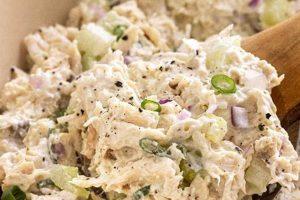
Simple preparations of this popular lunchtime staple typically involve cooked chicken, mayonnaise, and seasonings, often incorporating celery, onion, grapes, or nuts for added texture and flavor. A classic example combines shredded chicken with mayonnaise, diced celery, and salt and pepper, served on bread, crackers, or lettuce wraps.
Quick and adaptable, these recipes offer a convenient and nutritious meal option. Their versatility allows for variations in ingredients and seasonings, catering to diverse palates and dietary needs. Historically, chicken salad emerged as a way to utilize leftover cooked chicken, reflecting a resourceful approach to cooking. Its evolution into a widely enjoyed dish highlights its enduring appeal and adaptability to modern lifestyles.
This article will explore various approaches to creating these effortless meals, offering tips for ingredient selection, preparation techniques, and creative serving suggestions. Discussions will include variations for different dietary preferences, including gluten-free and low-fat options.
Tips for Easy Chicken Salad Sandwiches
Creating flavorful and convenient chicken salad sandwiches involves attention to ingredient selection and preparation techniques. The following tips offer guidance for achieving optimal results.
Tip 1: Utilize pre-cooked chicken. Rotisserie chicken or readily available cooked chicken breast significantly reduces preparation time.
Tip 2: Employ quality mayonnaise. The mayonnaise serves as the foundation of the flavor profile; opting for a higher quality product elevates the overall taste.
Tip 3: Consider texture. Dicing ingredients uniformly ensures a pleasant consistency. Experiment with different textures by incorporating chopped nuts or grapes.
Tip 4: Season thoughtfully. Freshly ground black pepper, a touch of Dijon mustard, or a pinch of paprika can enhance the flavor complexity.
Tip 5: Chill adequately. Chilling the prepared chicken salad allows the flavors to meld and enhances the overall experience.
Tip 6: Explore bread variations. While classic white bread is a popular choice, consider whole-wheat bread, croissants, or lettuce wraps for variety.
Tip 7: Add fresh herbs. Incorporating fresh herbs like dill, parsley, or chives provides a burst of flavor and visual appeal.
By following these guidelines, one can create delicious chicken salad sandwiches efficiently, maximizing both flavor and convenience.
These tips illustrate how simple adjustments can significantly impact the final product. The next section will explore creative variations and serving suggestions to further personalize this versatile dish.
1. Simple Ingredients
The ease of chicken salad sandwich recipes hinges significantly on the simplicity of their ingredients. Recipes utilizing readily available components like pre-cooked chicken, common pantry staples such as mayonnaise and mustard, and readily accessible produce like celery and onion minimize preparation time and effort. This accessibility allows for quick assembly, making these sandwiches an ideal choice for time-constrained meal preparation. For instance, using rotisserie chicken eliminates the need for cooking and shredding chicken, significantly streamlining the process. Similarly, opting for pre-chopped vegetables further reduces preparation time. This reliance on simple, readily available ingredients contributes directly to the convenience factor that defines these recipes.
The focus on simple ingredients also facilitates adaptability and customization. Basic recipes serve as a foundation for diverse flavor profiles. Swapping traditional celery for grapes or apples introduces a touch of sweetness, while adding dried cranberries or chopped walnuts contributes textural complexity. Spice preferences can be accommodated through variations in mustard types, the addition of hot sauce, or the incorporation of herbs and spices like dill, paprika, or curry powder. This inherent flexibility allows individuals to tailor recipes to specific tastes and dietary preferences without sacrificing ease of preparation. A classic example involves using Greek yogurt in place of mayonnaise for a lighter, lower-fat version.
Prioritizing simple ingredients not only simplifies preparation but also often translates to cost-effectiveness. Utilizing readily available components typically results in a more budget-friendly meal compared to recipes requiring specialized or less common ingredients. This makes easy chicken salad sandwiches a practical and economical choice for everyday meals, packed lunches, or casual gatherings. Moreover, the ability to utilize leftover cooked chicken minimizes food waste, further contributing to the overall value and practicality of these recipes.
2. Quick Preparation

Quick preparation is a defining characteristic of easy chicken salad sandwich recipes. The speed at which these sandwiches can be assembled contributes significantly to their popularity as a convenient meal option. Recipes often leverage pre-cooked ingredients, such as rotisserie chicken or canned chicken, eliminating the time required for cooking and shredding poultry. This reliance on readily available components minimizes active preparation time, allowing for a complete meal to be assembled in minutes. For example, combining pre-cooked chicken with mayonnaise, pre-chopped celery, and seasonings requires minimal effort and yields a satisfying sandwich quickly. This efficiency makes these recipes particularly appealing for busy individuals or those seeking a swift and effortless meal solution.
The emphasis on quick preparation also influences ingredient selection and preparation techniques. Recipes often call for chopped ingredients rather than finely diced or minced components, further streamlining the process. Utilizing pre-chopped vegetables or opting for ingredients like grapes or dried cranberries that require no additional preparation contributes to the overall speed and simplicity. Furthermore, many recipes employ straightforward flavor combinations, relying on readily available pantry staples like mayonnaise, mustard, and common spices rather than complex sauces or marinades. This focus on efficiency prioritizes speed without compromising flavor, making easy chicken salad sandwiches a practical and satisfying choice for everyday meals. Consider a scenario where a quick lunch is needed; utilizing pre-cooked chicken and readily available ingredients allows for a nutritious meal to be prepared and consumed within minutes.
The ability to prepare these sandwiches quickly has practical implications for various meal occasions. They are well-suited for packed lunches, providing a convenient and portable meal option for work or school. Their quick assembly also makes them ideal for last-minute meals or situations where time is limited. Furthermore, easy chicken salad sandwiches are a practical choice for larger gatherings or potlucks, as they can be prepared in large quantities without extensive time or effort. The convenience factor associated with quick preparation expands the versatility of these recipes, solidifying their role as a go-to option for a variety of mealtime needs.
3. Versatile Flavors

Flavor versatility represents a significant advantage of easy chicken salad sandwich recipes. The basic formulacooked chicken bound with mayonnaiseprovides a neutral canvas for diverse flavor profiles. This adaptability stems from the inherent compatibility of chicken salad with a wide range of ingredients and seasonings. Classic additions like celery and onion offer a familiar taste, while incorporating fruits such as grapes or apples introduces sweetness and textural contrast. Dried cranberries, chopped nuts, or seeds contribute further complexity and nutritional value. This inherent flexibility allows for customization based on individual preferences and available ingredients. For instance, curry powder can transform the sandwich into an Indian-inspired meal, while a blend of Dijon mustard and tarragon creates a French-influenced flavor profile. The ability to effortlessly adapt the flavor profile makes these recipes suitable for diverse palates and occasions.
The practical implications of this flavor versatility extend to accommodating dietary restrictions and preferences. Substituting Greek yogurt for mayonnaise creates a lighter, lower-fat option. Incorporating various vegetables boosts nutritional value and adds diverse textures. Using gluten-free bread or lettuce wraps caters to gluten-sensitive individuals. This adaptability ensures that easy chicken salad sandwich recipes remain accessible and enjoyable across a wide range of dietary needs. Consider a scenario where dietary restrictions limit dairy consumption; substituting avocado for mayonnaise allows for a creamy, dairy-free alternative that maintains the essential characteristics of the dish. The capacity for such modifications highlights the inherent adaptability and inclusivity of these recipes.
Flavor versatility, therefore, enhances the enduring appeal of easy chicken salad sandwich recipes. This adaptability ensures that a simple base recipe can be transformed to suit individual tastes, dietary needs, and available ingredients. The ability to seamlessly integrate diverse flavor profiles elevates this classic dish from a convenient staple to a culinary platform for creative expression. The ease with which flavor profiles can be modified contributes significantly to the sustained popularity and adaptability of these recipes across diverse culinary landscapes.
4. Customizable Textures

Textural variability represents a key element within easy chicken salad sandwich recipes. Control over texture contributes significantly to the overall enjoyment and adaptability of the dish. The interplay between creamy, crunchy, and smooth elements influences the sensory experience. Ingredient selection and preparation methods directly impact the final textural profile. For instance, coarsely chopped chicken creates a more substantial texture compared to finely shredded chicken. Similarly, incorporating ingredients like celery, grapes, or nuts introduces contrasting layers of crunch. This inherent flexibility allows individuals to tailor recipes to specific textural preferences. A preference for a smoother consistency might involve finely dicing all ingredients, while a desire for more pronounced textural contrast could incorporate coarsely chopped nuts or larger pieces of fruit. This control over texture contributes significantly to the personalized nature of these recipes.
The practical implications of customizable textures extend beyond individual preferences. Textural variation can also enhance the nutritional profile and visual appeal of the sandwich. Incorporating ingredients with diverse textures, such as chopped vegetables or nuts, adds nutritional value and creates visual interest. This allows for the creation of not only flavorful but also visually appealing and nutritious meals. Consider incorporating water chestnuts for a crisp, refreshing element, or sunflower seeds for a nutty crunch and added healthy fats. The interplay of textures can also influence the perceived freshness and quality of the sandwich. A sandwich with a variety of textures is often perceived as more dynamic and appealing than one with a uniform, homogenous texture. This understanding of textural interplay allows for the creation of more satisfying and enjoyable meals.
The ability to customize texture within easy chicken salad sandwich recipes enhances their overall versatility and appeal. This control over texture allows individuals to tailor the sensory experience to their specific preferences, creating meals that are both enjoyable and personalized. Furthermore, understanding the impact of textural variation on nutritional value and visual appeal empowers individuals to create well-rounded and satisfying meals. This attention to texture, combined with the ease of preparation, contributes to the enduring popularity and adaptability of these recipes across diverse culinary contexts.
5. Convenient Meals

The connection between convenient meals and easy chicken salad sandwich recipes is fundamental to their widespread appeal. The inherent ease of preparation, adaptability, and portability of these sandwiches positions them as an ideal solution for various meal occasions where convenience is paramount. This section will explore the multifaceted nature of this convenience, examining its components, real-life applications, and overall implications.
- Rapid Assembly
Minimal preparation time is a defining feature of these recipes. Utilizing pre-cooked ingredients like rotisserie chicken, canned chicken, or leftover cooked poultry significantly reduces active cooking time. Combined with readily available pantry staples and simple preparation techniques, a complete sandwich can be assembled in minutes. This rapid assembly is invaluable for busy individuals, time-constrained meal preparations, or unexpected guests.
- Adaptable Ingredients
The flexibility in ingredient selection further enhances convenience. Easy substitutions and variations accommodate dietary restrictions, ingredient availability, and personal preferences. Swapping mayonnaise for Greek yogurt, incorporating readily available vegetables, or utilizing gluten-free bread allows for customization without sacrificing ease of preparation. This adaptability simplifies meal planning and grocery shopping, making these recipes a practical choice for diverse needs.
- Portability and Storage
Chicken salad sandwiches are inherently portable, making them ideal for packed lunches, picnics, or travel. Their structural integrity holds up well in transit, and they require no heating or special equipment for consumption. Furthermore, prepared chicken salad can be refrigerated for several days, allowing for make-ahead meal preparation and reducing daily cooking demands. This portability and storage capacity expands their utility beyond immediate consumption, contributing to overall meal planning efficiency.
- Minimal Cleanup
The simplicity of these recipes translates to minimal cleanup. Utilizing pre-cooked ingredients and requiring minimal cooking equipment reduces dishwashing and kitchen maintenance. This aspect of convenience is particularly appealing for busy individuals or those seeking to minimize post-meal chores. The ease of cleanup further reinforces the practicality of these recipes for everyday meals or casual gatherings.
These facets of convenience collectively contribute to the enduring popularity of easy chicken salad sandwich recipes. From rapid assembly and adaptable ingredients to portability and minimal cleanup, these sandwiches offer a practical and satisfying solution for various mealtime needs. Their convenience extends beyond individual consumption, simplifying meal preparation for families, facilitating effortless entertaining, and providing a reliable option for time-constrained situations. This inherent convenience positions easy chicken salad sandwiches as a versatile and enduring staple in the culinary landscape.
6. Budget-Friendly Options
Affordability represents a significant advantage of easy chicken salad sandwich recipes. Cost-effectiveness stems from the utilization of readily available, often inexpensive ingredients, and the adaptability of the basic formula. This inherent affordability makes these recipes a practical choice for individuals and families seeking nutritious and satisfying meals without straining their budgets. The following facets explore the key components contributing to the budget-friendly nature of these recipes.
- Cost-Effective Ingredients
Recipes often rely on inexpensive protein sources like canned chicken or utilizing leftover cooked chicken, minimizing costs compared to using more expensive meats or poultry. Similarly, incorporating common pantry staples such as mayonnaise, mustard, and seasonings, alongside readily available produce like celery and onion, contributes to the overall affordability. This reliance on readily accessible and budget-friendly ingredients significantly reduces the overall cost per serving.
- Stretching Ingredients
Chicken salad offers opportunities to stretch ingredients, further maximizing value. Adding fillers like chopped celery, onion, or bread crumbs increases volume without significantly impacting flavor, allowing a smaller amount of chicken to serve more people. This ability to stretch ingredients makes these recipes particularly appealing for larger families or those seeking to maximize their food budget.
- Adaptability and Reduced Waste
The adaptable nature of chicken salad contributes to cost savings by allowing the utilization of leftover ingredients. Leftover cooked chicken from a previous meal can be repurposed into a delicious and satisfying chicken salad, minimizing food waste and maximizing the value of existing ingredients. This adaptability also allows for substitutions based on price and availability, further enhancing budget control.
- Minimal Equipment and Energy Use
Easy chicken salad sandwich recipes typically require minimal cooking equipment and energy. Utilizing pre-cooked chicken eliminates the need for extensive cooking processes, reducing energy consumption and associated costs. This aspect of preparation further contributes to the overall cost-effectiveness of these recipes.
These facets of budget-friendliness collectively underscore the value and practicality of easy chicken salad sandwich recipes. From cost-effective ingredients and the ability to stretch ingredients to adaptability and minimal resource utilization, these recipes offer a fiscally responsible approach to meal preparation without compromising flavor or satisfaction. The inherent affordability of these recipes makes them a sustainable and accessible option for individuals and families across diverse economic circumstances.
Frequently Asked Questions
This section addresses common inquiries regarding the preparation and enjoyment of easy chicken salad sandwiches.
Question 1: What type of chicken is best suited for chicken salad?
While various cooked chicken options suffice, using rotisserie chicken or pre-cooked chicken breast offers optimal convenience. Leftover baked or roasted chicken also provides excellent flavor and texture.
Question 2: Can mayonnaise be substituted with healthier alternatives?
Greek yogurt or avocado provide healthier alternatives to mayonnaise, offering a lighter texture and reduced fat content while maintaining creaminess.
Question 3: How long can prepared chicken salad be stored?
Properly stored in an airtight container in the refrigerator, chicken salad typically remains safe for consumption for up to three to five days.
Question 4: How can one prevent chicken salad from becoming watery?
Ensuring the chicken is adequately drained and dried before incorporating it into the salad helps prevent excess moisture. Adding a small amount of finely diced celery or onion can also absorb excess liquid.
Question 5: What are some creative additions for enhancing flavor and texture?
Incorporating ingredients such as grapes, dried cranberries, chopped apples, walnuts, or pecans introduces textural complexity and flavor nuances. Consider experimenting with herbs and spices like dill, tarragon, or curry powder for enhanced flavor profiles.
Question 6: Are there gluten-free options for chicken salad sandwiches?
Utilizing gluten-free bread, lettuce wraps, or serving the chicken salad over a bed of greens provides gluten-free alternatives to traditional bread.
Addressing these common inquiries aims to clarify preparation methods and storage guidelines, ensuring both safety and enjoyment. Understanding these aspects allows for a more informed and satisfying culinary experience.
The next section will offer a collection of easy chicken salad sandwich recipes, providing practical examples for implementing the information discussed.
Easy Chicken Salad Sandwich Recipes
This exploration of easy chicken salad sandwich recipes has highlighted their enduring appeal stemming from inherent simplicity, adaptability, and affordability. From utilizing readily available ingredients to accommodating diverse dietary preferences, these recipes offer a practical and satisfying meal solution for various occasions. The capacity for customization, ranging from flavor profiles to textural nuances, allows for personalized culinary experiences without demanding extensive culinary expertise or time investment. The examination of preparation techniques, ingredient selection, and creative variations underscores the versatility and enduring relevance of this culinary staple.
The ease and adaptability of these recipes position them as a valuable component within a diverse and evolving culinary landscape. Continued exploration of flavor combinations, ingredient incorporations, and presentation styles ensures the ongoing relevance and enjoyment of chicken salad sandwiches for generations to come. The inherent simplicity and adaptability of this classic dish promise its continued presence as a convenient, affordable, and satisfying meal option.