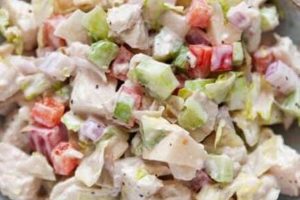
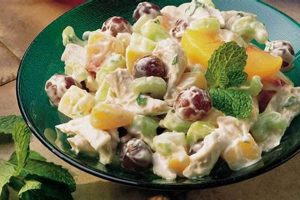
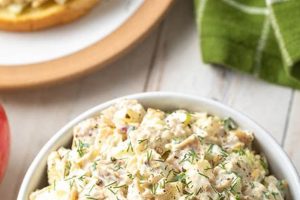
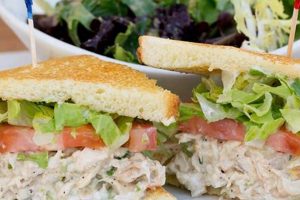
Dishes categorized as such typically consist of bite-sized pieces of chicken, combined with a variety of other ingredients like vegetables, fruits, nuts, cheese, and often bound with a creamy dressing. A classic example might include diced chicken breast, celery, red onion, grapes, walnuts, and mayonnaise, though variations are numerous and diverse.
The appeal of this type of salad lies in its versatility and convenience. It offers a balanced meal option, packing protein, healthy fats, and essential vitamins. Furthermore, the adaptable nature of the dish allows for customization to individual preferences and dietary needs. Historically, similar preparations have existed for centuries, evolving alongside culinary traditions and available ingredients. The modern iteration, emphasizing a finely chopped texture, rose to prominence in the mid-20th century, solidifying its place as a popular lunch, dinner, or potluck contribution.
Further exploration will delve into specific ingredient combinations, dressing options, and techniques for achieving the perfect texture and flavor balance, offering a comprehensive guide to creating and enjoying these culinary creations.
Tips for Exceptional Chopped Chicken Salads
Achieving a well-balanced and flavorful salad involves careful consideration of ingredients and techniques. The following tips offer guidance for creating a superior culinary experience.
Tip 1: Prioritize Chicken Quality: Opting for high-quality chicken, whether roasted, grilled, or poached, significantly impacts the overall flavor profile.
Tip 2: Uniformity of Cuts: Consistent chopping of ingredients ensures even distribution of flavors and a pleasing texture. Aim for bite-sized pieces.
Tip 3: Embrace Freshness: Utilizing fresh, seasonal ingredients elevates the salad’s vibrancy and nutritional value.
Tip 4: Balance Flavors and Textures: Consider incorporating a variety of textures and tastes. Crisp vegetables, crunchy nuts, and creamy dressings offer a delightful contrast.
Tip 5: Dress Strategically: Adding the dressing just before serving prevents the salad from becoming soggy. Toss gently to coat all ingredients evenly.
Tip 6: Explore Flavor Combinations: Don’t hesitate to experiment with different flavor profiles. Herbs, spices, and unique dressings can add depth and complexity.
Tip 7: Proper Storage: Store prepared chicken and other ingredients separately to maintain optimal freshness and prevent premature spoilage. Combine just before serving.
By employing these strategies, one can consistently produce a delectable and satisfying dish.
These insights provide a foundation for crafting exceptional salads, demonstrating the potential for creativity and customization within this culinary genre.
1. Chicken

Chicken plays a central role in chopped chicken salad recipes, contributing significantly to flavor, texture, and nutritional value. Understanding its various forms and preparation methods is essential for crafting a successful dish. The following facets explore key aspects of chicken’s contribution to these salads.
- Cooking Methods
The choice of cooking method profoundly impacts the chicken’s flavor and texture within the salad. Roasting yields a rich, savory flavor, while grilling imparts a smoky char. Poaching produces a moist, tender result, and pan-frying creates a crispy exterior. Each technique offers distinct characteristics, influencing the final salad’s overall profile. For instance, roasted chicken provides a robust flavor, complementing bolder dressings and ingredients, while poached chicken offers a milder taste, suitable for lighter, brighter flavor combinations.
- Chicken Types
Different cuts of chicken offer variations in texture and flavor. Chicken breast, a lean and versatile option, is commonly used for its neutral taste. Chicken thighs, richer in fat, contribute a more intense flavor and moistness. Using a combination of white and dark meat offers a balance of textures and tastes. The selection of chicken type influences the salad’s overall richness and nutritional content.
- Seasoning
Proper seasoning enhances the chicken’s inherent flavor and complements other salad components. Simple seasonings like salt, pepper, and garlic powder provide a foundational flavor base. More complex spice blends, herbs, or marinades introduce depth and complexity, aligning with specific flavor profiles. The choice of seasoning should harmonize with the other ingredients and the chosen dressing.
- Texture and Presentation
The chicken’s texture and presentation contribute significantly to the salad’s overall appeal. Achieving a consistent chop size ensures even distribution of flavor and a pleasant mouthfeel. The chicken can be shredded, diced, or left in larger chunks, depending on the desired texture. Presentation considerations, such as arranging the chicken atop the salad or incorporating it throughout, further enhance the visual appeal.
The careful consideration of these facets related to chicken preparation allows for a deeper appreciation of its role in chopped chicken salad recipes. By understanding these nuances, one can elevate this simple dish into a culinary masterpiece, showcasing the versatility and potential of chicken as a key ingredient.
2. Chop Size
Chop size plays a crucial role in the overall enjoyment and textural experience of chopped chicken salads. It directly influences the balance of ingredients, the ease of consumption, and the aesthetic presentation. Uniformity in chop size ensures that each bite contains a balanced representation of all components, preventing one ingredient from dominating the flavor profile. A consistently chopped salad also offers a more refined and visually appealing presentation, enhancing the dining experience. For instance, a salad with large, unevenly chopped ingredients might result in a mouthful of only lettuce or chicken, disrupting the intended flavor harmony. Conversely, a uniformly chopped salad offers a balanced blend of flavors in every bite.
Consider the impact of chop size on specific ingredients. Larger pieces of chicken may offer a more substantial, meaty texture, while smaller, diced pieces integrate more seamlessly with other components. Similarly, the size of chopped vegetables influences their perceived crispness and contribution to the overall salad texture. Larger pieces retain more crunch, while smaller pieces offer a more delicate texture. The interplay of these various chop sizes contributes to a dynamic and satisfying sensory experience. A salad featuring large chunks of avocado and smaller pieces of other vegetables might offer a contrasting interplay of creamy and crisp textures, further emphasizing the importance of intentional chop size choices.
Achieving the desired chop size requires appropriate knife skills and attention to detail. Sharp knives facilitate clean cuts, preventing ingredients from being crushed or bruised. Consistent knife strokes ensure uniformity, contributing to both the aesthetic presentation and the balanced distribution of flavors. While there is no single “correct” chop size, understanding its influence on texture, flavor balance, and visual appeal allows for informed decisions tailored to individual preferences and recipe goals. Mastering this element contributes significantly to the creation of well-balanced and visually appealing chopped chicken salads, demonstrating a refined understanding of culinary technique and ingredient interplay.
3. Ingredients

Ingredients constitute the core building blocks of chopped chicken salad recipes, contributing significantly to flavor, texture, nutritional value, and overall appeal. A thoughtful selection of ingredients elevates this simple dish from basic sustenance to a culinary experience. The following facets explore the diverse roles ingredients play in shaping the character of a chopped chicken salad.
- Vegetables
Vegetables provide crucial texture, color, and nutritional value to chopped chicken salads. Common choices include celery, red onion, bell peppers, cucumbers, and carrots, each offering a distinct flavor profile and textural contribution. For example, celery adds a crisp, refreshing element, while red onion contributes a pungent bite. The selection of vegetables can also influence the salad’s overall nutritional density, with options like bell peppers and carrots offering a boost of vitamins and antioxidants. Beyond these staples, incorporating less common vegetables like chopped broccoli, radishes, or jicama introduces unique flavors and textures, allowing for greater culinary creativity.
- Fruits
Fruits introduce sweetness, acidity, and visual appeal to chopped chicken salads. Grapes, apples, dried cranberries, and mandarin oranges are popular choices, each contributing a unique flavor dimension. The sweetness of grapes complements savory ingredients like chicken and nuts, while the tartness of apples offers a refreshing contrast. Dried cranberries add a chewy texture and concentrated sweetness, while mandarin oranges provide juicy bursts of flavor. The judicious inclusion of fruits elevates the salad’s complexity and offers a balance of sweet and savory notes.
- Nuts and Seeds
Nuts and seeds contribute healthy fats, protein, texture, and flavor complexity. Walnuts, pecans, almonds, sunflower seeds, and pumpkin seeds are frequently incorporated, each offering a distinct crunch and flavor profile. Walnuts provide a slightly bitter, earthy note, while pecans offer a buttery richness. Almonds contribute a subtle sweetness and satisfying crunch, while sunflower and pumpkin seeds introduce nutty notes and textural variety. These additions enhance the salad’s nutritional value and provide a satisfying textural contrast to softer ingredients.
- Other Additions
Beyond the core components of vegetables, fruits, and nuts, a wide array of ingredients can further enhance chopped chicken salads. Cheese, such as crumbled blue cheese, feta, or cheddar, adds salty, creamy, and tangy notes. Chopped hard-boiled eggs contribute protein and a rich flavor. Avocado provides healthy fats and a creamy texture. These additions offer opportunities to customize the salad’s flavor profile and nutritional content, further expanding its culinary versatility. Incorporating ingredients like bacon bits, olives, or chopped herbs introduces additional layers of flavor and complexity.
The careful selection and combination of these diverse ingredients contribute to the overall success of a chopped chicken salad. By understanding the unique characteristics of each ingredient, one can create a balanced and flavorful dish tailored to individual preferences and dietary needs. The interplay of textures, flavors, and nutritional components elevates the chopped chicken salad from a simple dish to a culinary creation showcasing the versatility and potential of ingredient combinations.
4. Dressing
Dressing serves as a unifying element in chopped chicken salad recipes, binding disparate ingredients and significantly influencing the overall flavor profile. The choice of dressing impacts not only taste but also texture and perceived freshness. A well-chosen dressing complements the other ingredients, enhancing their individual characteristics while creating a cohesive culinary experience. An overly acidic dressing might overwhelm delicate flavors, while a bland dressing fails to elevate the salad beyond its individual components. For example, a classic mayonnaise-based dressing provides a creamy texture and richness, complementing the savory chicken and crisp vegetables, while a vinaigrette offers a lighter, brighter counterpoint, enhancing the flavors of fresh herbs and fruits.
The quantity of dressing used also plays a critical role. Too much dressing can result in a soggy salad, compromising texture and diluting flavors. Too little dressing, conversely, leaves the salad dry and lacking cohesion. The ideal amount coats the ingredients evenly without overwhelming them, allowing individual flavors to shine while creating a harmonious blend. Adding the dressing just before serving helps maintain the salad’s crispness and prevents the emulsion from breaking down, particularly relevant for dressings containing mayonnaise or yogurt. This practice ensures optimal texture and flavor delivery, further enhancing the dining experience.
Understanding the interplay between dressing and other salad components is essential for creating a balanced and flavorful chopped chicken salad. The dressing should complement, not overpower, the other ingredients. A creamy dressing pairs well with robust flavors and textures, while a lighter vinaigrette enhances the freshness of lighter ingredients. Consideration of flavor profiles, textures, and the timing of dressing application contributes significantly to a successful and satisfying culinary outcome. Mastering this element allows for customization and elevates the chopped chicken salad from a simple dish to a carefully crafted culinary creation.
5. Flavor Profiles

Flavor profiles represent a crucial element in chopped chicken salad recipes, dictating the overall sensory experience and allowing for extensive customization. A well-defined flavor profile harmonizes diverse ingredients, creating a balanced and satisfying culinary composition. Understanding the interplay of various flavor components empowers culinary exploration and personalized recipe development.
- Classic Combinations
Classic flavor profiles often rely on familiar combinations that offer a comforting and predictable experience. These profiles typically incorporate creamy dressings, like mayonnaise or ranch, paired with traditional ingredients such as celery, grapes, and walnuts. Such combinations evoke a sense of familiarity and offer a balanced interplay of sweet, savory, and creamy notes. They represent a reliable foundation for those seeking a traditional chopped chicken salad experience.
- Bright and Zesty Profiles
Bright and zesty flavor profiles emphasize fresh herbs, citrus elements, and lighter dressings. These salads often incorporate ingredients like cilantro, mint, lime juice, and lemon zest. The resulting flavors are refreshing and vibrant, often featuring a tangy counterpoint to the richness of the chicken. This approach offers a lighter alternative to classic creamy profiles, particularly suitable for warmer weather or those seeking a more invigorating salad experience.
- Southwestern Inspiration
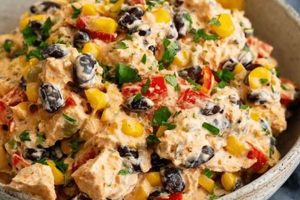
Southwestern-inspired flavor profiles incorporate elements of Southwestern cuisine, such as black beans, corn, avocado, cilantro, lime, and spices like cumin and chili powder. These salads often feature grilled or roasted chicken and a lighter, vinaigrette-based dressing. The combination of smoky, spicy, and tangy flavors offers a distinct and flavorful experience, showcasing the versatility of chopped chicken salad as a platform for culinary exploration.
- Asian Influences
Asian-inspired flavor profiles incorporate ingredients and flavor combinations commonly found in Asian cuisine. These salads might include ingredients like shredded carrots, edamame, mandarin oranges, toasted sesame seeds, and a dressing featuring soy sauce, ginger, and sesame oil. The resulting flavors are often a complex interplay of sweet, savory, and umami notes, offering a unique and flavorful departure from traditional chopped chicken salad profiles.
These diverse flavor profiles demonstrate the adaptability and potential of chopped chicken salad recipes. By understanding the interplay of various ingredients and flavor components, one can create customized salads tailored to specific preferences and culinary goals. This exploration of flavor profiles highlights the potential for creative expression within this seemingly simple dish, transforming it into a versatile canvas for culinary innovation.
Frequently Asked Questions
This section addresses common inquiries regarding the preparation and enjoyment of chopped chicken salads.
Question 1: What is the best way to prevent a chopped chicken salad from becoming soggy?
Sogginess often results from premature dressing application. Adding the dressing immediately before serving prevents the ingredients from becoming waterlogged. Storing components separately also mitigates this issue.
Question 2: Can chopped chicken salad be prepared in advance?
While the salad is best assembled just prior to consumption, components can be prepared in advance. Store chopped ingredients and dressing separately, combining them only when ready to serve.
Question 3: What are the best chicken types for chopped chicken salad?
Chicken breast offers a lean, versatile option. Chicken thighs provide richer flavor and greater moisture content. A combination of both can achieve a balance of taste and texture.
Question 4: How long can chopped chicken salad be stored in the refrigerator?
Refrigerated storage in an airtight container is recommended for up to three days. However, consuming the salad within 24 hours is optimal for peak freshness and flavor.
Question 5: What are healthy ingredient alternatives for chopped chicken salad?
Greek yogurt can replace mayonnaise for a lower-fat dressing option. Incorporating a variety of vegetables and lean protein sources maximizes nutritional value. Quinoa or brown rice can be added for increased fiber content.
Question 6: Can frozen chicken be used in chopped chicken salad?
While fresh chicken is generally preferred, frozen chicken can be used if thawed and cooked thoroughly prior to incorporation. Ensure complete thawing and proper cooking to maintain food safety standards.
These responses offer practical guidance for achieving optimal results when preparing and enjoying chopped chicken salads. Addressing these common concerns ensures a positive culinary experience.
This concludes the frequently asked questions section. The following segment will explore variations and adaptations of chopped chicken salad recipes, showcasing their versatility and adaptability.
Conclusion
Chopped chicken salad recipes offer a versatile and adaptable culinary canvas. Exploration of core componentschicken preparation, chop size considerations, ingredient selection, dressing choices, and flavor profile developmentreveals the potential for customization within this seemingly simple dish. From classic combinations to innovative flavor profiles, the adaptability of chopped chicken salad allows for personalized culinary expression.
Culinary exploration extends beyond established norms, encouraging experimentation and adaptation. The fundamental principles discussed herein provide a framework for crafting exceptional chopped chicken salads tailored to individual preferences and dietary needs. The potential for creativity within this culinary genre remains vast, offering a continuing opportunity for innovation and enjoyment.