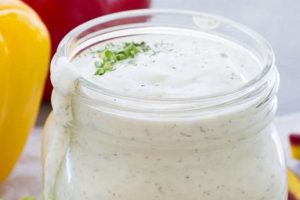
A homemade blend of dried herbs and spices, typically including buttermilk powder, garlic powder, onion powder, dill, parsley, chives, salt, and pepper, creates a versatile seasoning for various culinary applications. This mixture, when combined with mayonnaise and other dairy products, forms a classic creamy dressing. However, its uses extend beyond salads, as it can season meats, vegetables, dips, and snacks.
The convenience and extended shelf life of this blend offer advantages over pre-made bottled dressings. Making it at home allows control over ingredients, accommodating dietary restrictions and taste preferences while avoiding preservatives and additives often found in commercial products. Furthermore, the ability to customize the blend by adjusting herb ratios or incorporating additional spices provides greater culinary flexibility. Historically, dry mixes gained popularity due to increased accessibility of dried ingredients and a growing demand for convenient food preparation.
This article explores the multifaceted nature of creating and utilizing such a seasoning blend. Topics covered include detailed recipes, variations for different dietary needs, creative applications beyond salad dressings, proper storage techniques, and the historical evolution of similar blends.
Tips for Utilizing Dry Ranch Seasoning Mix
Optimizing the use of a dry ranch seasoning blend maximizes its versatility and flavor potential. The following tips provide guidance for successful incorporation in various culinary applications.
Tip 1: Storage is Key: Store the blend in an airtight container in a cool, dark, and dry environment to maintain freshness and prevent clumping. This preserves the potency of the herbs and spices for extended periods.
Tip 2: Start Small, Adjust to Taste: When using the seasoning in a new recipe, begin with a smaller amount and gradually increase to achieve the desired flavor intensity. This prevents over-seasoning and allows for customization based on personal preference.
Tip 3: Beyond Salad Dressing: Explore the versatility of the mix by using it as a dry rub for meats, poultry, or fish before grilling or roasting. It can also be added to dips, vegetable dishes, or sprinkled on popcorn for a savory snack.
Tip 4: Control the Creaminess: When preparing a ranch dressing, the consistency can be adjusted by varying the ratio of mayonnaise to sour cream or yogurt. A higher proportion of mayonnaise yields a thicker dressing.
Tip 5: Fresh Herb Enhancement: Incorporating fresh herbs, such as dill, parsley, or chives, into a prepared ranch dressing enhances the flavor profile and adds a vibrant visual appeal.
Tip 6: Ingredient Quality Matters: Utilizing high-quality dried herbs and spices significantly impacts the overall flavor of the seasoning blend. Opt for fresh, vibrant ingredients whenever possible.
Tip 7: Experiment with Variations: Consider customizing the base recipe by adding spices like smoked paprika, cayenne pepper, or onion flakes to create unique flavor profiles tailored to individual preferences.
By following these tips, one can fully realize the culinary potential of a dry ranch seasoning blend, creating flavorful dishes beyond traditional salad applications. These practices ensure consistent results and allow for creativity and customization in the kitchen.
By understanding the nuances of creating and utilizing this versatile seasoning, cooks can elevate everyday meals and explore a wide range of flavor possibilities.
1. Ingredient Quality

Ingredient quality significantly impacts the final flavor profile of a dry ranch salad dressing mix. Subpar ingredients result in a bland or off-flavored final product, while high-quality ingredients contribute to a vibrant and well-balanced taste. Understanding the nuances of ingredient selection is crucial for achieving optimal results.
- Freshness of Herbs and Spices:
Dried herbs and spices gradually lose their potency over time. Using fresh, recently purchased ingredients ensures maximum flavor intensity in the finished mix. Older spices can impart a stale or dull taste, diminishing the overall quality of the dressing. For example, using fresh garlic powder results in a pungent, pronounced garlic flavor, whereas older garlic powder can taste weak and slightly bitter.
- Quality of Buttermilk Powder:
Buttermilk powder provides the characteristic tangy flavor in ranch dressing. The quality of this ingredient directly influences the overall balance and complexity of the mix. Low-quality buttermilk powder can have a chalky texture and lack the distinct tang, negatively impacting the final flavor. Opting for high-quality buttermilk powder ensures a smooth texture and a well-defined tangy note.
- Purity of Spices:
Using pure spices, free from additives or fillers, is essential for achieving a clean, authentic flavor. Additives can introduce unwanted flavors or alter the intended taste profile. For instance, some commercially available garlic powder contains anti-caking agents that can impart a slightly metallic taste. Choosing pure garlic powder, without additives, ensures a true garlic flavor.
- Storage Conditions:
Proper storage of individual ingredients before blending and of the finished mix is crucial for maintaining quality. Exposure to moisture, heat, or light can degrade the flavor and potency of dried herbs and spices. Storing ingredients in airtight containers in a cool, dark, and dry environment preserves their quality, resulting in a superior final product. For instance, storing dried parsley in a clear container exposed to sunlight will cause it to lose its vibrant green color and diminish its flavor.
Careful consideration of ingredient quality, from sourcing to storage, ensures a superior dry ranch salad dressing mix. The cumulative impact of these factors directly translates to the final flavor, aroma, and overall quality of the blend, highlighting the importance of prioritizing ingredient selection in the recipe.
2. Precise Measurements

Precise measurements are crucial for achieving a balanced and consistent flavor profile in a dry ranch salad dressing mix. The interplay of various dried herbs and spices requires careful proportioning to avoid an overly dominant taste from any single ingredient. Accuracy in measurement ensures that the intended flavor profile, encompassing the tanginess of buttermilk powder, the savory notes of garlic and onion, and the herbaceous contributions of dill and parsley, is realized consistently.
- Impact on Flavor Balance:
Accurate measurements ensure the intended balance of sweet, savory, tangy, and herbaceous flavors. For instance, too much garlic powder can overpower the other delicate herbs, while insufficient buttermilk powder can diminish the characteristic tang. Using precise measurements allows for a harmonious blend of flavors, where each component contributes to the overall profile without overpowering others. A properly balanced mix enhances the flavor of salads and other dishes, while an unbalanced mix can result in a one-dimensional or overpowering taste.
- Consistency Across Batches:
Precise measurements guarantee consistent results every time the mix is prepared. This reliability is essential for both home cooks and commercial producers. Consistent flavor profiles build trust and satisfaction, whether preparing a family meal or manufacturing a product for market. Inconsistent measurements lead to unpredictable results, making it difficult to replicate a desired flavor profile or maintain quality control.
- Recipe Scalability:
With precise measurements as a foundation, recipes can be easily scaled up or down to accommodate different needs. Whether preparing a small batch for personal use or a larger quantity for a gathering, accurate measurements ensure the flavor profile remains consistent regardless of the batch size. This scalability offers flexibility and control in recipe adaptation.
- Recipe Adaptation and Customization:
While precise measurements establish a balanced base, they also provide a framework for customization. Once familiar with the standard ratios, adjustments can be made to individual ingredients to cater to specific preferences. For instance, increasing the dill or parsley can amplify the herbaceous notes, while reducing the garlic can create a milder flavor. Precise measurements enable informed adjustments, allowing for personalized flavor profiles without compromising the overall balance.
In the context of a dry ranch salad dressing mix recipe, precise measurements are not merely a procedural step but a foundational element that ensures consistent flavor, scalability, and the potential for personalized customization. The careful balance of ingredients achieved through accurate measurement elevates the mix from a simple combination of dried herbs and spices to a versatile and dependable seasoning.
3. Proper Blending

Proper blending is essential for achieving a homogenous dry ranch salad dressing mix, ensuring consistent flavor distribution and optimal texture. Inadequate blending can result in pockets of concentrated ingredients, leading to an uneven flavor experience. Conversely, thorough blending guarantees that each ingredient is evenly dispersed throughout the mixture, creating a harmonious balance of flavors in every bite or application.
Consider the difference between a well-blended mix and one where ingredients are poorly incorporated. In the latter case, one might encounter a mouthful of pure garlic powder or an area dominated by dill, disrupting the intended flavor profile. This uneven distribution can negatively impact the overall culinary experience, whether used as a salad dressing or a dry rub. Thorough blending, however, ensures that each application delivers a consistent and balanced flavor, reflecting the intended recipe.
Furthermore, proper blending contributes to the optimal texture of the mix. A well-blended mix is smooth and free of clumps, facilitating even dispersion when added to other ingredients or sprinkled onto dishes. This uniformity enhances both the visual appeal and the culinary experience. Clumping, on the other hand, can lead to uneven seasoning and an unpleasant gritty texture. Practical examples include a smoother consistency when mixing the dry blend with mayonnaise and sour cream for a dip, or even distribution when used as a dry rub on chicken or popcorn.
Several methods achieve proper blending, including whisking, shaking in a sealed container, or using a food processor for larger quantities. The chosen method should effectively combine all ingredients into a uniform mixture, free of clumps or pockets of isolated ingredients. Ultimately, achieving a properly blended mix ensures consistent flavor, optimal texture, and enhances the overall quality and versatility of the dry ranch salad dressing mix.
4. Airtight Storage
Airtight storage is paramount for preserving the quality and longevity of a dry ranch salad dressing mix. This practice safeguards the blend from environmental factors that can degrade its flavor, aroma, and texture. Exposure to air, moisture, and light accelerates the oxidation of dried herbs and spices, leading to a loss of potency and the development of off-flavors. The volatile aromatic compounds that contribute to the characteristic flavors of dill, parsley, garlic, and onion are particularly susceptible to degradation when exposed to air. Consequently, airtight storage is essential to maintaining the intended flavor profile.
Consider the impact of improper storage. A mix stored in a loosely sealed container will gradually lose its vibrancy, resulting in a bland and less flavorful dressing. Moisture absorption can cause clumping and caking, rendering the mix difficult to incorporate smoothly into recipes. Furthermore, exposure to light can degrade the color of dried herbs, diminishing the visual appeal of the mix. Conversely, storing the mix in an airtight container, such as a glass jar with a tight-fitting lid, creates a protective barrier against these detrimental factors. This preserves the potency of the herbs and spices, ensuring the mix retains its vibrant flavor and aroma for an extended period. For instance, a properly stored mix can maintain its quality for several months, while a poorly stored mix may become noticeably stale within a few weeks.
Practical applications of airtight storage include using opaque containers to minimize light exposure, storing containers in a cool, dark, and dry environment like a pantry or cupboard, and ensuring the container is completely sealed after each use. Addressing these factors through diligent airtight storage practices is crucial for maximizing the shelf life and maintaining the quality of a dry ranch salad dressing mix, ultimately contributing to a more flavorful and enjoyable culinary experience. This understanding reinforces the significance of airtight storage not merely as a storage solution, but as an integral component of the dry ranch salad dressing mix recipe itself.
5. Creative Applications
Creative applications extend the utility of a dry ranch salad dressing mix far beyond its traditional role as a salad enhancer. This versatility stems from the blend’s inherent flavor profile, combining the tanginess of buttermilk powder with the savory notes of garlic, onion, and herbs. This foundation allows for innovative uses across a wide range of culinary contexts, transforming a simple salad dressing mix into a multifaceted seasoning.
Consider the impact of this versatility through specific examples. The mix can be incorporated into dry rubs for meats, poultry, and fish, imparting a savory, herbaceous crust during grilling or roasting. It can be blended into dips, adding a tangy complexity to sour cream or yogurt-based preparations. Sprinkling the mix on popcorn or roasted vegetables provides a quick and flavorful snack. Furthermore, it can be added to breading mixtures for fried foods or incorporated into casseroles and baked dishes for an extra layer of flavor. These applications demonstrate how the mix transcends its primary function, offering a convenient and flavorful shortcut to enhancing a variety of dishes.
The practical significance of understanding these creative applications lies in maximizing the culinary potential of a readily available ingredient. It promotes resourcefulness in the kitchen, offering a simple yet effective way to elevate everyday meals. Recognizing the mix’s versatility not only expands its use cases but also encourages experimentation and culinary creativity. This understanding transforms the dry ranch salad dressing mix from a single-purpose ingredient into a versatile tool that can significantly enhance the flavor and complexity of numerous dishes, fostering a more dynamic and flavorful cooking experience.
6. Flavor Customization
Flavor customization represents a significant advantage of preparing homemade dry ranch salad dressing mixes. Control over individual ingredients empowers creation of blends tailored to specific palates and dietary needs. This flexibility contrasts with commercially produced mixes, which often offer limited flavor variations. Customization allows adjustments to the base recipe, enhancing or diminishing specific flavor components. For example, reducing garlic powder creates a milder blend, while increasing dill and parsley amplifies herbaceous notes. Smoked paprika or cayenne pepper can introduce smoky or spicy dimensions. This adaptability extends to dietary considerations; omitting salt creates a low-sodium version, while substituting nutritional yeast for buttermilk powder offers a vegan alternative. The practical significance of this customization lies in the ability to craft a truly personalized seasoning, aligning precisely with individual preferences and requirements.
Furthermore, flavor customization extends beyond simple ingredient adjustments. The base recipe serves as a foundation for exploring entirely new flavor profiles. Incorporating dried lemon zest and black pepper creates a bright, citrusy variant. Adding dried mushrooms or porcini powder introduces umami depth. Experimentation with herbs like oregano, thyme, or marjoram can evoke Mediterranean influences. These examples highlight the transformative potential of flavor customization, pushing beyond traditional ranch flavor profiles to create unique and personalized blends. This capacity for innovation distinguishes homemade mixes, offering a level of culinary control unavailable with pre-made options.
Ultimately, flavor customization elevates the dry ranch salad dressing mix from a static recipe to a dynamic culinary tool. It fosters experimentation and creativity, allowing individuals to craft seasonings perfectly suited to their tastes and culinary endeavors. This adaptability offers not only enhanced flavor experiences but also a deeper engagement with the culinary process, transforming a simple seasoning blend into a personalized expression of taste and culinary creativity.
Frequently Asked Questions
This section addresses common inquiries regarding dry ranch salad dressing mix recipes, offering clarity and practical guidance for utilizing this versatile seasoning.
Question 1: What is the shelf life of a homemade dry ranch seasoning mix?
When stored correctly in an airtight container in a cool, dark, and dry environment, a homemade mix typically retains optimal quality for six to twelve months. However, flavor intensity may gradually diminish over time.
Question 2: Can buttermilk powder be substituted in the recipe?
While buttermilk powder provides the characteristic tangy flavor, it can be omitted for a milder taste. Alternatives like powdered sour cream or yogurt can offer a similar, albeit less pronounced, tang. Vegan options include nutritional yeast for a cheesy, savory note.
Question 3: How can the sodium content be reduced?
Omitting salt entirely or using a salt substitute creates a low-sodium version. Potassium chloride offers a viable alternative. Additionally, reducing the overall amount of mix used in a recipe can effectively lower sodium intake.
Question 4: Beyond salads, what are some recommended uses for the mix?
The mix’s versatility extends to dry rubs for meats, poultry, and fish; seasoning for roasted vegetables, popcorn, or french fries; an addition to dips and sauces; and incorporation into breading mixtures for fried foods.
Question 5: How can clumping be prevented in the stored mix?
Thorough blending and storage in an airtight container minimize clumping. Adding a desiccant packet, such as silica gel, to the storage container can absorb excess moisture and further prevent clumping.
Question 6: Are there gluten-free considerations for this recipe?
The base recipe, utilizing dried herbs and spices, is typically gluten-free. However, when incorporating the mix into other recipes, ensure all additional ingredients are also gluten-free to maintain dietary compliance.
Understanding these frequently asked questions clarifies common concerns and misconceptions, promoting effective utilization of dry ranch salad dressing mix in various culinary applications.
The subsequent section will explore specific recipe variations for different dietary needs and preferences.
Conclusion
This exploration of dry ranch salad dressing mix recipes has illuminated the multifaceted nature of this seemingly simple blend. From ingredient selection and precise measurements to proper blending and airtight storage, each step contributes significantly to the final product’s quality and longevity. Furthermore, the examination of creative applications, ranging from dry rubs to dips and seasonings, has showcased the mix’s remarkable versatility beyond traditional salad dressings. The potential for flavor customization, empowering personalized blends tailored to individual preferences and dietary needs, further distinguishes homemade mixes. The frequently asked questions section has addressed common concerns, offering practical solutions for maximizing the mix’s utility and shelf life.
Understanding the nuances of dry ranch salad dressing mix recipes empowers culinary creativity and resourcefulness. This knowledge transforms a basic pantry staple into a dynamic tool capable of enhancing a wide array of dishes. Further exploration and experimentation with flavor profiles and applications promise continued culinary discovery and enjoyment, underscoring the enduring appeal and adaptability of this versatile seasoning.