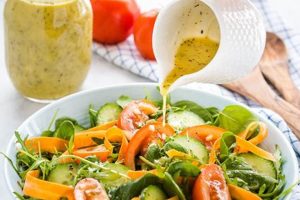
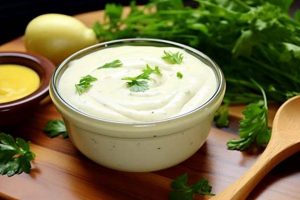
A classic emulsion of oil, egg yolks, lemon juice, garlic, anchovies, Worcestershire sauce, and Parmesan cheese forms the base of this beloved condiment. Variations often include Dijon mustard, black pepper, and other seasonings to create unique flavor profiles. A well-executed version delivers a rich, savory, and tangy experience that elevates simple romaine lettuce to a culinary delight. For example, some preparations incorporate Greek yogurt or mayonnaise for added creaminess.
The enduring popularity of this dressing stems from its ability to transform ordinary salads into satisfying meals. Its versatility extends beyond lettuce, complementing grilled chicken, fish, and roasted vegetables. The balance of umami from the anchovies, sharpness from the lemon, and richness from the cheese and egg yolks creates a complex flavor profile that has captivated palates for generations. Originating in Tijuana, Mexico, in the early 20th century, it quickly gained international recognition and remains a staple in restaurants and homes worldwide.
This exploration will delve further into the nuances of preparation, offering guidance on ingredient selection, technique variations, and tips for achieving the perfect consistency and flavor. Further topics will include discussions of dietary adaptations, storage methods, and creative serving suggestions.
Tips for an Exceptional Caesar Dressing
Achieving a truly remarkable Caesar dressing requires attention to detail and an understanding of the interplay of ingredients. These tips offer guidance for elevating the final product.
Tip 1: Emulsify Thoroughly: A stable emulsion is crucial for a creamy texture. Whisking the oil into the egg yolks drop by drop initially, then in a slow, steady stream, creates a cohesive mixture that prevents separation.
Tip 2: Freshly Grated Parmesan: Pre-grated cheese often contains cellulose, which can hinder the smooth texture. Grating Parmesan directly into the dressing ensures optimal flavor and texture.
Tip 3: Quality Anchovies: High-quality anchovy fillets provide a depth of umami flavor that cannot be replicated. Rinse the fillets before use to remove excess salt.
Tip 4: Freshly Squeezed Lemon Juice: Bottled lemon juice lacks the bright, vibrant flavor of fresh lemons. Use freshly squeezed juice for the best results.
Tip 5: Balance Flavors: Taste and adjust seasonings throughout the process. The balance of salt, pepper, and acidity should complement, not overpower, the other ingredients.
Tip 6: Garlic Considerations: Raw garlic can be pungent. Roasting or blanching the garlic before use mellows its flavor while retaining its essence. Alternatively, a garlic press can be employed.
Tip 7: Room Temperature Ingredients: Using room temperature ingredients, especially the eggs, promotes better emulsification and a smoother consistency.
By following these guidelines, one can craft a Caesar dressing that surpasses expectations. The result is a balanced, flavorful, and visually appealing condiment that elevates any dish.
These insights provide a solid foundation for creating exceptional Caesar dressings. The subsequent sections will explore variations and serving suggestions.
1. Emulsification Technique
Emulsification is fundamental to achieving the desired texture and stability in a creamy Caesar dressing. This process involves combining two immiscible liquids, typically oil and an aqueous solution (in this case, lemon juice and egg yolks), into a stable mixture. The egg yolks act as an emulsifier, their lecithin molecules binding to both the oil and water, creating a suspension of tiny oil droplets within the aqueous phase. This prevents the oil and water from separating, resulting in a smooth, creamy consistency rather than a greasy, broken dressing. The vigorous whisking action during preparation incorporates air, further contributing to the light and airy texture characteristic of a well-made Caesar dressing. Failure to emulsify correctly results in a thin, watery dressing lacking the richness and mouthfeel expected.
Consider a vinaigrette, where oil and vinegar separate quickly. In contrast, a properly emulsified Caesar dressing maintains its cohesive texture over time. This stability is crucial, ensuring the dressing clings evenly to the lettuce and other ingredients, delivering consistent flavor in each bite. Practical applications of this understanding include gradually adding the oil to the egg yolks while whisking constantly. This slow incorporation allows the emulsifier to encapsulate each droplet of oil, preventing separation. Adding a small amount of mustard, which also contains emulsifying agents, can further enhance stability. Recognizing the signs of a broken emulsion, such as a thin consistency or visible oil separation, allows for corrective action, often involving whisking in an additional egg yolk or a drop of water.
Mastery of emulsification is essential for crafting a successful creamy Caesar dressing. The stability and texture of the dressing directly influence the overall sensory experience. Attention to detail during the emulsification process ensures a smooth, creamy, and visually appealing dressing, significantly contributing to the dish’s overall success. Challenges can arise when using ingredients at drastically different temperatures or incorporating too much oil too quickly. Understanding these potential pitfalls allows for proactive adjustments and consistently excellent results.
2. Fresh, Quality Ingredients

The quality of a creamy Caesar salad dressing hinges directly on the freshness and quality of its components. Subpar ingredients yield a dressing that lacks the vibrancy and depth of flavor characteristic of a truly exceptional preparation. Investing in high-quality, fresh ingredients elevates the dressing from ordinary to extraordinary.
- Freshly Squeezed Lemon Juice:
Bottled lemon juice often contains preservatives and lacks the bright, zesty flavor of fresh lemons. Freshly squeezed lemon juice provides a vibrant acidity that balances the richness of the dressing and enhances the other flavors. The difference is noticeable in the overall taste profile. Bottled juice can impart a slightly artificial taste, while fresh juice offers a clean, invigorating citrus note.
- High-Quality Olive Oil:
Extra virgin olive oil, preferably cold-pressed, contributes significantly to the flavor and texture of the dressing. Its fruity, peppery notes complement the other ingredients, while its viscosity contributes to the creamy emulsion. Using a lower-quality oil can result in a greasy mouthfeel and muted flavors. For example, a robust Tuscan olive oil will create a more pronounced flavor than a delicate Ligurian olive oil.
- Fresh Garlic:
Fresh garlic offers a pungent, aromatic flavor that enhances the dressing’s complexity. Pre-minced or jarred garlic often lacks the intensity and freshness of whole cloves. Roasting or blanching the garlic mellows its sharpness while retaining its characteristic flavor. This nuance allows for greater control over the final taste. Using aged garlic can impart an unpleasant bitterness.
- Quality Parmesan Cheese:
Authentic Parmigiano-Reggiano, freshly grated, adds a salty, umami richness to the dressing. Pre-grated cheese frequently contains cellulose, which can create a gritty texture and diminish the flavor. The quality of the cheese directly impacts the overall depth and complexity of the dressing. A high-quality Parmesan melts seamlessly into the dressing, contributing to its creamy texture and savory notes.
The interplay of these fresh, high-quality ingredients creates a synergistic effect, elevating the creamy Caesar dressing to a culinary experience. The difference between a dressing made with premium ingredients and one made with inferior substitutes is palpable. The former delivers a vibrant, complex flavor profile, while the latter often falls flat, lacking the depth and nuance that characterize a truly exceptional Caesar dressing. The investment in quality ingredients translates directly into a superior final product.
3. Anchovy Selection

Anchovies play a crucial role in a creamy Caesar salad dressing, contributing a depth of umami flavor that forms the backbone of its characteristic savory profile. Selection of the appropriate anchovy product significantly impacts the final result. Oil-packed anchovies offer a convenient and readily available option. Their tender texture blends seamlessly into the dressing, imparting a rich, salty flavor. Salt-packed anchovies, while requiring rinsing and filleting, provide a more intense, briny flavor that some consider essential for an authentic Caesar dressing. Using anchovy paste offers a convenient alternative, though it can sometimes lack the nuanced flavor of whole fillets. Poor-quality anchovies, regardless of their form, can introduce an undesirable fishy or overly salty taste, detracting from the overall balance of the dressing.
The quantity of anchovies used also requires careful consideration. Too few anchovies may result in a bland dressing that lacks the characteristic umami punch, while too many can overpower the other flavors, creating an excessively salty or fishy taste. For example, using one or two high-quality oil-packed fillets per serving typically provides sufficient umami depth without overwhelming the other ingredients. Adjustments may be necessary depending on the specific anchovy product and personal preference. The interaction between anchovy selection and the other ingredients, particularly the garlic and lemon juice, further influences the final flavor profile. The acidity of the lemon juice helps to balance the saltiness of the anchovies, while the garlic adds a pungent aromatic note that complements the umami character.
Understanding the impact of anchovy selection empowers one to tailor the dressing’s flavor profile. Careful consideration of anchovy type, quality, and quantity ensures a balanced and flavorful result. This knowledge allows for adjustments based on specific ingredient combinations and desired taste outcomes, mitigating the risk of an unbalanced or unappetizing dressing. The choice between oil-packed, salt-packed, or paste allows for flexibility in preparation and control over the final intensity of anchovy flavor. Ultimately, thoughtful anchovy selection contributes significantly to the overall success of a creamy Caesar salad dressing.
4. Garlic Preparation
Garlic preparation significantly influences the final flavor profile of creamy Caesar salad dressing. Raw garlic possesses a sharp, pungent flavor that, while desirable to some, can be overpowering when incorporated directly into the dressing. Various preparation methods modulate garlic’s intensity, allowing for nuanced flavor integration. Mincing raw garlic releases its volatile compounds, resulting in the most assertive flavor. This method suits individuals who prefer a pronounced garlic presence. Pressing garlic through a garlic press yields a similar intensity, though the resulting pure distributes more evenly throughout the dressing.
Roasting garlic mellows its sharpness, transforming its flavor profile into something sweeter and more nuanced. The roasting process caramelizes the sugars in the garlic, creating a depth of flavor that complements the richness of the dressing without overpowering the other ingredients. This method is ideal for those seeking a balanced flavor profile. Similarly, blanching garlic in boiling water for a brief period tames its pungency while retaining a subtle garlic essence. This technique offers a middle ground between the raw and roasted approaches. Consider, for example, a dressing intended for pairing with delicate grilled fish. The assertive flavor of raw garlic might clash with the subtle flavor of the fish, while roasted or blanched garlic would provide a complementary savory note without overwhelming the dish.
Understanding the impact of garlic preparation methods enables one to tailor the dressing to specific preferences and ingredient pairings. Careful consideration of desired flavor intensity guides the selection of the appropriate method. Challenges can arise when raw garlic is used indiscriminately, potentially overpowering the other delicate flavors within the dressing. Conversely, insufficiently cooked roasted garlic may retain a degree of sharpness that disrupts the balance. Practical application of this knowledge ensures the garlic contributes harmoniously to the overall flavor profile of the creamy Caesar salad dressing, enhancing its complexity and appeal.
5. Lemon Juice (Freshly Squeezed)
Freshly squeezed lemon juice constitutes a critical component of creamy Caesar salad dressing, providing essential acidity that balances the richness of the other ingredients. Its bright, citrusy flavor enlivens the dressing, preventing it from becoming overly heavy or cloying. An exploration of its multifaceted contributions reveals its significance within the recipe.
- Balancing Richness and Saltiness
The acidity of freshly squeezed lemon juice cuts through the richness of the egg yolks, oil, and Parmesan cheese, creating a harmonious flavor profile. It also tempers the saltiness of the anchovies, preventing the dressing from becoming overly savory. The balance achieved allows the individual flavors to shine without any single element dominating the palate. For instance, consider the interplay between the salty anchovies and the tart lemon juicethe acidity brightens the palate, preventing the anchovies from becoming overpowering.
- Flavor Enhancement
Beyond balancing richness and saltiness, lemon juice enhances the other flavors present in the dressing. Its citrus notes interact synergistically with the garlic and pepper, creating a more complex and nuanced flavor profile. The brightness of the lemon also lifts the overall taste, making the dressing more refreshing and palatable. This can be observed in how the lemon juice accentuates the subtle nuances of the olive oil and Parmesan, preventing them from being overshadowed by the more assertive flavors.
- Emulsion Stability
While not a primary emulsifier, the acidity of lemon juice contributes to the stability of the emulsion in Caesar dressing. The low pH helps to maintain the structure of the egg yolks, promoting a more stable and homogenous mixture. This is particularly relevant in dressings that do not utilize additional emulsifying agents like mustard. A stable emulsion prevents the dressing from separating into its constituent oil and aqueous components, ensuring a consistent texture and flavor distribution.
- Freshness and Vibrancy
Freshly squeezed lemon juice contributes a vibrancy that bottled lemon juice often lacks. The volatile aromatic compounds present in fresh juice impart a bright, zesty aroma and flavor that elevates the overall sensory experience. This freshness is evident in both the taste and aroma of the dressing, contributing to its appeal. The difference between freshly squeezed and bottled lemon juice becomes readily apparent in the final product; the fresh juice imparts a distinct brightness and complexity that significantly enhances the dressing’s overall quality.
In summary, freshly squeezed lemon juice plays a crucial role in the creamy Caesar salad dressing recipe, extending beyond mere acidity. Its contribution to flavor balance, enhancement, emulsion stability, and overall freshness elevates the dressing, transforming it into a complex and harmonious culinary creation. Substituting bottled lemon juice compromises these qualities, resulting in a dressing that lacks the vibrancy and depth of flavor characteristic of a truly exceptional Caesar dressing. Understanding the multifaceted role of lemon juice highlights its essential contribution to this classic recipe.
6. Seasoning Balance

Seasoning balance constitutes a critical factor in a successful creamy Caesar salad dressing recipe. It determines the overall harmony and palatability of the dressing, ensuring no single flavor dominates the experience. A properly balanced dressing allows the nuanced flavors of each ingredient to contribute to the overall profile, creating a complex and satisfying taste.
- Salt
Salt enhances the inherent flavors of the other ingredients, particularly the umami notes from the anchovies and Parmesan cheese. However, excessive salt can mask the subtleties of the other components, rendering the dressing one-dimensional. Careful salt addition, preferably in small increments with tasting in between, allows for precise control and prevents over-salting. Consider, for example, the impact of using salted versus unsalted butter in a recipethe former requires less added salt, highlighting the importance of considering existing sodium levels. Similarly, the salt content of different anchovy brands varies, necessitating adjustments in the added salt.
- Black Pepper
Freshly ground black pepper introduces a subtle heat and complexity to the dressing. Its slightly pungent flavor complements the richness of the egg yolks and olive oil. Excessive pepper can overwhelm the delicate balance, creating an unpleasant bitterness. The grind size influences the pepper’s impact; coarsely ground pepper offers a more pronounced presence than finely ground pepper. Adjustments based on personal preference and the desired level of spiciness are crucial. A comparison can be made to the use of pepper in a delicate white sauce versus a robust steak marinadethe former requires a lighter touch to avoid overwhelming the subtle flavors.
- Acidity
The acidity derived from lemon juice balances the richness of the dressing and tempers the saltiness of the anchovies and cheese. Insufficient acidity can result in a flat, heavy dressing, while excessive acidity can make it unpleasantly tart. The variety of lemon used can also influence the acidity level, requiring adjustments based on the specific fruit. Comparing the acidity of lemons to that of limes illustrates this variabilitylimes generally possess a higher acidity, necessitating smaller quantities for a similar effect in a recipe.
- Garlic
Garlic contributes a pungent, aromatic dimension to the dressing. However, its intensity requires careful management. Raw garlic offers the most potent flavor, while roasted or blanched garlic provides a more mellowed sweetness. The preparation method influences the final balance, as raw garlic can easily overpower the other flavors, while roasted garlic contributes a more integrated savory note. This can be likened to the difference between using fresh ginger versus pickled ginger in Asian cuisinethe former adds a sharp spice, while the latter offers a more subtle, tangy flavor.
The interplay of these seasonings determines the ultimate success of the creamy Caesar salad dressing. A harmonious balance of salt, pepper, acidity, and garlic creates a complex flavor profile that complements the other ingredients, allowing their individual characteristics to shine through without any single element dominating the experience. Failure to achieve this balance can result in a dressing that is either too salty, too acidic, too peppery, or overly dominated by garlic, obscuring the nuances of the other components. The careful and deliberate balancing of these elements elevates the dressing from a simple condiment to a sophisticated culinary creation.
7. Parmesan Quality
Parmesan cheese plays a pivotal role in creamy Caesar salad dressing, contributing not only its characteristic salty, umami flavor but also influencing the texture and overall quality of the final product. The quality of the Parmesan used directly impacts the dressing’s success, affecting its flavor complexity, texture, and ability to emulsify properly. Understanding the nuances of Parmesan quality allows for informed decisions that elevate the dressing from ordinary to exceptional.
- Authenticity and Origin
Authentic Parmigiano-Reggiano, protected by strict regulations regarding production methods and geographic origin, offers a complex flavor profile unmatched by generic Parmesan cheeses. Its granular texture, a result of the traditional aging process, contributes to the dressing’s body and mouthfeel. Generic Parmesan cheeses, often produced using shortcuts and fillers, lack the depth of flavor and textural complexity of true Parmigiano-Reggiano. For example, the presence of cellulose in some generic Parmesan cheeses can lead to a gritty texture in the dressing, detracting from the smooth, creamy consistency desired. Authentic Parmigiano-Reggiano, with its crystalline structure, dissolves more readily into the dressing, contributing to a smoother, more integrated final product.
- Freshly Grated vs. Pre-Grated
Freshly grated Parmesan offers superior flavor and texture compared to pre-grated alternatives. Pre-grated Parmesan often contains added cellulose to prevent clumping, which can negatively impact the dressing’s texture, creating a slightly grainy mouthfeel. Additionally, the pre-grating process exposes more surface area to air, leading to oxidation and flavor degradation. Freshly grating Parmesan directly into the dressing ensures optimal flavor and texture, maximizing its contribution to the final product. The difference between a dressing made with freshly grated Parmesan and one made with pre-grated Parmesan is palpable; the former delivers a brighter, more nuanced flavor and a smoother texture.
- Age and Flavor Profile
The age of Parmesan influences its flavor profile. Younger Parmesan, typically aged for 12-18 months, possesses a milder, sweeter flavor. Older Parmesan, aged for 24 months or more, develops a more complex, sharper, and nuttier flavor. Selection of the appropriate age depends on personal preference and the desired flavor profile of the dressing. A younger Parmesan might complement a lighter, more delicate Caesar dressing, while an older Parmesan would enhance the robustness of a dressing with stronger flavors. For instance, pairing a 36-month aged Parmesan with high-quality anchovies and a robust olive oil creates a dressing with a pronounced umami character.
- Storage and Preservation
Proper storage of Parmesan cheese is crucial for maintaining its quality and preventing flavor degradation. Storing Parmesan in the refrigerator, tightly wrapped in wax paper or plastic wrap, helps to preserve its freshness and prevent it from drying out. Exposure to air accelerates oxidation and flavor loss. Storing Parmesan with a piece of bread in the wrapping can help to absorb excess moisture and maintain optimal humidity. Proper storage ensures the Parmesan retains its full flavor potential when incorporated into the dressing. Using improperly stored, dried-out Parmesan can result in a dressing with a diminished flavor profile and a less desirable texture.
The quality of Parmesan cheese significantly influences the overall quality of creamy Caesar salad dressing. Selecting authentic Parmigiano-Reggiano, grating it freshly, choosing an appropriate age, and storing it correctly maximizes its flavor contribution and ensures a smooth, creamy texture. These factors, when carefully considered, elevate the dressing, transforming it from a simple condiment into a culinary experience that highlights the nuanced interplay of high-quality ingredients. Neglecting Parmesan quality compromises the dressing’s potential, resulting in a less flavorful and texturally satisfying outcome.
Frequently Asked Questions
This section addresses common inquiries regarding creamy Caesar salad dressing preparation, offering concise and informative responses.
Question 1: What causes Caesar dressing to separate, and how can separation be prevented?
Separation occurs when the emulsion breaks, typically due to insufficient whisking, improper ingredient temperature, or excessive oil added too quickly. Gradual oil incorporation while whisking constantly, ensuring consistent ingredient temperatures, and using a reliable emulsifier like egg yolks or mustard helps prevent separation.
Question 2: Can Caesar dressing be made without raw eggs?
While raw egg yolks contribute significantly to the classic flavor and texture, alternatives exist. Pasteurized egg yolks mitigate safety concerns, while mayonnaise or Greek yogurt can provide creaminess, though they may slightly alter the flavor profile. These substitutions offer safer and potentially healthier options.
Question 3: How long can Caesar dressing be stored, and what are the optimal storage methods?
Properly stored in an airtight container in the refrigerator, homemade Caesar dressing typically lasts for up to five days. Separation may occur during storage; gentle whisking or shaking usually restores the emulsion. Freezing is not recommended, as it can negatively impact texture and flavor upon thawing.
Question 4: What are some common flavor variations for Caesar dressing?
Flavor profiles can be customized through ingredient adjustments. Adding roasted red peppers introduces sweetness and smokiness, while incorporating Dijon mustard adds tanginess. Other variations include using different types of vinegar, incorporating herbs like chives or parsley, or adding a dash of hot sauce for a spicy kick.
Question 5: Can Caesar dressing be used for more than just salads?
Its versatility extends beyond salads. Caesar dressing serves as a marinade for chicken or fish, a dipping sauce for vegetables or chips, or a spread for sandwiches and wraps. Its creamy texture and robust flavor enhance a variety of dishes beyond the traditional salad context.
Question 6: How can one adjust the thickness of Caesar dressing?
Thickness can be adjusted by modifying the ratios of oil and emulsifying agents. Increasing the oil content creates a thicker dressing, while reducing the oil or adding a small amount of water or lemon juice thins it. Monitoring the consistency during preparation allows for adjustments to achieve the desired texture.
Addressing these common inquiries provides a comprehensive understanding of Caesar dressing preparation and storage, empowering individuals to create and enjoy this culinary classic confidently.
Further exploration of Caesar salad variations and serving suggestions follows in the next section.
Creamy Caesar Salad Dressing Recipe
Exploration of creamy Caesar salad dressing recipes reveals a nuanced interplay of ingredients and techniques. Emulsification, ingredient quality, and seasoning balance contribute significantly to the final product. Freshly squeezed lemon juice, high-quality Parmesan, and carefully selected anchovies are essential for achieving optimal flavor and texture. Garlic preparation methods influence the dressing’s pungency, while proper seasoning harmonizes the diverse flavors. Understanding these elements allows for informed choices, elevating the dressing beyond a simple condiment to a culinary creation.
Mastery of creamy Caesar salad dressing preparation empowers culinary exploration and personalized flavor experiences. The potential for variation, from ingredient selection to seasoning adjustments, allows for continuous refinement and adaptation to individual preferences. Continued appreciation for the delicate balance of flavors and textures ensures this classic dressing remains a timeless culinary staple, adaptable to evolving palates and culinary trends.