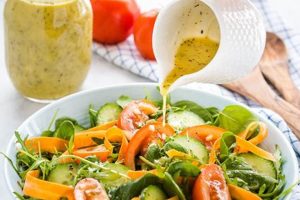
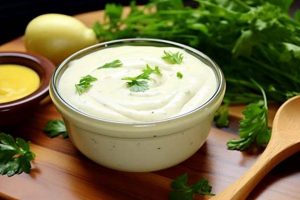
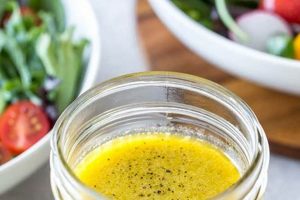
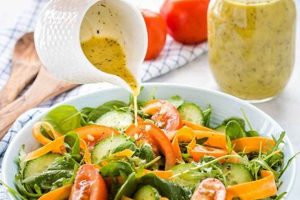
Flavorful emulsions designed to enhance salads, these culinary creations typically combine garlic, oil, an acidic element (such as vinegar or citrus juice), and often additional seasonings. A classic example includes minced garlic, olive oil, lemon juice, salt, and pepper, whisked together into a vibrant, aromatic dressing.
Beyond their ability to elevate simple greens, these dressings offer potential health benefits. Garlic, a key ingredient, is known for its antioxidant and antimicrobial properties. Furthermore, the choice of oil contributes to the nutritional value. Olive oil, for instance, is rich in healthy fats. Historically, flavored oils and vinegars have played a vital role in culinary traditions worldwide, serving as both a preservative and a flavor enhancer for various dishes. The use of garlic in such preparations reflects its long-standing recognition for both its culinary and medicinal properties.
This exploration will delve into various preparation methods, ranging from classic emulsified dressings to creamy variations, offering a diverse range of options to suit individual preferences and dietary needs. Further discussion will encompass ingredient selection, flavor pairings, and techniques for achieving optimal texture and taste.
Tips for Crafting Exceptional Garlic Salad Dressings
Achieving a well-balanced and flavorful garlic salad dressing requires attention to detail and an understanding of the interplay between ingredients. These tips offer guidance for creating dressings that elevate any salad.
Tip 1: Fresh Garlic is Key: Pre-minced garlic often lacks the pungent vibrancy of freshly minced or pressed cloves. Investing in a garlic press or honing knife skills significantly enhances the final product.
Tip 2: Balance Acidity: The right balance of acidity is crucial. Start with a smaller amount of vinegar or citrus juice and adjust to taste, ensuring a pleasant tang without overpowering the other flavors.
Tip 3: Emulsification Matters: Proper emulsification creates a smooth, creamy texture and prevents separation. Whisk the ingredients vigorously or use a blender for a more stable emulsion.
Tip 4: Oil Selection: The choice of oil influences the flavor profile. Extra virgin olive oil offers a robust, peppery flavor, while avocado oil provides a milder, creamier base. Experiment to find a preferred option.
Tip 5: Seasoning Beyond Salt and Pepper: Explore additional seasonings such as Dijon mustard, honey, herbs, or spices to create unique and complex flavor combinations. Start small and adjust according to personal preference.
Tip 6: Roasting the Garlic: Roasting garlic mellows its flavor, creating a sweeter, more nuanced profile that complements creamy dressings particularly well.
Tip 7: Allow Time for Flavors to Meld: Freshly prepared dressings benefit from resting time, allowing the flavors to meld and intensify. Refrigerate for at least 30 minutes before serving.
By following these guidelines, one can create flavorful and well-balanced garlic salad dressings that complement a wide array of greens and vegetables. Mastery of these techniques enhances culinary expertise and allows for customized flavor profiles.
This exploration concludes with a selection of specific recipes, incorporating these principles to illustrate their practical application and further inspire culinary creativity.
1. Fresh Garlic

Fresh garlic plays a pivotal role in garlic salad dressing recipes, contributing significantly to the overall flavor profile. Its pungent, sharp notes provide a foundational element upon which other ingredients build. The use of fresh garlic, as opposed to pre-minced or powdered varieties, yields a more pronounced and nuanced flavor. This stems from the release of allicin, a sulfur-containing compound responsible for garlic’s characteristic aroma and taste, which is maximized when cloves are freshly crushed or minced. For instance, a vinaigrette featuring freshly pressed garlic exhibits a vibrant, almost spicy kick, whereas one made with pre-minced garlic tends to offer a milder, sometimes duller, taste.
The impact of fresh garlic extends beyond mere flavor enhancement. It introduces a textural element, contributing a subtle bite that complements the smoother textures of the oil and acid components. Furthermore, fresh garlic offers potential health benefits attributed to its antioxidant and antimicrobial properties, although these are diminished with cooking. From a practical standpoint, utilizing fresh garlic allows for control over the intensity of its flavor. Mincing the cloves finely results in a more assertive garlic presence, while a coarser chop yields a milder taste. This adaptability makes fresh garlic a versatile ingredient, suited to a broad range of flavor preferences and recipe variations. Consider a robust Caesar dressing where the assertive flavor of finely minced garlic harmonizes with parmesan and anchovies, compared to a delicate lemon-herb vinaigrette where coarsely chopped garlic provides a subtle backdrop to lighter flavors.
In conclusion, fresh garlic stands as a cornerstone of successful garlic salad dressing recipes. Its contribution extends beyond flavor, influencing texture and offering potential health benefits. Understanding its impact empowers culinary exploration, allowing for precise control over flavor intensity and customization to complement a diverse array of ingredients and palates. While challenges may include variations in garlic pungency depending on variety and growing conditions, careful selection and preparation mitigate this variability. Ultimately, the choice to use fresh garlic underscores a commitment to maximizing flavor and optimizing the overall sensory experience of the final dish.
2. Quality Oil

The selection of oil significantly impacts the sensory experience and nutritional value of garlic salad dressings. Quality oil serves not merely as a carrier of flavor but as a foundational component that influences texture, aroma, and overall palatability. Understanding the characteristics of different oils allows for informed choices that elevate these dressings beyond basic emulsions.
- Flavor Profile
Different oils possess distinct flavor profiles that interact with the pungent notes of garlic. Extra virgin olive oil, with its peppery and slightly bitter undertones, creates a robust dressing. Avocado oil, known for its mild, buttery flavor, yields a smoother, creamier result. The chosen oil should complement rather than mask the garlic’s presence, creating a harmonious balance of flavors. For example, a delicate spring mix salad might benefit from a light vinaigrette made with walnut oil, while a heartier kale salad could handle the intensity of extra virgin olive oil.
- Texture and Viscosity
Oil viscosity affects the dressing’s texture and mouthfeel. Lighter oils, such as grapeseed oil, contribute to a thinner, more delicate emulsion. Conversely, denser oils, like extra virgin olive oil, produce a thicker, more substantial dressing. The desired texture depends on the specific salad and personal preference. A light vinaigrette clings delicately to delicate greens, whereas a thicker dressing better coats heartier vegetables.
- Nutritional Composition
Oils vary in their nutritional content. Extra virgin olive oil is rich in monounsaturated fats and antioxidants. Flaxseed oil offers a source of omega-3 fatty acids. Choosing an oil with a favorable nutritional profile enhances the health benefits of the dressing. While flavor and texture are important, aligning these with nutritional considerations creates a more wholesome culinary experience.
- Shelf Life and Storage
Different oils have varying shelf lives and storage requirements. Exposure to light, heat, and air can lead to oxidation and rancidity, compromising both flavor and quality. Proper storage, in a cool, dark place, is essential for preserving the integrity of the oil and, consequently, the dressing. Understanding these factors ensures that the chosen oil contributes positively to the final product, rather than introducing off-flavors or diminishing its nutritional value. Proper storage practices maximize the oil’s contribution to the overall quality of the dressing.
The interplay of these facets underscores the importance of selecting quality oil in garlic salad dressing recipes. The chosen oil contributes significantly to the final product’s flavor, texture, nutritional value, and overall quality. Careful consideration of these factors elevates the dressing from a simple condiment to an integral component of a well-balanced and enjoyable culinary creation.
3. Acidity Balance

Acidity balance plays a crucial role in garlic salad dressing recipes, influencing not only the perceived tartness but also the overall flavor profile, texture, and emulsion stability. The judicious use of acidic ingredients, such as vinegar or citrus juice, provides the necessary counterpoint to the richness of the oil and the pungency of the garlic. This balance prevents the dressing from becoming overly heavy or cloying, creating a refreshing and palatable culinary experience. The chemical interaction between the acid and other ingredients also contributes to the emulsification process, helping to bind the oil and aqueous phases together. For example, a dressing made with a robust red wine vinegar offers a sharper, more complex flavor profile than one made with a milder apple cider vinegar. Furthermore, the acidity level impacts the shelf life of the dressing by inhibiting bacterial growth.
Different acidic ingredients contribute unique flavor characteristics. Lemon juice imparts a bright, citrusy note, while lime juice offers a more tart and tangy flavor. Vinegars, ranging from balsamic to rice wine vinegar, introduce a spectrum of flavor complexities, from sweet and syrupy to light and delicate. The specific acid chosen should complement the other ingredients in the dressing and the overall flavor profile of the salad. A Greek salad with feta and olives pairs well with a red wine vinegar dressing, whereas a lighter salad with fresh herbs and vegetables might benefit from a lemon vinaigrette. Furthermore, the concentration of acid matters. Starting with a smaller amount and adjusting to taste allows for precise control over the final acidity level, ensuring a balanced and harmonious flavor profile.
Achieving the correct acidity balance requires careful consideration of the interplay between all ingredients. The inherent sweetness of certain vegetables, the saltiness of cheeses, and the bitterness of some greens all influence the perceived acidity of the dressing. Adjusting the acid component accordingly ensures a well-rounded and harmonious flavor profile. Overly acidic dressings can overwhelm delicate ingredients, while insufficient acidity can result in a bland and unappealing taste. Therefore, precise measurement and tasting throughout the preparation process are essential for achieving the desired balance. Mastery of acidity balance elevates garlic salad dressing recipes from simple mixtures to complex culinary creations that enhance the overall dining experience.
4. Emulsification Method
Emulsification is fundamental to the texture, stability, and overall sensory experience of garlic salad dressings. This process involves combining two immiscible liquids, typically oil and an aqueous solution (vinegar or citrus juice), into a stable mixture. The desired result is a smooth, creamy dressing, rather than one where the oil and aqueous phases separate. The method employed significantly impacts the final product’s characteristics. A temporary emulsion, created through vigorous whisking, results in a lighter, less viscous dressing that may separate over time. A more permanent emulsion, achieved through the addition of an emulsifying agent or the use of a blender, yields a thicker, more stable dressing less prone to separation.
Several techniques achieve emulsification in garlic salad dressings. The classic method involves slowly drizzling the oil into the aqueous phase while whisking constantly. This gradual incorporation allows the oil droplets to disperse evenly within the aqueous phase, creating a stable emulsion. Alternatively, a blender or food processor can achieve a quicker and more thorough emulsification. The high-speed blending action breaks down the oil into smaller droplets, creating a more homogenous and stable mixture. Furthermore, incorporating an emulsifying agent, such as Dijon mustard or egg yolk, facilitates the binding of oil and water molecules, resulting in a more permanent emulsion. The choice of method depends on the desired texture and stability of the dressing. A classic vinaigrette benefits from the lighter texture achieved through whisking, while a creamy Caesar dressing requires a more stable emulsion produced by a blender or emulsifying agent.
Understanding the principles of emulsification empowers culinary control over the final product. Factors such as the rate of oil addition, the intensity of whisking or blending, and the presence of emulsifying agents all influence the stability and texture of the dressing. A stable emulsion not only enhances the visual appeal but also contributes to a more homogenous flavor distribution. Conversely, a poorly emulsified dressing separates, creating an unpleasant oily mouthfeel and uneven flavor. Therefore, mastering emulsification techniques is essential for crafting high-quality garlic salad dressings that offer both visual appeal and a delightful sensory experience. This knowledge enables chefs to tailor the texture and stability of their dressings to complement a variety of salads and culinary creations.
5. Complementary Seasonings

Complementary seasonings represent a critical element in garlic salad dressing recipes, elevating them from simple emulsions to complex flavor experiences. These additions, ranging from herbs and spices to sweeteners and umami-rich ingredients, interact with the foundational flavors of garlic, oil, and acid, creating depth, balance, and nuance. Strategic selection and application of complementary seasonings allow for customization, aligning the dressing’s flavor profile with the specific ingredients of the salad and individual preferences.
- Herbs and Spices
Fresh or dried herbs and spices contribute significantly to the aromatic complexity of garlic salad dressings. Parsley, chives, and oregano offer bright, herbaceous notes that complement lighter vinaigrettes. Conversely, bolder spices like paprika, cumin, or chili flakes introduce warmth and depth, suitable for heartier salads. The choice of herbs and spices should harmonize with the other ingredients in the dressing and the salad itself. For example, a Mediterranean-inspired dressing might incorporate oregano and mint, while a Southwestern-style dressing could include cumin and chili powder.
- Sweeteners
A touch of sweetness balances the sharpness of garlic and acidity, adding a dimension of complexity. Honey, maple syrup, or agave nectar introduce subtle sweetness and contribute to the dressing’s viscosity. The type and amount of sweetener should be carefully considered to avoid overpowering the other flavors. A delicate vinaigrette might benefit from a touch of honey, while a robust dressing could handle the stronger sweetness of maple syrup. Balancing sweetness with acidity and other savory elements is crucial for a harmonious flavor profile.
- Umami Enhancers
Umami, often described as a savory, meaty flavor, adds depth and richness to garlic salad dressings. Ingredients like Worcestershire sauce, soy sauce, or anchovy paste contribute umami notes that complement the garlic and enhance the overall savoriness. These additions should be used sparingly to avoid overpowering the other flavors. A Caesar dressing often incorporates anchovy paste for its umami contribution, while a vinaigrette might benefit from a dash of Worcestershire sauce. Balancing umami with other flavor elements creates a more complex and satisfying dressing.
- Other Flavor Enhancers
Beyond herbs, spices, sweeteners, and umami enhancers, other ingredients can elevate garlic salad dressings. Dijon mustard adds a tangy complexity and acts as an emulsifier. Roasted red peppers contribute a smoky sweetness. Sun-dried tomatoes offer a concentrated, umami-rich flavor. These additions, when used judiciously, further customize the dressing, creating unique flavor profiles that complement specific salads and personal preferences. A creamy dressing might benefit from the addition of roasted red peppers, while a vinaigrette could be enhanced with a touch of Dijon mustard.
The careful selection and combination of complementary seasonings are essential for creating well-balanced and flavorful garlic salad dressings. These additions not only enhance the complexity and depth of flavor but also allow for customization, ensuring that the dressing complements the specific ingredients of the salad and satisfies individual preferences. The interplay of these seasonings with the foundational elements of garlic, oil, and acid transforms a simple dressing into a culinary masterpiece, elevating the overall dining experience. Furthermore, the choice of seasonings can also influence the nutritional value of the dressing, with certain herbs and spices offering antioxidant and anti-inflammatory benefits.
6. Storage Techniques

Proper storage techniques are essential for maintaining the quality, flavor, and safety of garlic salad dressings. These techniques directly impact the longevity and palatability of the final product, influencing both its culinary and practical value. A well-crafted dressing, improperly stored, can quickly deteriorate, developing off-flavors, textural changes, and potential microbial growth. Conversely, appropriate storage preserves the intended flavor profile, texture, and nutritional value, extending the dressing’s usability and minimizing waste. The connection between storage techniques and recipe success is undeniable. For instance, a vinaigrette containing fresh herbs, if left at room temperature, will wilt and lose its vibrancy, whereas refrigeration preserves its fresh, bright flavors. Similarly, creamy dressings, particularly those containing dairy or eggs, are highly susceptible to bacterial growth if not kept adequately chilled.
Several factors influence optimal storage. Airtight containers are crucial for preventing oxidation and preserving volatile aromatic compounds. Exposure to light can degrade certain ingredients, particularly oils and herbs, leading to off-flavors. Temperature fluctuations contribute to emulsion instability and accelerate spoilage. Therefore, storing dressings in opaque, airtight containers in a consistently cool environment, such as a refrigerator, is paramount. The specific storage duration varies depending on the ingredients. Dressings containing fresh herbs or ingredients prone to spoilage have a shorter shelf life than those made with more stable components. Regularly assessing the dressing’s appearance, aroma, and texture is essential for determining its usability. Any signs of spoilage, such as mold growth, off-odors, or separation, indicate that the dressing should be discarded.
Effective storage practices are integral to maximizing the enjoyment and practicality of garlic salad dressing recipes. They preserve the intended flavor profile, texture, and nutritional value, extending the dressing’s shelf life and minimizing waste. Understanding the factors influencing storage, such as container type, light exposure, and temperature stability, empowers informed decisions that ensure food safety and optimize culinary outcomes. While challenges such as ingredient variability and potential cross-contamination exist, careful attention to storage practices significantly mitigates these risks, enhancing the overall culinary experience. By integrating proper storage techniques into recipe development and execution, one ensures not only a delicious but also a safe and sustainable culinary practice. This mindful approach maximizes the value of the ingredients and elevates the overall culinary endeavor.
7. Dietary Adaptations
Dietary adaptations play a crucial role in ensuring that garlic salad dressing recipes remain accessible and enjoyable across a wide range of individual needs and preferences. These adaptations address specific dietary restrictions, such as veganism, vegetarianism, gluten-free diets, and low-sodium or low-fat requirements. Modifying ingredients and preparation methods allows individuals to savor flavorful and healthful dressings without compromising their dietary guidelines. Adaptability in recipes expands their reach and promotes inclusivity in culinary experiences. For example, a traditional Caesar dressing, typically made with anchovies and Parmesan cheese, can be adapted for vegans by using capers and nutritional yeast to replicate the savory and umami notes. Similarly, a creamy dressing relying on mayonnaise can be made lighter and lower in fat by substituting Greek yogurt or a blended avocado.
- Vegan Adaptations
Vegan adaptations focus on eliminating all animal products from the recipe. This often involves substituting honey with maple syrup or agave nectar, replacing dairy-based cheeses with plant-based alternatives like nutritional yeast, and using egg replacements or emulsifying techniques that don’t rely on eggs. Achieving the desired texture and flavor balance might require adjustments to the ratios of other ingredients. For example, a vegan Caesar dressing can be made by blending soaked cashews, nutritional yeast, lemon juice, garlic, and water to create a creamy, flavorful emulsion.
- Gluten-Free Adaptations
Gluten-free adaptations center on eliminating ingredients containing gluten, a protein found in wheat, barley, and rye. In salad dressings, gluten might be present in certain soy sauces or thickening agents. Ensuring that all ingredients are certified gluten-free or naturally gluten-free caters to individuals with celiac disease or gluten sensitivity. For instance, using tamari or coconut aminos in place of traditional soy sauce guarantees a gluten-free dressing.
- Low-Sodium Adaptations
Low-sodium adaptations aim to reduce the sodium content of the dressing. This typically involves minimizing added salt and opting for low-sodium or no-salt-added ingredients. Flavor enhancement can be achieved through herbs, spices, and citrus zest, compensating for the reduced saltiness. Using fresh herbs and spices instead of salt-based seasoning blends significantly lowers the sodium content without sacrificing flavor complexity. For example, a low-sodium Italian dressing could feature fresh oregano, basil, and garlic, minimizing the need for added salt.
- Low-Fat Adaptations
Low-fat adaptations focus on reducing the overall fat content, often by substituting lower-fat ingredients or adjusting ingredient ratios. Using a higher proportion of vinegar or citrus juice to oil creates a lighter vinaigrette. Pureeing fruits or vegetables, such as roasted red peppers or blended avocado, can add creaminess without relying on high-fat ingredients. A low-fat ranch dressing, for example, might incorporate Greek yogurt instead of mayonnaise or sour cream, reducing fat and calories without compromising the creamy texture.
Dietary adaptations expand the versatility and inclusivity of garlic salad dressing recipes. By thoughtfully substituting ingredients and modifying preparation methods, individuals can enjoy flavorful and healthful dressings while adhering to their specific dietary needs. These adaptations not only cater to a wider audience but also encourage culinary creativity and exploration. The ability to adapt recipes demonstrates a deep understanding of flavor profiles and ingredient functionalities, further enriching the culinary experience. A well-adapted dressing provides not only nutritional benefits but also sensory satisfaction, enhancing the enjoyment of any salad or meal.
Frequently Asked Questions
This section addresses common inquiries regarding the preparation, storage, and utilization of garlic salad dressings, providing concise and informative responses.
Question 1: How can one mitigate the intensity of raw garlic in salad dressings?
Soaking minced or pressed garlic in cold water for 10-15 minutes mellows its pungency. Alternatively, roasting the garlic before incorporating it into the dressing creates a sweeter, more subdued flavor profile.
Question 2: What factors contribute to emulsion instability in garlic salad dressings?
Several factors can destabilize an emulsion: using too much oil relative to the aqueous phase, inadequate whisking or blending, temperature fluctuations, and the addition of certain ingredients that interfere with emulsification. Gradual oil addition, vigorous mixing, and stable temperature environments promote emulsion stability.
Question 3: How long can garlic salad dressing be stored safely?
Storage duration depends on the ingredients. Dressings made with fresh ingredients, particularly herbs, are best consumed within 3-4 days. Dressings without perishable components can last up to a week when stored properly in an airtight container in the refrigerator. Regularly assessing the dressing’s quality is recommended.
Question 4: Can garlic salad dressings be frozen?
While freezing is possible, it’s generally not recommended. Freezing can alter the texture and flavor of the dressing, particularly emulsified versions, which may separate upon thawing. Fresh herbs will also lose their vibrancy and texture after freezing.
Question 5: How can one adapt garlic salad dressings for individuals with allergies or dietary restrictions?
Substitutions offer adaptability. For those with nut allergies, avoid using nut-based oils or ingredients. Individuals with soy allergies should use coconut aminos or tamari instead of soy sauce. Vegan diets necessitate replacing honey with maple syrup or agave, and substituting dairy products with plant-based alternatives.
Question 6: Beyond salads, what other culinary applications exist for garlic salad dressings?
Garlic salad dressings offer versatility beyond salads. They serve as marinades for meat, poultry, or vegetables, adding flavor and tenderizing properties. They also function as dipping sauces for crudits or bread, and as flavorful additions to sandwiches or wraps.
Understanding these common concerns allows for informed decision-making during preparation and storage, ultimately maximizing the culinary potential of these versatile dressings. Addressing these frequently asked questions helps ensure consistent results and enjoyable culinary experiences.
This concludes the exploration of garlic salad dressing recipes. Experimentation with various ingredients and techniques is encouraged to develop personalized variations and discover new flavor profiles.
Garlic Salad Dressing Recipes
Exploration of garlic salad dressing recipes reveals a complex interplay of ingredients, techniques, and culinary considerations. From the foundational elements of fresh garlic, quality oil, and balanced acidity to the nuances of emulsification, complementary seasonings, storage practices, and dietary adaptations, each facet contributes to the final product’s success. Mastery of these elements allows for the creation of dressings that not only enhance salads but also offer versatility in various culinary applications. Careful selection of ingredients, precise execution of techniques, and thoughtful consideration of individual dietary needs elevate these recipes from simple condiments to culinary expressions.
The potential of garlic salad dressing recipes extends beyond basic culinary functionality. They represent an opportunity for creativity, allowing for exploration of diverse flavor profiles and personalized adaptations. Further investigation into regional variations, cultural influences, and innovative ingredient combinations promises continued evolution and refinement within this culinary domain. Ultimately, the pursuit of exceptional garlic salad dressing recipes reflects a broader commitment to culinary excellence and the ongoing exploration of flavor.