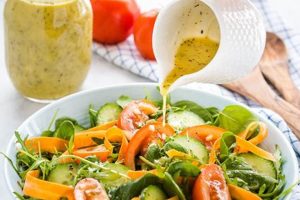
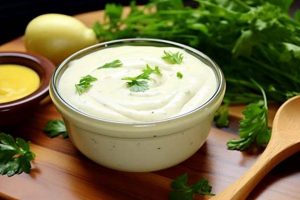
This vibrant, tangy dressing, often served in Japanese-American restaurants, typically features a ginger-soy base, often incorporating sesame oil, rice vinegar, and a touch of sweetness. Variations may include garlic, onion, or chili flakes for added complexity. A classic example combines soy sauce, rice vinegar, ginger, sesame oil, and a small amount of sugar or honey.
The appeal lies in its balance of sweet, savory, and acidic flavors, complementing a variety of salad ingredients, particularly those with Asian influences. Its relative simplicity allows for easy preparation at home, making it a popular choice for both casual meals and more elaborate dining experiences. While its exact origins are unclear, the dressing likely emerged as part of the evolution of Japanese-American cuisine, reflecting a fusion of culinary traditions.
Further exploration will delve into specific ingredient combinations, preparation methods, and suitable pairings for this versatile dressing, offering both novice and experienced cooks a deeper understanding of its potential.
Tips for Crafting an Excellent Ginger-Soy Dressing
Achieving the desired balance of flavors is key to a successful ginger-soy dressing. These tips offer guidance for preparation and customization.
Tip 1: Fresh Ginger is Essential: Utilize fresh ginger root for the most vibrant flavor. Grate it finely to ensure even distribution throughout the dressing.
Tip 2: Balance Sweetness and Acidity: Careful adjustment of sugar or honey and rice vinegar achieves the characteristic sweet-tart profile. Taste and adjust as needed.
Tip 3: Quality Soy Sauce Matters: Opt for a good quality soy sauce, preferably Japanese-style, as it forms the foundation of the dressing’s savoriness.
Tip 4: The Right Oil: Sesame oil provides a distinctive nutty aroma and flavor. Toasted sesame oil offers a more intense flavor, but use it sparingly as it can be overpowering.
Tip 5: Emulsification is Key: Whisk the ingredients vigorously to create a smooth, emulsified dressing that clings well to salad ingredients.
Tip 6: Customize with Care: Garlic, onion, or chili flakes can enhance the complexity. Add these ingredients judiciously, starting with small amounts and adjusting to taste.
Tip 7: Proper Storage: Store leftover dressing in an airtight container in the refrigerator for up to a week. Shake well before serving.
By following these guidelines, one can consistently create a flavorful and well-balanced dressing that enhances a variety of salads and dishes.
These tips provide a foundation for mastering this versatile dressing, paving the way for culinary experimentation and enjoyment.
1. Ginger

Ginger plays a pivotal role in a Tokyo Express-style salad dressing, contributing a distinctive pungent warmth and subtle sweetness that balances the other ingredients. Its presence is often considered essential, shaping the dressing’s overall character.
- Flavor Profile
Ginger’s flavor profile is complex, offering a combination of spicy, sweet, and slightly citrusy notes. This complexity allows it to harmonize with both savory and sweet elements within the dressing, adding depth and dimension beyond simple heat.
- Preparation and Use
Fresh ginger root is typically preferred in this context. It’s finely grated or minced to maximize surface area, releasing its flavor compounds effectively into the dressing. While ground ginger can be substituted, it often lacks the fresh, vibrant character of the root.
- Cultural Significance
Ginger holds culinary significance in various Asian cuisines, including Japanese. Its incorporation into the dressing reflects this cultural influence and contributes to the authentic flavor profile associated with Tokyo Express-style cuisine.
- Complementary Ingredients
Ginger complements other common ingredients found in the dressing, such as soy sauce, sesame oil, and rice vinegar. Its pungent warmth enhances the umami of soy sauce, while its subtle sweetness balances the acidity of rice vinegar, creating a harmonious flavor profile.
The careful integration of ginger elevates the dressing beyond a simple condiment, transforming it into a complex and flavorful element crucial to the overall dining experience. The quantity used can be adjusted to suit individual preferences, allowing for customization while maintaining the essential ginger character.
2. Soy Sauce

Soy sauce forms the foundational savory element in a Tokyo Express-style salad dressing, contributing umami richness and depth of flavor. Its presence is crucial, influencing the dressing’s overall character and its interaction with other ingredients. The type of soy sauce utilized significantly impacts the final taste profile. Japanese-style soy sauces, such as shoyu, are commonly preferred for their balanced saltiness and subtle sweetness. Darker soy sauces, like koikuchi, impart a richer, more complex flavor, while lighter soy sauces, such as usukuchi, offer a more delicate taste. Using a lower-sodium soy sauce allows for greater control over the dressing’s overall saltiness, especially when combined with other salty ingredients. For example, if incorporating seaweed flakes or preserved vegetables, a lower-sodium soy sauce prevents the dressing from becoming overly saline.
The interplay between soy sauce and other components is essential. The saltiness of soy sauce enhances the sweetness of the dressing’s added sugar or honey, creating a balanced flavor profile. It also complements the acidity of the rice vinegar, preventing the dressing from becoming overly sweet. Furthermore, soy sauce interacts with the aromatics, such as ginger and garlic, amplifying their flavors and creating a more complex sensory experience. Consider a dressing with a robust dark soy sauce, fresh ginger, and toasted sesame oil. The soy sauce’s umami notes amplify the ginger’s pungency and the sesame oil’s nuttiness, resulting in a layered and harmonious flavor profile.
Understanding soy sauce’s role is crucial for achieving a well-balanced and flavorful Tokyo Express-style dressing. Careful selection and application of the appropriate soy sauce, considering its interaction with other ingredients, allows for customization and ensures a dressing that complements the intended salad or dish. Challenges may include balancing the saltiness contributed by soy sauce with other ingredients, requiring careful tasting and adjustment throughout the preparation process. Ultimately, mastering soy sauce’s contribution elevates this dressing, offering a deeper understanding of flavor dynamics within Japanese-inspired cuisine.
3. Sesame Oil
Sesame oil contributes significantly to the sensory experience of a Tokyo Express-style salad dressing, providing a distinctive nutty aroma and rich flavor. Its presence, while often subtle, plays a crucial role in shaping the dressing’s overall character. The type of sesame oil employed influences the final taste profile. Toasted sesame oil, derived from roasted sesame seeds, offers a more intense, almost smoky flavor and darker color. Untoasted sesame oil, extracted from raw sesame seeds, presents a lighter, more delicate flavor. The choice between these two depends on the desired intensity and the balance of other flavors within the dressing. A small amount of toasted sesame oil can add depth and complexity without overpowering other delicate ingredients. Conversely, a larger quantity of untoasted sesame oil provides a subtler sesame presence, allowing other flavors to shine.
The interaction of sesame oil with other dressing components is noteworthy. Its richness complements the savory notes of soy sauce and the pungency of ginger, creating a harmonious blend of flavors. The oil also acts as a carrier for these flavors, distributing them evenly throughout the dressing and enhancing their impact on the palate. For example, a dressing containing toasted sesame oil, soy sauce, and rice vinegar benefits from the oil’s ability to meld the savory, salty, and acidic elements into a cohesive whole. The sesame oil’s inherent richness prevents the acidity from becoming overly sharp, while also enhancing the umami notes of the soy sauce.
Understanding sesame oil’s contribution is essential for crafting a balanced and flavorful Tokyo Express-style salad dressing. Careful selection of the type of sesame oil and consideration of its interaction with other ingredients allows for customization and ensures a dressing that complements the accompanying dish. A challenge can arise in balancing the intensity of toasted sesame oil, requiring judicious use to prevent it from dominating other flavors. Ultimately, skillful application of sesame oil elevates this dressing beyond a simple condiment, showcasing the subtle nuances and complex interplay of flavors characteristic of Japanese-inspired cuisine.
4. Rice Vinegar

Rice vinegar provides the essential acidic component in a Tokyo Express-style salad dressing, balancing the richness of sesame oil and the umami of soy sauce. Its presence contributes brightness and complexity, preventing the dressing from becoming overly heavy or cloying. The specific type of rice vinegar influences the final flavor profile. Unseasoned rice vinegar offers a clean, crisp acidity, while seasoned rice vinegar, often containing added sugar and salt, contributes a touch of sweetness and complexity. Selecting the appropriate type depends on the desired balance of flavors and the other ingredients in the dressing. For instance, using seasoned rice vinegar allows for a reduction in added sugar within the dressing itself, streamlining the preparation process while maintaining the desired sweet-tart balance. Conversely, unseasoned rice vinegar provides a blank canvas for greater control over sweetness and saltiness, allowing for precise tailoring of the dressing’s flavor profile.
The interaction of rice vinegar with other components within the dressing is critical. Its acidity cuts through the richness of sesame oil, preventing the dressing from feeling too heavy on the palate. It also complements the savory notes of soy sauce, enhancing its umami and creating a balanced flavor profile. The acidity further interacts with any added sweetness, creating a dynamic interplay between sweet and sour notes. Consider a dressing composed of soy sauce, ginger, sesame oil, and seasoned rice vinegar. The vinegar’s acidity balances the soy sauce’s saltiness and the sesame oil’s richness, while its inherent sweetness harmonizes with the ginger’s pungency. This interplay of contrasting flavors results in a well-rounded and complex taste experience.
Understanding rice vinegar’s contribution is crucial for achieving a well-balanced and flavorful Tokyo Express-style dressing. Careful selection of the type of rice vinegar, considering its interaction with other ingredients, allows for customization and ensures a dressing that complements the intended dish. A potential challenge lies in achieving the ideal balance of acidity, as too much can make the dressing overly sharp, while too little can result in a cloying texture. Mastering this balance, however, allows for the creation of a nuanced and flavorful dressing that exemplifies the harmonious interplay of flavors characteristic of Japanese-inspired cuisine. This understanding further underscores the significance of each ingredient’s contribution to the overall culinary experience.
5. Sweetener

Sweetener plays a crucial role in a Tokyo Express-style salad dressing, balancing the savory and acidic components while contributing to the overall complexity of the flavor profile. The sweetener’s primary function is to temper the sharpness of the rice vinegar and the saltiness of the soy sauce, creating a more harmonious and palatable experience. This balance is essential for achieving the characteristic sweet-savory-tangy flavor profile associated with this style of dressing. The choice of sweetener influences the final taste and texture. Common options include white sugar, brown sugar, honey, maple syrup, or even mirin (a sweet Japanese rice wine). Granulated sugar provides a clean sweetness, while honey and maple syrup contribute more complex flavors and a slightly thicker consistency. Mirin adds a unique umami note along with sweetness, further enhancing the Japanese-inspired character of the dressing. For example, using honey might impart subtle floral notes, while brown sugar offers a hint of molasses. These nuances allow for customization based on individual preferences and the specific flavor profile desired. Over-sweetening, however, can mask the other delicate flavors, so careful portioning is critical. A dressing featuring a robust dark soy sauce might benefit from the deeper notes of brown sugar or honey, while a lighter dressing might be better suited to the clean sweetness of white sugar or the nuanced flavor of mirin.
The interaction of the sweetener with other ingredients is essential for a well-balanced dressing. The sweetener’s presence harmonizes with the acidity of the rice vinegar, creating a dynamic sweet-and-sour element. It also moderates the saltiness of the soy sauce, preventing the dressing from becoming overly savory. This interplay of contrasting flavors creates a more nuanced and complex taste experience. For instance, if the dressing includes pungent ingredients like ginger or garlic, the sweetener helps to mellow their sharpness, creating a more rounded flavor profile. The sweetener also interacts with the sesame oil, enhancing its nutty aroma and contributing to the overall richness of the dressing. Practical application of this understanding involves careful tasting and adjustment throughout the preparation process. Starting with a smaller amount of sweetener and gradually increasing it to taste allows for precise control over the final balance of flavors. This approach ensures that the sweetness complements rather than overwhelms the other ingredients, resulting in a harmonious and flavorful dressing.
Understanding the role of the sweetener in a Tokyo Express-style salad dressing is crucial for achieving the desired balance and complexity of flavors. Careful selection of the sweetener type and mindful consideration of its interaction with other ingredients allow for customization and a final product that complements the intended dish. The challenge lies in finding the optimal level of sweetness, avoiding both an overly sweet or an overly sharp dressing. Successfully navigating this balance, however, elevates the dressing, demonstrating a deep understanding of flavor dynamics and contributing to a more nuanced and enjoyable culinary experience.
6. Variations
Variations within a “Tokyo Express salad dressing recipe” highlight the adaptability of its core components, allowing for personalized flavor profiles while maintaining the fundamental balance of sweet, savory, and acidic elements. Exploring these variations provides insight into the dressing’s versatility and potential for culinary creativity.
- Spicy Variations
Introducing spice elements, such as chili flakes, sriracha, or a dash of chili oil, adds a layer of heat that complements the existing flavors. The level of spice can be adjusted to individual preferences, ranging from a subtle warmth to a fiery kick. Incorporating spice can create a dynamic contrast with the sweetness and acidity of the dressing, appealing to those who enjoy bolder flavor profiles. A real-world example includes adding a teaspoon of gochujang (Korean chili paste) for a fermented, spicy, and umami-rich dimension.
- Citrus Infusion
Incorporating citrus elements, such as a squeeze of lemon or lime juice, or the zest of an orange, introduces a bright, refreshing note that enhances the dressing’s overall vibrancy. The citrus acidity complements the rice vinegar, adding another layer of complexity to the flavor profile. A real-world example includes using yuzu juice, a Japanese citrus fruit, for a distinct aromatic complexity.
- Aromatic Enhancements
Incorporating additional aromatics, such as minced garlic, finely chopped shallots, or toasted sesame seeds, further develops the dressing’s complexity. These additions contribute layers of flavor beyond the core ginger component, creating a more nuanced and aromatic experience. A real-world example includes adding finely diced white onion for a subtle sharpness that balances the sweetness.
- Umami Boost
Ingredients that enhance umami, such as a small amount of grated Parmesan cheese, a dash of fish sauce, or a spoonful of miso paste, can deepen the savory notes of the dressing. These additions contribute a richer, more complex flavor profile that complements the existing soy sauce base. A real-world example involves incorporating a teaspoon of dried bonito flakes for a subtle smoky, umami flavor characteristic of Japanese cuisine.
These variations demonstrate the “Tokyo Express salad dressing recipe’s” adaptability, offering a range of possibilities for customization. From subtle tweaks to bolder additions, these variations allow individuals to tailor the dressing to specific taste preferences and create unique flavor combinations that enhance a variety of culinary applications. This exploration of variations ultimately underscores the dressing’s versatility and its potential as a foundation for culinary exploration.
Frequently Asked Questions
This section addresses common inquiries regarding the preparation and utilization of this versatile dressing.
Question 1: What type of soy sauce is recommended?
While various soy sauces can be utilized, Japanese-style soy sauces, such as shoyu, are generally preferred for their balanced saltiness and subtle sweetness. Lower-sodium versions offer greater control over the dressing’s overall saltiness.
Question 2: Can the dressing be made ahead of time?
The dressing can be prepared in advance and stored in an airtight container in the refrigerator for up to a week. Shaking well before serving is recommended to re-emulsify the ingredients.
Question 3: What salads pair well with this dressing?
This dressing complements a wide range of salads, particularly those featuring Asian-inspired ingredients such as shredded cabbage, carrots, edamame, and mandarin oranges. It also pairs well with grilled chicken or tofu.
Question 4: Can bottled ginger be used as a substitute for fresh ginger?
While bottled ginger can be used in a pinch, fresh ginger is strongly recommended for its superior flavor and aroma. The bottled version often lacks the same vibrancy and can impart a slightly different taste.
Question 5: How can the dressing’s sweetness be adjusted?
The sweetness can be adjusted by varying the amount of sugar or honey added. Starting with a smaller amount and gradually increasing to taste allows for precise control over the final sweetness level.
Question 6: What is the role of sesame oil in the dressing?
Sesame oil contributes a distinctive nutty aroma and rich flavor to the dressing. Toasted sesame oil offers a more intense flavor, but should be used sparingly as it can be overpowering. Untoasted sesame oil provides a milder sesame flavor.
Careful attention to these frequently asked questions ensures successful preparation and utilization of this versatile and flavorful dressing.
This concludes the FAQ section. The following sections will provide further insights and practical tips for creating and enjoying this popular dressing.
Conclusion
Exploration of the “Tokyo Express salad dressing recipe” reveals a complex interplay of flavors and ingredients. From the foundational elements of soy sauce and ginger to the nuanced contributions of sesame oil and rice vinegar, each component plays a crucial role in the dressing’s overall character. The careful balance of sweet, savory, and acidic notes, coupled with the potential for customized variations, underscores its versatility and adaptability to diverse culinary applications. Understanding the function and interaction of each ingredient provides a framework for crafting a well-balanced and flavorful dressing.
Mastery of this dressing offers a gateway to a deeper appreciation of Japanese-inspired cuisine and the potential for culinary creativity. Further experimentation with ingredient combinations and flavor profiles promises continued enjoyment and exploration of this versatile culinary staple.