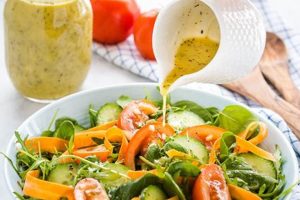
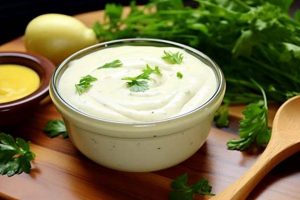
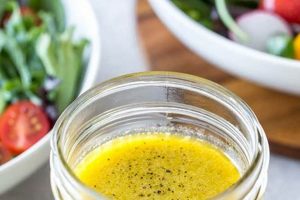
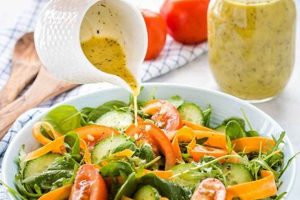
A vibrant, flavorful condiment typically combines fresh ginger, carrots, and an acidic element like vinegar or citrus juice. Oil, sweeteners like honey or maple syrup, and other seasonings such as garlic, onion, or chili flakes may also be incorporated to create a balanced, emulsified dressing. Variations can include different oils (e.g., sesame, olive), vinegars (e.g., rice, apple cider), and additional spices to customize the flavor profile.
Such a dressing offers a healthy and refreshing alternative to creamy or heavier options. The carrots contribute sweetness and body, while ginger provides a distinctive warmth and subtle spice. The combination delivers a nutritional boost from vitamins, antioxidants, and potential anti-inflammatory properties. This type of dressing complements a variety of salads, from leafy greens and slaw to grain-based or noodle salads, adding both flavor and visual appeal. Its versatility extends beyond salads, making it a suitable marinade for vegetables, tofu, or even chicken.
The following sections will explore specific recipes for this type of dressing, offering variations to suit diverse palates and dietary needs. Guidance on ingredient selection, preparation techniques, and storage recommendations will also be provided.
Tips for Crafting the Perfect Dressing
These tips offer guidance for creating a well-balanced and flavorful dressing, adaptable to individual preferences.
Tip 1: Balance Sweet and Tangy Elements: Achieve harmony by balancing the sweetness of carrots and any added sweeteners with the acidity of vinegar or citrus. Taste and adjust accordingly, aiming for a pleasant contrast.
Tip 2: Ginger Preparation: Fresh ginger offers the most potent flavor. Peel and finely grate or mince it to ensure even distribution throughout the dressing. Alternatively, ginger juice can be used for a smoother texture.
Tip 3: Carrot Selection and Preparation: Choose fresh, firm carrots. Grating carrots finely creates a smoother dressing, while coarsely grated carrots provide more texture.
Tip 4: Emulsification Techniques: A stable emulsion prevents separation. Whisking the oil slowly into the other ingredients or using a blender creates a smooth, creamy consistency.
Tip 5: Flavor Customization: Experiment with additional ingredients. Garlic, onion, chili flakes, or other spices can add complexity and depth. Different oils, such as sesame or olive oil, contribute distinct flavor profiles.
Tip 6: Storage: Store the dressing in an airtight container in the refrigerator for up to five days. The flavors will meld and intensify over time.
Tip 7: Serving Suggestions: This dressing complements a wide range of salads, from leafy greens to grain-based salads. It can also be used as a marinade for vegetables, tofu, or chicken.
By following these tips, one can consistently achieve a flavorful and versatile dressing. The balance of flavors and textures enhances the overall culinary experience.
The concluding section will provide a summary of the key information presented, emphasizing the versatility and health benefits of this type of dressing.
1. Fresh Ginger

Fresh ginger serves as a cornerstone ingredient, contributing significantly to the distinctive character of ginger carrot salad dressing. Its unique flavor profile and potential health benefits make it an essential component. Understanding its various facets enhances appreciation for its role in the overall composition of the dressing.
- Flavor Profile
Fresh ginger offers a complex flavor profile characterized by its pungent, spicy, and slightly sweet notes. This distinct taste adds depth and warmth to the dressing, contrasting and complementing the sweetness of carrots and other ingredients. The intensity of the ginger flavor can be adjusted based on personal preference, ranging from a subtle hint to a more pronounced zest.
- Health Benefits
Beyond its flavor contributions, fresh ginger offers potential health benefits. Known for its anti-inflammatory properties, it may aid in reducing inflammation. Furthermore, ginger contains antioxidants, which can contribute to overall well-being. Incorporating fresh ginger into a salad dressing allows one to enjoy these potential benefits alongside a flavorful culinary experience.
- Preparation Techniques
Proper preparation techniques are essential to maximize ginger’s flavor impact. Peeling the ginger root and then finely grating or mincing it ensures even distribution throughout the dressing and prevents fibrous pieces. Alternatively, juicing the ginger offers a smoother texture and a more intense ginger essence.
- Interaction with other ingredients
Ginger’s flavor profile interacts dynamically with other dressing components. It harmonizes well with the sweetness of carrots and the acidity of vinegar or citrus juice, creating a balanced flavor profile. The ginger’s warmth also complements other spices and aromatics, such as garlic, chili flakes, or sesame oil, adding layers of complexity to the overall taste experience.
The integration of these facetsflavor, health benefits, preparation, and interaction with other ingredientsmakes fresh ginger an integral component of a well-crafted ginger carrot salad dressing. Its distinctive characteristics contribute not only to the taste but also to the potential health benefits and overall sensory experience of the dressing.
2. Carrot Preparation
Carrot preparation significantly influences the final texture, flavor release, and overall aesthetic of a ginger carrot salad dressing. Different methods yield varying results, impacting how the carrots integrate with other ingredients and contribute to the dressing’s sensory experience. The choice of preparation technique should align with the desired outcome, whether a smooth, emulsified dressing or one with more textural complexity is preferred.
Grating represents the most common preparation method. Fine grating produces a smoother dressing, allowing the carrot’s sweetness to meld seamlessly with other components. It also maximizes surface area, promoting flavor release and quicker softening when marinating in the dressing. Coarse grating, conversely, introduces textural elements, providing a more substantial bite. This approach retains distinct carrot pieces within the dressing, offering a contrasting mouthfeel against other ingredients. Julienned or finely diced carrots offer a visually appealing option, particularly for dressings served with composed salads or as a garnish. While this method requires more precise knife work, it introduces a distinct visual element and a slightly different textural experience compared to grating.
Beyond the chosen cutting method, pre-treatment options further refine the carrot’s contribution to the dressing. Briefly blanching carrots can soften their texture while maintaining some crispness, making them more palatable in the final dish. Alternatively, roasting carrots before incorporating them into the dressing imparts a deeper, caramelized sweetness and a softer texture. This approach adds a layer of complexity to the flavor profile, complementing the warmth of the ginger and other spices. Ultimately, selecting the appropriate carrot preparation method is crucial for achieving the desired textural and flavor nuances within the ginger carrot salad dressing. Careful consideration of these techniques ensures a harmonious balance of ingredients and a more satisfying culinary experience.
3. Acidity (Vinegar/Citrus)

Acidity plays a crucial role in ginger carrot salad dressings, providing balance, enhancing flavors, and contributing to preservation. The acidic component, whether vinegar or citrus juice, counteracts the sweetness of the carrots and any added sweeteners, creating a more complex and palatable flavor profile. This balance prevents the dressing from being overly sweet and allows the other flavors, such as ginger and spices, to shine. Furthermore, the acidity brightens the overall taste, adding a refreshing tang that complements the other ingredients.
Different types of vinegar and citrus juices offer unique flavor profiles and levels of acidity. Rice vinegar lends a mild, slightly sweet tang, while apple cider vinegar contributes a more robust, fruity acidity. Citrus juices, such as lemon or lime, provide a vibrant, zesty acidity and a distinct aromatic character. The choice of acidic component depends on the desired flavor profile and the other ingredients in the dressing. For example, a dressing with sesame oil and honey might benefit from the subtle sweetness of rice vinegar, whereas a dressing with cilantro and lime juice could be enhanced by the bright acidity of lime juice. The amount of acid used also affects the final balance; adjustments can be made to suit individual preferences.
Beyond flavor enhancement, acidity contributes to the preservation of the dressing. The lower pH created by the vinegar or citrus juice inhibits the growth of microorganisms, extending the shelf life of the dressing. This is particularly important for dressings containing fresh ingredients like ginger and carrots. Properly balanced acidity ensures not only a delicious but also a safer dressing that can be enjoyed for several days. Careful consideration of the type and quantity of acid used is therefore essential for creating a well-rounded and flavorful ginger carrot salad dressing.
4. Oil Selection

Oil selection significantly impacts the flavor profile, texture, and nutritional value of a ginger carrot salad dressing. The oil acts as a carrier for the other ingredients, distributing their flavors throughout the dressing and creating a cohesive culinary experience. Different oils possess unique characteristics that interact with the ginger, carrots, and other components, influencing the final taste and mouthfeel. Careful consideration of oil properties is essential for crafting a well-balanced and flavorful dressing.
Neutral oils, such as grapeseed or canola oil, offer a blank canvas, allowing the flavors of the ginger, carrots, and other ingredients to take center stage. These oils have a subtle flavor that doesn’t compete with other components, making them a versatile choice for a wide range of flavor profiles. Conversely, oils with more pronounced flavors, like sesame or olive oil, can add depth and complexity to the dressing. Sesame oil imparts a nutty, toasted flavor that complements Asian-inspired dressings, while extra virgin olive oil contributes a fruity, peppery note that enhances Mediterranean flavors. The intensity of the oil’s flavor should be considered in relation to the other ingredients to ensure a harmonious balance. For example, a delicate ginger flavor might be overpowered by a robust extra virgin olive oil, while a bolder ginger flavor could benefit from the added complexity of toasted sesame oil.
Beyond flavor, oil selection influences the texture and nutritional value of the dressing. Oils vary in their viscosity and fat composition, affecting the dressing’s mouthfeel and how it coats the ingredients in the salad. A lighter oil like grapeseed oil creates a thinner dressing, while a heavier oil like avocado oil results in a richer, creamier texture. The nutritional profile of the oil also contributes to the overall health benefits of the dressing. Oils rich in monounsaturated fats, like olive oil and avocado oil, are considered heart-healthy choices. Understanding the interplay between oil selection, flavor profiles, texture, and nutritional value is crucial for creating a ginger carrot salad dressing that is both delicious and beneficial.
5. Sweetener Balance

Sweetener balance plays a pivotal role in a ginger carrot salad dressing recipe, acting as a critical bridge between the inherent sweetness of carrots, the pungent spice of ginger, and the chosen acidity. Achieving this balance is crucial for a palatable and harmonious flavor profile. Sweeteners not only counteract the sharpness of the ginger and the acidity of vinegar or citrus juice but also enhance the overall complexity of the dressing. Over-sweetening can mask the other delicate flavors, while insufficient sweetness can result in a harsh or unbalanced taste. The type and quantity of sweetener used directly impact the final flavor profile and should be carefully considered in relation to the other ingredients.
Several sweetener options can be incorporated into a ginger carrot salad dressing, each offering a unique flavor profile and level of sweetness. Honey provides a floral sweetness with subtle notes of caramel, complementing the warmth of the ginger. Maple syrup offers a richer, more robust sweetness with hints of woodsy flavor. Agave nectar imparts a neutral sweetness, allowing other flavors to shine. Granulated sugar provides a clean, straightforward sweetness. The choice of sweetener should align with the overall flavor profile desired for the dressing. For example, a dressing with apple cider vinegar and walnuts might benefit from the robust sweetness of maple syrup, while a dressing with lime juice and cilantro might be better suited to the neutral sweetness of agave nectar.
Practical application of sweetener balance necessitates careful tasting and adjustment throughout the preparation process. Start with a small amount of the chosen sweetener and gradually increase until the desired level of sweetness is achieved. The interaction of the sweetener with the other ingredients, particularly the acidity, should be considered. A dressing with a higher level of acidity may require more sweetener to achieve balance. Understanding this interplay and making adjustments accordingly ensures a well-rounded and flavorful final product. The objective is not merely to add sweetness but to create a harmonious blend of flavors that complement and enhance one another. This careful attention to sweetener balance elevates the ginger carrot salad dressing from a simple condiment to a nuanced culinary creation.
6. Complementary Spices

Complementary spices represent a crucial element in elevating ginger carrot salad dressings beyond the foundational ingredients. Judicious spice selection enhances complexity, adding depth and nuance to the flavor profile. The interplay between spices and the core ingredientsginger, carrots, and the acidic componentcreates a symphony of flavors that elevates the overall sensory experience. Understanding the role and potential of complementary spices is essential for crafting a truly exceptional dressing.
- Aromatic Enhancement
Aromatics like garlic and onion, while not strictly spices, contribute significantly to the overall flavor profile. Minced or grated garlic adds a pungent savory note, while finely diced onion introduces a subtle sweetness and sharpness. These aromatics create a foundational flavor base that complements the ginger and carrots, adding depth and complexity.
- Chili Heat
Chili flakes or a pinch of cayenne pepper introduce an element of heat, balancing the sweetness and adding a stimulating dimension to the dressing. The level of heat can be adjusted to suit individual preferences, ranging from a subtle warmth to a fiery kick. The type of chili used also influences the flavor profile, with some varieties offering smoky or fruity notes in addition to heat.
- Earthy and Herbal Notes
Ground cumin or coriander adds earthy, warm notes that complement the ginger and carrots. Fresh herbs like cilantro or parsley provide a refreshing, herbaceous counterpoint to the other flavors. These additions create a more complex and nuanced flavor profile, expanding beyond the core ingredients.
- Balancing Spices
A pinch of ground cloves or allspice can add warmth and depth, balancing the sweetness and acidity. These spices should be used sparingly, as their potent flavors can easily overpower the other ingredients. Careful experimentation is key to achieving a harmonious balance.
The careful integration of complementary spices transforms a basic ginger carrot dressing into a nuanced culinary creation. These additions deepen the flavor profile, adding layers of complexity and intrigue. The interplay between spices and the core ingredients creates a symphony of flavors that elevates the overall sensory experience, enhancing the enjoyment of any salad or dish to which the dressing is added.
7. Emulsification Technique

Emulsification is crucial for creating a stable and visually appealing ginger carrot salad dressing. It involves combining two immiscible liquidstypically oil and an aqueous solution containing vinegar or citrus juiceinto a homogeneous mixture. Without proper emulsification, the dressing will separate into distinct layers, compromising both its texture and aesthetic appeal. A stable emulsion ensures the flavors are evenly distributed throughout the dressing, coating salad ingredients consistently and providing a more satisfying culinary experience.
Several techniques facilitate effective emulsification. Whisking vigorously while slowly drizzling the oil into the aqueous mixture encourages the formation of small oil droplets dispersed within the vinegar or citrus juice. This creates a temporary emulsion that can be stabilized by incorporating an emulsifying agent, such as a small amount of Dijon mustard or honey. These agents contain compounds that attract both oil and water, helping to bind the two phases together. Alternatively, a blender can be used to create a more stable emulsion by rapidly breaking down the oil into tiny droplets and dispersing them evenly throughout the mixture. This method is particularly effective for dressings containing thicker ingredients like tahini or nut butters. Regardless of the chosen technique, the key is to incorporate the oil gradually, allowing the emulsion to form properly and preventing separation.
A properly emulsified ginger carrot salad dressing exhibits a smooth, creamy texture and a uniform color. The flavors are evenly distributed, ensuring a consistent taste experience with every bite. A stable emulsion also prevents the dressing from separating upon standing, maintaining its visual appeal and textural integrity. Conversely, a poorly emulsified dressing will appear watery and separated, with the oil floating on top. This not only compromises the aesthetic presentation but also leads to an uneven distribution of flavors and a less enjoyable culinary experience. Understanding and applying proper emulsification techniques is therefore essential for creating a high-quality ginger carrot salad dressing that is both visually appealing and flavorful.
Frequently Asked Questions
This section addresses common inquiries regarding ginger carrot salad dressings, providing concise and informative responses to facilitate a deeper understanding of their preparation and usage.
Question 1: What is the shelf life of a homemade ginger carrot salad dressing?
When stored correctly in an airtight container in the refrigerator, a homemade dressing typically lasts up to five days. Flavor intensity may evolve over time.
Question 2: Can alternative sweeteners be used, and how do they affect the final taste?
Honey, maple syrup, agave nectar, or granulated sugar offer varied sweetness and flavor profiles. Honey provides floral notes, maple syrup adds richness, agave offers neutrality, and sugar delivers a clean sweetness. Selection depends on desired taste preferences.
Question 3: How can one adjust the dressing’s thickness or thinness?
Thickness can be adjusted by adding small amounts of water for a thinner consistency or a touch of tahini or nut butter for a creamier texture. Constant whisking or blending ensures even incorporation.
Question 4: What are the best oils to use, and how do they influence the dressing’s flavor profile?
Neutral oils like grapeseed or canola allow other ingredients to shine. Sesame oil adds a nutty dimension, while olive oil contributes a fruity, peppery note. Oil selection depends on desired flavor combinations.
Question 5: Can this dressing be used beyond salads?
Its versatility extends to marinades for vegetables, tofu, or chicken, and it can also serve as a dipping sauce.
Question 6: How does ginger preparation affect the dressing?
Freshly grated or minced ginger offers the most potent flavor. Ginger juice provides a smoother texture. The intensity of ginger flavor can be adjusted to individual preference.
Careful consideration of these frequently asked questions enables informed decisions regarding ingredient selection, preparation methods, and potential applications of ginger carrot salad dressings.
The following section will offer a collection of recipe variations for exploration.
Ginger Carrot Salad Dressing Recipe
Exploration of this vibrant culinary topic has revealed the multifaceted nature of crafting a successful ginger carrot salad dressing recipe. Key elements highlighted include the importance of fresh ginger preparation, the impact of carrot processing techniques on texture, the crucial role of acidity in balancing sweetness, the influence of oil selection on flavor profiles, the delicate art of sweetener balance, the potential of complementary spices to enhance complexity, and the necessity of proper emulsification for achieving a stable and visually appealing dressing. Understanding the interplay of these elements allows for informed decision-making throughout the preparation process, resulting in a dressing tailored to individual preferences.
The versatility of ginger carrot salad dressing extends beyond its traditional application to salads. Its potential as a marinade, dipping sauce, or flavor enhancer for various dishes underscores its adaptability within the culinary landscape. Continued exploration of flavor combinations and ingredient variations promises further evolution and innovation within this vibrant culinary domain. This exploration serves as a foundation for continued experimentation and a deeper appreciation of the nuanced flavors and textures achievable within the realm of ginger carrot salad dressings.