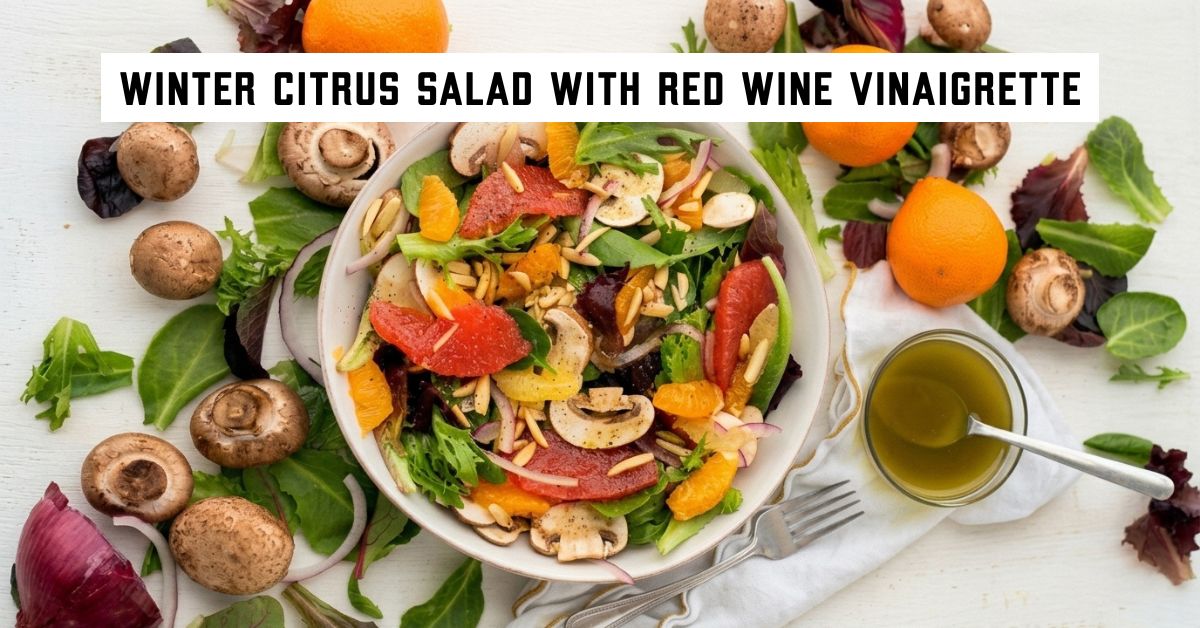
Winter Citrus Salad with Red Wine Vinaigrette
Our furnace broke during the coldest week of January, leaving the kitchen as the only warm room for three days. I made a Winter Citrus Salad with Red Wine Vinaigrette three times that week because it took only ten minutes, required no oven, and provided a refreshing meal while we wore coats indoors.
My husband started calling it “the furnace salad,” and the name stuck even after the repairman fixed the heater the following Tuesday. Before that week, I made this salad whenever I had extra citrus.
Afterward, it became a regular dish for our meals in January and February, made repeatedly until the last grapefruit disappeared from stores each spring. It’s a simple dish made with seasonal produce that shines when everything else outside looks gray and bare.
My husband asked for the recipe so many times that I finally measured the ingredients instead of just guessing.

Winter Citrus Salad with Red Wine Vinaigrette
Make Winter Citrus Salad with Red Wine Vinaigrette in 15 minutes with oranges, grapefruit, greens, almonds, and a bright homemade dressing.
Ingredients
- 5 ounces mixed baby greens
- 2 navel oranges, peeled and sliced into rounds
- 1 large grapefruit, peeled and segmented
- ½ small red onion, sliced paper thin
- 8 ounces cremini mushrooms, sliced thin
- ⅓ cup sliced almonds, toasted
- ⅓ cup extra virgin olive oil
- 3 tablespoons red wine vinegar
- 1 teaspoon Dijon mustard, heaping
- 1 small garlic clove, finely minced
- 1 tablespoon honey
- ½ teaspoon kosher salt, plus more to taste
- ¼ teaspoon freshly ground black pepper
Instructions
- In a serving bowl, whisk together olive oil, red wine vinegar, Dijon mustard, honey, garlic, salt, and pepper. Whisk for about thirty seconds until the mixture is cloudy and slightly thick.
- Before tossing the salad, taste the dressing on a piece of lettuce. If it tastes flat, add a small pinch of salt to improve the flavor.
- Place sliced almonds in a dry skillet over medium heat. Shake the pan every thirty seconds. Remove the almonds from the heat when they turn light golden brown and smell fragrant, about four minutes.
- To avoid burning, keep a close eye on them while toasting. After toasting, transfer them to a plate immediately.
- Cut the top and bottom off each orange and grapefruit so they stand flat on the cutting board. Remove the peel by cutting it off in strips, taking the white pith with it. Slice the oranges into rounds and cut the grapefruit into segments by slicing between the membranes.
- Save any juice that collects on the board and mix it into the dressing.
- Thinly slice the red onion, using a mandoline if available. Clean the mushrooms with a damp towel instead of rinsing them, as they absorb water quickly and can become soggy. Slice the mushrooms just before serving to keep them fresh.
- Add greens to the bowl with the dressing and toss them until coated. Layer the citrus, onion, mushrooms, and toasted almonds on top. Toss gently one more time to avoid breaking the citrus apart.
- Serve immediately so the almonds stay crisp and the greens remain fresh. Wilt.
Why This Recipe Works When Nothing Else Sounds Good
By late January I’m tired of soup. Roasted vegetables start to taste the same after enough repeats, and heavy dinners feel wrong once the holidays are over. Winter Citrus Salad with Red Wine Vinaigrette solves that stretch of winter by leaning on citrus instead of anything cooked.
Oranges and grapefruit are cheap and plentiful right now, often marked down at the store because so much of it is coming in from Florida and California at once.
Cold produce needs almost no work. You slice it, toss it with greens and a fast vinaigrette, and dinner is done before the oven would have finished preheating.
My kids won’t touch cooked greens, but they eat this one, because the citrus makes the whole bowl taste sweet instead of bitter. That single detail keeps it in our regular rotation.
A Recipe That Started as Kitchen Cleanup
I created this salad to use up citrus from my neighbor’s tree in Texas. Every winter, she brings me a box, and sometimes we can’t eat it all before it spoils. Instead of wasting it, I started slicing the leftover fruit and making a salad.
Later, I added mushrooms after visiting a small Italian market near my mother’s house. Their cremini mushrooms looked much better than those at my regular grocery store. Thin slices of raw mushrooms give the salad a nice crunch that the citrus lacks.
I used red wine vinegar because it was open and went well with the citrus, more than a milder vinegar would.
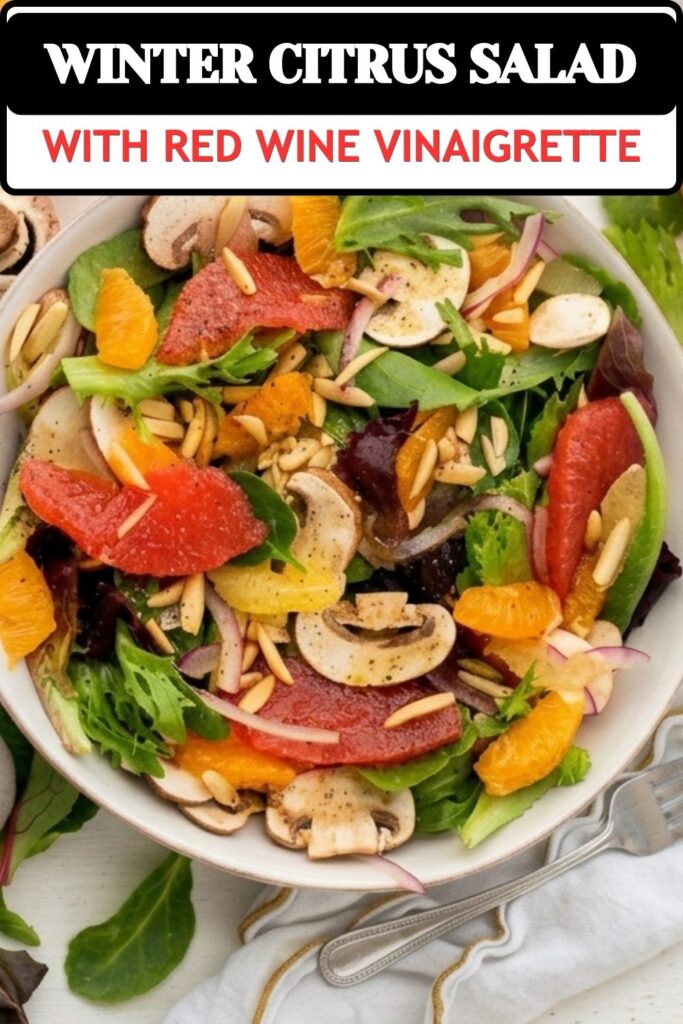
Ingredients for Winter Citrus Salad with Red Wine Vinaigrette
5 ounces mixed baby greens: This is the base of the salad. A mix of spinach, arugula, and baby lettuces adds texture. I usually choose the Organic Girl brand, as the bag stays fresh in the fridge longer. Spin them in a salad spinner, even if the bag says they are pre-washed, to remove extra moisture.
2 navel oranges, peeled and sliced: The oranges add sweetness to balance the dressing’s vinegar. Choose heavy oranges for more juice. Use a knife to peel them, so the bitter white pith comes off with the skin.
1 large grapefruit, peeled and segmented: Grapefruit adds a bitter taste that keeps the salad from being too sweet. Ruby red grapefruit is milder than white and is better for those who haven’t tried this mix before. Segment carefully to avoid bitter white parts.
½ small red onion, sliced thin: Raw onion adds bite, but slicing it thin keeps it from overpowering the salad. A mandoline helps with this, but a sharp knife works as well. Soak the slices in cold water for five minutes if raw onion is too strong for some people.
8 ounces cremini mushrooms, sliced thin: Raw mushrooms sound unusual, but sliced thin, they add a nutty flavor that pairs well with citrus. Look for mushrooms with tight caps to ensure freshness. Slice them just before serving to prevent browning.
⅓ cup sliced almonds, toasted: Toasted almonds add crunch and a roasted flavor. Toast them in a dry skillet over medium heat for about four minutes, watching closely to avoid burning. Allow them to cool on a plate before adding them to the salad.
⅓ cup extra virgin olive oil: The oil is the base of the dressing, helping combine the vinegar and mustard. I use Colavita for everyday cooking, as it retains its flavor well when whisked. A milder olive oil is fine if a strong one is too much.
3 tablespoons red wine vinegar: Red wine vinegar adds tang and pairs well with citrus. Look for one labeled aged or reserved for a richer taste. Store it in a cool cabinet away from the stove.
1 teaspoon Dijon mustard, heaping: Mustard helps the oil and vinegar blend, so the dressing stays mixed. I use Maille since it stays smooth. A heaping teaspoon is better for clinging to the greens.
1 small garlic clove, minced fine: A small amount of garlic adds depth without being overpowering. Mince it very small, as larger pieces may not blend well with the citrus. Avoid garlic with a green sprout, as it may be bitter.
1 tablespoon honey: Honey balances the vinegar and grapefruit bitterness without making the dressing sweet. Local wildflower honey adds more flavor than standard clover honey. Warm it slightly to help it mix smoothly.
½ teaspoon kosher salt, plus more to taste: Salt in the dressing adds flavor to the whole salad. I use Diamond Crystal because it dissolves quickly. Taste the dressing before tossing, as sweetness varies with different citrus.
¼ teaspoon black pepper, freshly ground: A little pepper balances the sweetness from the fruit and honey. Freshly ground pepper is more flavorful than pre-ground. Grind it directly into the dressing for even flavor distribution.
Equipment to Make Winter Citrus Salad with Red Wine Vinaigrette
- Salad spinner: dries greens before dressing
- Sharp paring knife: for peeling and segmenting citrus
- Small mixing bowl or jar: for whisking the dressing
- Large, wide salad bowl: room enough to toss well
- Dry skillet: toasting the almonds evenly
- Mandoline (optional): thin, even onion slices
How to Make Winter Citrus Salad with Red Wine Vinaigrette
Make the Dressing: In a serving bowl, whisk together olive oil, red wine vinegar, Dijon mustard, honey, garlic, salt, and pepper. Whisk for about thirty seconds until the mixture is cloudy and slightly thick.
Before tossing the salad, taste the dressing on a piece of lettuce. If it tastes flat, add a small pinch of salt to improve the flavor.
Toast the Almonds: Place sliced almonds in a dry skillet over medium heat. Shake the pan every thirty seconds. Remove the almonds from the heat when they turn light golden brown and smell fragrant, about four minutes.
To avoid burning, keep a close eye on them while toasting. After toasting, transfer them to a plate immediately.
Prep the Citrus: Cut the top and bottom off each orange and grapefruit so they stand flat on the cutting board. Remove the peel by cutting it off in strips, taking the white pith with it. Slice the oranges into rounds and cut the grapefruit into segments by slicing between the membranes.
Save any juice that collects on the board and mix it into the dressing.
Slice the Onion and Mushrooms: Thinly slice the red onion, using a mandoline if available. Clean the mushrooms with a damp towel instead of rinsing them, as they absorb water quickly and can become soggy. Slice the mushrooms just before serving to keep them fresh.
Assemble the Salad: Add greens to the bowl with the dressing and toss them until coated. Layer the citrus, onion, mushrooms, and toasted almonds on top. Toss gently one more time to avoid breaking the citrus apart.
Serve immediately so the almonds stay crisp and the greens remain fresh. Wilt.

Tips for Winter Citrus Salad with Red Wine Vinaigrette
- If your dressing is too tangy, add a small drizzle of honey gradually instead of more oil.
- Greens wilt quickly after tossing. Only toss what you will eat right away. Keep the extra greens and dressing separate until you serve them.
- To keep citrus segments intact, use a thin, sharp knife instead of a serrated one, as serrated knives can tear the fruit.
- If onions are too strong, soak the slices in ice water for five to ten minutes before adding them to your dish.
- To keep almonds fresh, buy smaller bags and store them in the freezer, since nuts can go bad quickly at room temperature.
- If your dressing separates in the fridge, let it sit at room temperature for a few minutes and shake it well before using it again.
Variations to Try
Add Roasted Beets: Mix in a cup of roasted, sliced beets with the citrus. This adds an earthy, sweet flavor that pairs well with the vinegar. I make this when beets come in our co-op box, often served with roast chicken.
Swap in Blood Oranges: Use blood oranges instead of regular ones. They add a deeper color and a slight berry flavor instead of just sweetness. I save this for New Year’s Day brunch when blood oranges are easy to find.
Turn It Into Dinner with Grilled Chicken: Place sliced grilled chicken thighs on top and add a squeeze of orange juice to the dressing. This turns the dish into dinner on nights when I don’t use the oven.
Go Heavier on Herbs: Add a handful of fresh mint or torn basil right before serving. This adds a fresh, green flavor under the citrus. I prefer this in early spring when fresh herbs are available at the farmers market.
Add Crumbled Feta: Sprinkle a few tablespoons of feta on top. This adds a salty taste that balances the sweetness from the honey and fruit. My sister asks for this version every time she visits in February.
Turn Up the Heat: Add a pinch of crushed red pepper flakes to the dressing. This adds warmth that works well with the cold citrus. I like to use this when serving something rich, like a roast.
What Dishes to Try With This Winter Citrus Salad with Red Wine Vinaigrette
This salad pairs well with rich dishes because the vinegar and bitter grapefruit balance heavier flavors. We often serve it with roast chicken, especially when the skin is crispy, as the salad adds brightness to the meal.
It also goes well with grilled salmon since the tangy dressing complements the fatty fish. On busy nights, we enjoy it with a simple baguette and soft cheese, which makes the salad feel like a complete meal.
For a full dinner centered around the salad, prepare it while roasting a beef tenderloin in the oven, as it requires little attention while you slice the citrus.
Cook a pot of wild rice on another burner, and top it with the same toasted almonds from the salad. By the time everything is ready, you’ll have a well-organized meal with minimal effort.
Storing, Freezing & Reusing
Store the dressing in a sealed jar in the fridge for up to one week. Shake it well before each use, as the oil and vinegar separate over time.
Once you pour it on the salad, it will stay fresh in the fridge for about half a day before the greens start to wilt and the citrus juice collects at the bottom.
If you’re preparing ahead, keep the greens, sliced citrus, onion, and mushrooms in separate airtight containers for up to two days.
Mix everything just before serving. This salad does not freeze well. The greens become slimy after thawing, and the citrus loses its texture and turns mushy.
If you have leftovers of dressed salad, don’t try to save it for more than one day. Instead, use extra citrus and greens for a smoothie or fresh juice.
Winter Citrus Salad with Red Wine Vinaigrette Recipe FAQs
Can I use canned or jarred citrus instead of fresh?
Yes, drained canned mandarin segments work in a pinch, though they run sweeter and softer than fresh citrus. Drain them well and pat them dry with a paper towel first, since extra liquid waters down the dressing.
Is the mushroom necessary?
No. Leave it out entirely for a lighter version, or add sliced fennel instead for a similar crunch with a milder flavor.
Can I use white wine vinegar instead of red?
You can, and the flavor turns milder and less tangy. Red wine vinegar has more body and pairs better with the bitterness in the grapefruit, so the balance shifts a little with the swap.
What works in place of Dijon mustard?
A smooth yellow mustard works in a pinch, though it tastes sharper and less rounded than Dijon. Start with half the amount and add more slowly, since yellow mustard can overpower the rest of the dressing fast.
Do I need a mandoline to slice the onion thin enough?
No, a sharp knife and a steady hand work fine. A mandoline just speeds things up and keeps every slice the same thickness.
How spicy is this recipe?
It isn’t spicy at all as written. The red pepper flake variation mentioned earlier adds a mild warmth, nothing beyond what most people handle easily.
Can I make the dressing ahead of the rest of the salad?
Yes, and it’s worth doing. The dressing keeps well for a week in the fridge, so a double batch on a Sunday sets up salads for most of the week ahead.
Why did my dressing turn out watery instead of thick?
This usually means the oil and vinegar didn’t get whisked long enough to come together. Whisk for a full thirty seconds, or shake it hard in a sealed jar instead, which emulsifies the mixture faster than a whisk alone.
Is this too bitter for kids?
Most kids handle it fine, since the sweetness from the oranges and honey outweighs the bitterness from the grapefruit. Cut back on the grapefruit and add an extra orange for picky eaters at the table.
What’s the best way to segment grapefruit without wasting half the fruit?
Cut close to each membrane with a thin knife, working over a bowl to catch the juice. It takes practice, and the first few grapefruits usually come out messier than the ones after, before the technique gets easier.